



The Ghost of Freud
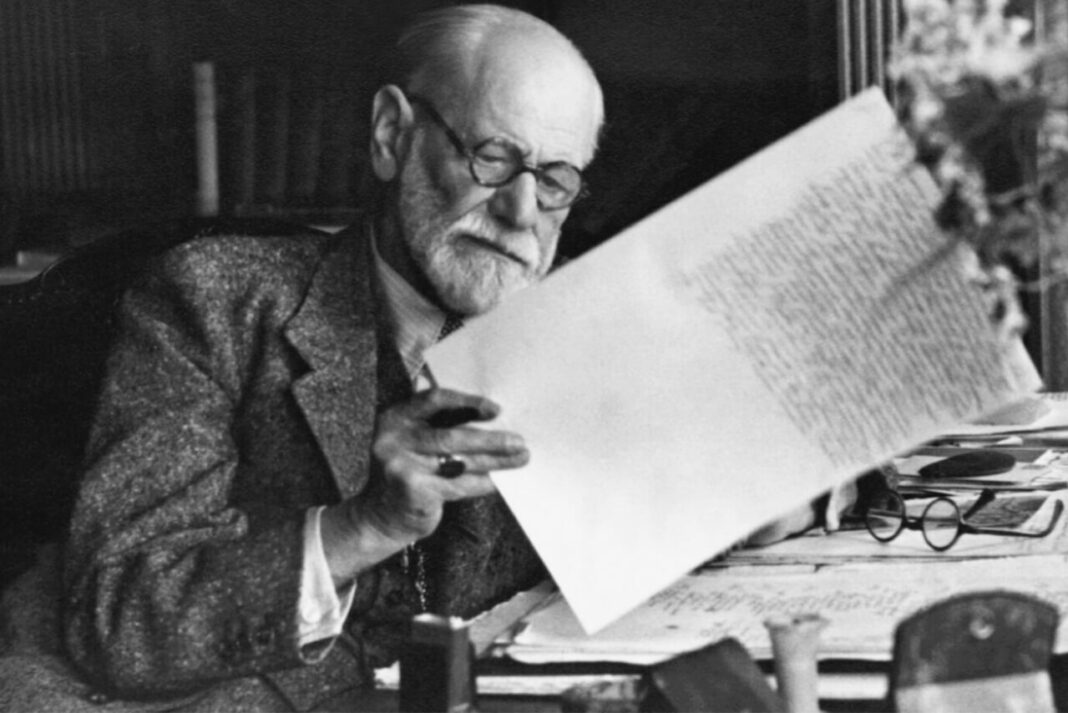
Das Unheimliche, an article written by Sigmund Freud in 1919, explains the strange feeling of becoming estranged to familiarity. In his article, Freud was articulating this feeling as the returning of the repressed (Ruers, 2019). In other words, the notion das Unheimliche is not about the fear of aliens or something new; it is deeper and perhaps even scarier. Feeling scared of an unknown thing is predictable. But feeling scared of something which has been known once and repressed is disturbing. In this case, repression is an important point for Freud’s perspective. His diagram is: “Familiarity → Repression → Das Unheimliche” (Ruers, 2019).
Repression conveys the conscious act of pressuring the thing that makes us uncomfortable, upset, or weak. Once the familiarity is repressed because of an uncomfortable memory or emotion linked to it, it is also avoided. But what if we encounter what we avoid suddenly? Even the minimal disturbing feeling you felt while reading this question exemplifies das Unheimliche. Perhaps the best translation of this notion into English is “uncanny.” Therefore, in the rest of this article, “uncanny” will also be used to refer to das Unheimliche.
Why is the “Uncanny” Aesthetic?
The notion of “uncanny” is, of course, a subjective experience. In some cases, it can be so disturbing that it may cause someone to avert their gaze and even leave the room. But on the other hand, there is an aesthetic side of the uncanny that makes people both want to avoid it and cannot tear themselves away from the experience. Curiosity and excitement for something familiar, the adrenaline of encountering something repressed, fills us up.
You may think that the notion of uncanniness appears only in horror or thriller movies or gothic novels, suggesting that it is only experienced intentionally. But the fact is, the uncanny has become more prevalent in the modern world due to social media trends — for instance, Lalubu dolls — and the rapid progress of AI-generated games, movies, images, music videos, etc.
The question is, how did this insecure aesthetic rise from the ashes and dust? There is an inclusive notion in psychology to answer it: emotional ambivalence. That is to say, uncanny creates a safe distance from the novel appearance of familiarity. Familiarity and unfamiliarity seem entangled, yet you are certain that this confusion poses no real danger, allowing you to feel empowered to dare to examine its parts. As a result, the uncomfortable situation becomes a kind of unconsciously thrilling game.
Why Does The Uncanny Valley Matter?
The uncanny takes many places in art and media nowadays, from Japanese horror animations to dark academia fashion style. Yet, particularly AI-generated human faces attract attention. The resemblance of humans and humans’ rapport towards the resemblances expresses the “uncanny valley,” hypothesized by Japanese roboticist Mori in 1970 (Kendall, n.d.).
This term demonstrates the oscillations that occur in the flow of affinity and the feeling of the uncanny, as shown in the graph of interactions with AI-generated faces. Basically, the sudden rise in affinity due to human likeliness and the sudden drop caused by the uncanny feeling resulting from the unfamiliarity of AI-generated human faces create oscillations in the graph, forming a valley.
The uncanny valley is an important topic for understanding how humans react to robots today, as humanized robots are created to assist humans in homes, cafes, and other settings. After observing the relationship of the human mind and the notion of uncanny, the low acceptance of highly human-like robots is more understandable. Since humans’ impressions increase due to the level of human likeliness of AI technology in general, the impressions are not always positive — especially when the likeliness is high (Sasaki et al., 2024).
The Reasons Occurring Uncanny Valley
There are several hypotheses questioning the background of the uncanny valley, the most notable being:
-
Threat avoidance hypothesis, which links the evolutionary instincts of avoiding the danger of the unknown in order to survive.
-
Mismatch hypothesis, which addresses broader aspects of human features — such as voice — and the consistency between robotic voice and human-like faces.
-
Animacy-based hypothesis, which ascribes animacy to the mind, suggesting that when people cannot attribute a mind to AI, the uncanny valley effect occurs.
-
Categorization-based hypothesis, which explains the uncanny valley as stemming from the tendency of the mind to categorize — when things are difficult to categorize, affinity drops.
Conclusion
To sum up, das Unheimliche is a broad concept to probe within cognitive sciences. It includes philosophy, psychology, and cognitive science. Therefore, it encompasses artificial intelligence, and exploring the aesthetics of the uncanny and human affinity seems crucial to deepening the topic and improving AI technologies’ interactions with people.
References:
Kendall, E. (n.d.). Uncanny valley | Definition, Origin, & Facts. Britannica.
https://www.britannica.com/topic/uncanny-valley
Ruers, J. (2019). The Uncanny. Freud Museum London.
https://www.freud.org.uk/2019/09/18/the-uncanny/
Sasaki, K., Yonemitsu, F., & Ariga, A. (2024). The uncanny valley phenomenon can be explained by categorization failure rather than categorization difficulty. Visual Cognition, 32(5), 388–399.
https://doi.org/10.1080/13506285.2024.2448697