
Is It Love—or Losing Yourself?

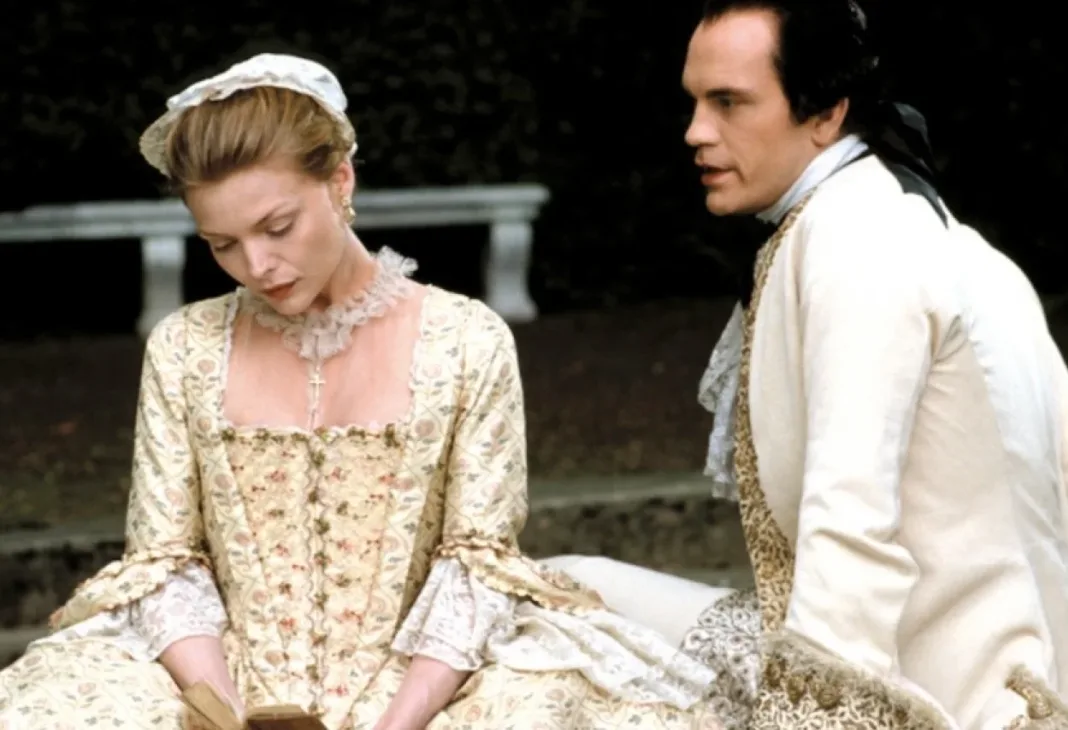
"Do you still think men love the way we do?"
Sometimes, a single line from a film brings a scene from our own lives vividly to mind. Perhaps it reminds us of someone we have forgiven countless times, a relationship we have waited to change, or a hurt we have never quite admitted to ourselves. The words of Madame de Rosemonde in Dangerous Liaisons have precisely this effect.
Rosemonde argues that men do not experience love in the same way women do. In her view, men take pleasure in their own happiness, while women find fulfillment in bringing happiness to the people they love and seeing them happy. She believes men are incapable of devoting themselves entirely to one person and that love can bring a woman more disappointment than happiness. She does not soften her conclusion: “Those who are most worthy of love are never made happy by it.”
But is that really true? Are we supposed to believe that people who love deeply are more likely to be unhappy? Or have the stories we have heard about love for so long taught us to see pain as a natural part of loving someone?
Rosemonde’s Pessimism: Does the One Who Loves Suffer More?
There is something unsettling about Rosemonde’s words. Perhaps what unsettles us is that they do not feel entirely unfamiliar.
Have you ever tried to understand someone even after they hurt you? Have you exhausted yourself searching for a reason to explain their behavior, linked their mistakes to something you might have done, or swallowed the words you wanted to say simply because you were afraid of losing them?
Perhaps you told yourself, time and time again, “If I just give it a little more time, things will get better.” You remembered their good qualities and the beautiful moments you had shared, trying to convince yourself that your disappointments were only temporary. At some point, you stopped simply loving them and began trying to understand, forgive, wait, and make up for what was missing.
This is where Rosemonde’s perspective begins to make sense. When someone places their partner’s happiness above their own, they may become more concerned with how the other person feels than with how the relationship makes them feel. Their partner’s peace of mind may begin to matter more than their own.
However, an important distinction needs to be made here: this does not mean that men are naturally unfaithful or that women are naturally more capable of love. Rosemonde’s views reflect the social conventions of the period in which the film is set, as well as a pessimistic understanding of the roles women are expected to play in relationships. Yet we can still encounter similar imbalances in relationships today. When one person gives love while the other simply benefits from it, a relationship can gradually stop being a shared source of happiness.
Perhaps the real question is not who loves more, but why some people come to believe they must give so much of themselves to be loved.
But Why Does It Have to Be This Way?
After Rosemonde expresses her views, Madame de Tourvel responds with a question that, to me, is one of the most striking moments in the scene: “But why? Why should that be?"
At first glance, this may seem like a simple objection. Yet there is much more to it. Tourvel refuses to accept the bleak reality presented to her without question. She asks why love must end in unhappiness and why being worthy of love is not enough to guarantee happiness.
Perhaps this is why her question belongs not only to a fictional character but also to anyone who has ever felt unloved in return, been betrayed, or found themselves growing increasingly lonely within a relationship.
Why am I still unhappy when I am trying so hard? Why does loving someone sometimes mean giving up parts of myself? Why am I always expected to be the more understanding one to keep a relationship alive?
Tourvel’s resistance reminds me of the moment when we begin to question what we have been taught to accept. Becoming accustomed to unhappiness is not the same as believing that unhappiness is inevitable. At some point, we may begin to recognize that what we have been enduring is not simply something we are supposed to tolerate.
Tourvel’s question also makes the more painful aspects of her story impossible to ignore. Her love for Valmont is not simply a matter of beautiful feelings; it conflicts with her beliefs, her values, and the relationship she has with herself. As her attachment to him deepens, so does her inner struggle. Sometimes, loving someone means finding ourselves caught between moving closer to that person and moving further away from who we are.
But does the fact that love causes so much pain make it any more real?
How much of Yourself Can You Give Up in order to Be Loved?
Perhaps one of the most dangerous beliefs we can hold about relationships is that true love must always come at a cost. Once we embrace this idea, we do more than endure pain; we begin to give it meaning.
We explain the behavior of someone who hurts us as part of the difficulties of love. We interpret our unmet needs as unreasonable expectations. And as we make more and more sacrifices to keep a relationship going, we may start to believe that we are becoming better partners.
Women, in particular, may be expected to be understanding, preserve their relationships, and carry the emotional burden. After an argument, it is often the same person who tries to ease the tension, resolve the problem, and understand the other person’s feelings. Arlie Russell Hochschild’s work on emotional labor offers a valuable framework for understanding how emotions are managed in response to social expectations.
Of course, making sacrifices, showing understanding, and occasionally compromising on our own wishes are natural parts of a relationship. The problem begins when these efforts stop being mutual. If you are constantly looking after your partner’s needs while feeling afraid to express your own, are you really experiencing this relationship together?
Sometimes, we become so convinced that the person we love will change one day that we overlook the unhappiness we are experiencing now. We may even fall in love with the person we believe they will eventually become. We imagine that the good days will return, enduring today’s pain in the hope of experiencing that happiness again in the future. Perhaps the possibility that everything will eventually work out begins to feel more powerful than the reality of what we are living through today.
The research of Maier and Seligman on learned helplessness explores how uncontrollable negative experiences can influence our expectations and willingness to act. This concept does not explain every unhappy relationship, but it can help us understand why people may struggle to recognize their options when they begin to believe that nothing they do will make a difference.
Still, it is important to remember that staying in a relationship is not always a sign of weakness, just as leaving is not always easy. Emotional attachments, circumstances, and fears differ from person to person. The point is not to judge anyone, but to become aware of what is happening to us while we are loving someone else.
In a way, we find ourselves somewhere between Rosemonde’s pessimism and Tourvel’s resistance. On one side, there is a voice that sees unhappiness as an inevitable part of love, treating disappointment almost as a certainty. On the other, there is a woman who refuses to accept this unhappiness and dares to ask, “Why does it have to be this way?”
Perhaps the fundamental difference between these two characters lies in the fact that one sees pain as an unavoidable truth of life, while the other attempts to question that truth.
We cannot apply Rosemonde’s beliefs to all men. Neither loyalty nor the capacity to love is determined by gender alone. Nevertheless, her words offer us an opportunity to reflect on unequal expectations in relationships and on how far some people are willing to push themselves into the background just to be loved.
Perhaps we can begin by asking ourselves a few questions: Can I be myself in this relationship? Am I heard when I express my needs? Do I constantly have to prove something to feel loved?
The answers may not always be easy to face. But sometimes, change begins not with making an immediate decision, but with questioning something we have accepted as normal for years.
Because we do not have to suffer to deserve love. Making ourselves unhappy to keep someone else happy does not prove the depth of our feelings. And we do not have to abandon our needs, our boundaries, or our happiness to make someone love us.
Perhaps the most meaningful response to Rosemonde’s pessimism lies in Tourvel’s brief question:
Why does it have to be this way?
Perhaps it does not. Perhaps the real challenge is not learning how much love can hurt us, but learning to stop treating that hurt as an unchangeable condition of being loved.
Because we can love someone else without abandoning ourselves. And perhaps the happiness we deserve most is not the hope that one day someone will come along and save us, but the realization that we never had to give up our own happiness in the first place.
Kaynakça
- Hochschild, A. R. (1983). The Managed Heart: Commercialization of Human Feeling. University of California Press. Laclos, P. C. de. (1782). Les Liaisons dangereuses.
- Maier, S. F., & Seligman, M. E. P. (2016). Learned helplessness at fifty: Insights from neuroscience. Psychological Review, 123(4), 349–367. https://doi.org/10.1037/rev0000033
- Dangerous Liaisons (1988). Directed by Stephen Frears.