
Music May Contain Hope, but What If It Never Stops? Background Music as Companion, Regulator, or Escape from Silence.

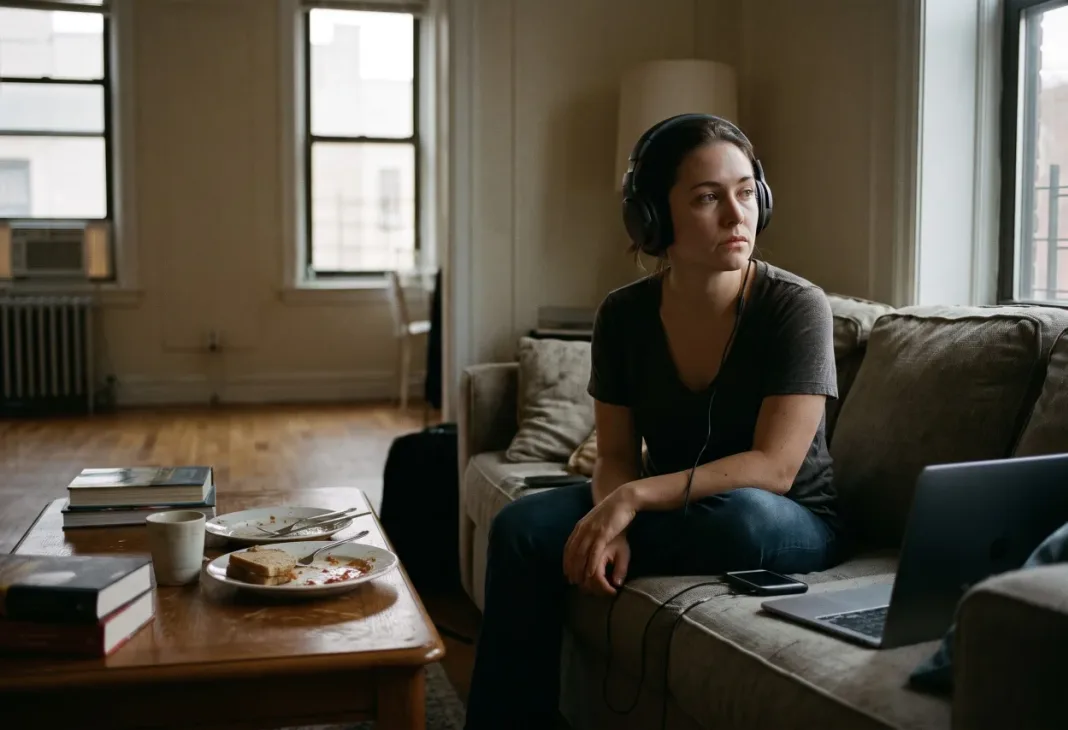
The headphones go on before the day begins and come off only when sleep finally arrives. Music plays while cooking, commuting, working, and falling asleep. It is rarely the main event; more often, it is the setting. For many people, this is simply a preference. For others, silence can feel strangely loud.
Psychology has studied deliberate music listening extensively, but continuous background listening—the kind that accompanies ordinary routines—raises a different question. What happens when music becomes more than something we listen to? When does it help us regulate our emotions, and when might it help us avoid them?
The distinction matters. Music can offer comfort, structure, and companionship without becoming a problem. Yet the same habit may serve different functions at different times. Understanding those functions may tell us more than listening duration alone.
Music as the Setting of Daily Life
Everyday music listening rarely occurs in isolation. People often encounter music while doing something else, using it to shape mood, regulate arousal, or reflect on their sense of self (Sloboda et al., 2001; North et al., 2004; Schäfer et al., 2013). In this sense, background music is not simply an aesthetic experience. It becomes part of the emotional environment in which daily life unfolds. A preregistered study of 711 adults found that music listening was associated with lower momentary stress and improved mood, although the effects were small and the observational design could not establish causality (Feneberg et al., 2023). Such findings suggest that music may accompany everyday emotional regulation, but they do not establish that continuous listening is beneficial for everyone.
The important question is therefore not whether music is good or bad for us. It is what role it plays in a particular moment.
What the Evidence Can and Cannot Tell Us
The effects of background music depend on the task and the listener. A meta-analysis found no overall effect of background music on adult performance while identifying differences across outcomes: music disrupted reading, slightly impaired memory, and improved emotional responses (Kämpfe et al., 2011). Individual differences matter, too. Introverts were more distracted by background music than extraverts in one study (Furnham & Bradley, 1997), while a small study found that steady background noise improved performance in children with ADHD (Söderlund et al., 2007). These findings do not establish that background music benefits people with ADHD generally, nor do they explain why some people prefer continuous sound. They do, however, caution against treating silence as the universally optimal environment. For some listeners, background sound may support concentration or make demanding environments easier to navigate.
Clinical research offers another perspective, although it examines a somewhat different question. A meta-analysis of controlled studies found that people felt considerably less anxious in the moment after listening to music, a large effect by conventional standards. Even the most cautious estimate in the analysis pointed to a small reduction in anxiety, while the most optimistic suggested a very large one (Harney et al., 2023). Another meta-analysis found that adding music therapy to usual care led to moderate improvements in depression and anxiety across psychiatric conditions, roughly half a standard deviation better than usual care alone, while noting methodological limitations (Lassner et al., 2025). These findings support the potential value of music-based interventions. They do not demonstrate that having music playing throughout the day produces the same benefits. Deliberate listening, structured music therapy, and continuous background sound should not be treated as interchangeable experiences.
Company, Regulation, and a Sense of Safety
Music can also function as a form of companionship. People report using it to feel less alone, regulate their moods, and create an atmosphere that suits their activities (Lonsdale & North, 2011). Adaptive uses of music have also been associated with better well-being (Groarke & Hogan, 2016). Sleep research provides a useful example of music’s potential benefits. A Cochrane review found moderate-certainty evidence that music improves subjective sleep quality in adults with insomnia symptoms (Jespersen et al., 2022). A 2024 meta-analysis also reported a moderate benefit among adults with mental health problems after excluding an outlier study, while calling for higher-quality research (Zhao et al., 2024). Music therapy has also been investigated in trauma-related conditions. A meta-analysis of nine randomized trials found lower PTSD symptom levels with music therapy than with usual care alone. However, all included trials were judged to have a high risk of bias, and the certainty of the evidence was low (Ma et al., 2024). Could predictable sound also help some people feel safer during everyday life? It is an intriguing possibility, particularly for those who experience heightened vigilance or anxiety. Yet whether continuous background music itself signals safety to a hypervigilant nervous system remains an open question, not an established clinical finding.
When the Background Becomes an Escape
Music can accompany difficult emotions, but it can also help us avoid confronting them. The distinction is not always obvious.
In a series of experiments, many participants preferred giving themselves mild electric shocks rather than sitting alone with their thoughts for a short period (Wilson et al., 2014). These experiments did not investigate music, so they cannot establish that continuous listening serves the same function. They do, however, raise a broader question: how comfortable are we when external stimulation no longer occupies our attention?
Research on everyday music use offers a more direct connection. Feneberg et al. (2023) found different associations depending on how people used music: listening for distraction was followed by higher stress and lower mood, whereas listening when stress was above a person’s usual level was followed by lower stress. These findings are observational, but they suggest that the function of listening matters. Research has also linked certain uses of music to rumination and depressive symptoms. Among young people prone to depression, listening in ways that sustain an existing mood may reinforce rumination (Garrido & Schubert, 2015; Stewart et al., 2019). Escape-oriented listening has also been associated with depression in adolescents (Miranda & Claes, 2009). These associations do not establish causality, and they should not be generalized to everyone who listens frequently. Listening to distract oneself is not inherently unhealthy. Distraction can be useful when emotions are overwhelming, when concentration is needed, or when a person simply wants a pleasant soundtrack to an ordinary day. The concern arises when a coping strategy becomes rigid, interferes with daily functioning, or feels impossible to put aside even when the person wants to.
The distinction, then, is not between listening and not listening. It is between having music available as a choice and feeling unable to do without it.
Implications for Clinical Practice and Research
Clinically, the more useful question may not be “How much music do you listen to?” but “What does music do for you?”
Practitioners might explore when listening begins, what the person experiences when the music stops, and whether background sound supports concentration, provides comfort, reduces loneliness, or helps them avoid unwanted thoughts. They might also ask whether the person can choose silence when they wish to, without assuming that difficulty doing so necessarily indicates a psychological problem. Flexibility may be a useful clinical question to explore, but it is not a validated diagnostic marker. Nor should silence automatically be treated as a therapeutic goal. For people with ADHD, sensory sensitivities, or demanding living and working environments, background sound may be a legitimate accommodation rather than a behavior that needs to change.
When listening appears to function as a persistent form of avoidance, clinicians can explore the underlying distress and consider appropriate emotion-regulation strategies. Gradually increasing tolerance for silence may be worth considering in selected cases, but this is a clinical hypothesis rather than an established intervention for continuous music listening. It should be individualized, particularly when trauma-related symptoms are present.
Research could move the field forward by distinguishing continuous background listening from deliberate, focused listening and structured music therapy. Experience-sampling studies could track listening context, emotional state, perceived purpose, and what happens when music stops. Longitudinal and experimental designs could help establish whether particular listening patterns precede changes in well-being or emerge in response to distress. Research should also examine whether these relationships differ across people with anxiety, trauma-related symptoms, ADHD, and other relevant experiences.
A Closing Thought
Music may contain hope. Sometimes it makes a difficult day more bearable, gives shape to an otherwise unstructured afternoon, or offers a sense of company when no words seem adequate. There is nothing inherently wrong with needing that. But when the soundtrack never pauses, an important question can remain unanswered: are we choosing the music because it enriches our experience, or because silence has become something we cannot bear?
The answer will not be the same for everyone, or even for the same person every day. The aim is not to romanticize silence or pathologize music, but to remain curious about the relationship between the two. Perhaps the most useful kind of freedom is not living without a soundtrack, but knowing that we can turn it on when we need it and turn it off when we are ready to listen to something else.
Kaynakça
- Chin, T., & Rickard, N. S. (2014). Emotion regulation strategy mediates both positive and negative relationships between music uses and well-being. Psychology of Music, 42(5), 692–713. https://doi.org/10.1177/0305735613489916.
- Feneberg, A. C., Stijovic, A., Forbes, P. A. G., Lamm, C., Piperno, G., Pronizius, E., Silani, G., & Nater, U. M. (2023). Perceptions of Stress and Mood Associated With Listening to Music in Daily Life During the COVID-19 Lockdown. JAMA network open, 6(1), e2250382. https://doi.org/10.1001/jamanetworkopen.2022.50382.
- Furnham, A., & Bradley, A. (1997). Music while you work: The differential distraction of background music on the cognitive test performance of introverts and extroverts. Applied Cognitive Psychology, 11(5), 445–455. https://doi.org/10.1002/(SICI)1099-0720(199710)11:5<445::AID-ACP472>3.0.CO;2-R.
- Garrido, S., & Schubert, E. (2015). Music and people with tendencies to depression. Music Perception, 32(4), 313–321. https://doi.org/10.1525/mp.2015.32.4.313.
- Groarke, J. M., & Hogan, M. J. (2016). Enhancing wellbeing: An emerging model of the adaptive functions of music listening. Psychology of Music, 44(4), 769–791. https://doi.org/10.1177/0305735615591844.
- Harney, C., Johnson, J., Bailes, F., & Havelka, J. (2023). Is music listening an effective intervention for reducing anxiety? A systematic review and meta-analysis of controlled studies. Musicae Scientiae, 27(2), 278–298. https://doi.org/10.1177/10298649211046979.
- Jespersen, K. V., Pando-Naude, V., Koenig, J., Jennum, P., & Vuust, P. (2022). Listening to music for insomnia in adults. The Cochrane database of systematic reviews, 8(8), CD010459. https://doi.org/10.1002/14651858.CD010459.pub3.
- Kämpfe, J., Sedlmeier, P., & Renkewitz, F. (2011). The impact of background music on adult listeners: A meta-analysis. Psychology of Music, 39(4), 424–448. https://doi.org/10.1177/0305735610376261.
- Lassner, A., Siafis, S., Wiese, E., Leucht, S., Metzner, S., Wagner, E., & Hasan, A. (2024). Evidence for music therapy and music medicine in psychiatry: transdiagnostic meta-review of meta-analyses. BJPsych open, 11(1), e4. https://doi.org/10.1192/bjo.2024.826.
- Lonsdale, A. J., & North, A. C. (2011). Why do we listen to music? A uses and gratifications analysis. British journal of psychology (London, England : 1953), 102(1), 108–134. https://doi.org/10.1348/000712610X506831.
- Ma, Y. M., Yuan, M. D., & Zhong, B. L. (2024). Efficacy and acceptability of music therapy for post-traumatic stress disorder: a systematic review and meta-analysis of randomized controlled trials. European journal of psychotraumatology, 15(1), 2342739. https://doi.org/10.1080/20008066.2024.2342739.
- Miranda, D., & Claes, M. (2009). Music listening, coping, peer affiliation and depression in adolescence. Psychology of Music, 37(2), 215–233. https://doi.org/10.1177/0305735608097245.
- North, A. C., Hargreaves, D. J., & Hargreaves, J. J. (2004). Uses of music in everyday life. Music Perception, 22(1), 41–77. https://doi.org/10.1525/mp.2004.22.1.41.
- Schäfer, T., Sedlmeier, P., Städtler, C., & Huron, D. (2013). The psychological functions of music listening. Frontiers in psychology, 4, 511. https://doi.org/10.3389/fpsyg.2013.00511.
- Sloboda, J. A., O'Neill, S. A., & Ivaldi, A. (2001). Functions of music in everyday life: An exploratory study using the Experience Sampling Method. Musicae Scientiae, 5(1), 9–32. https://doi.org/10.1177/102986490100500102.
- Söderlund, G., Sikström, S., & Smart, A. (2007). Listen to the noise: noise is beneficial for cognitive performance in ADHD. Journal of child psychology and psychiatry, and allied disciplines, 48(8), 840–847. https://doi.org/10.1111/j.1469-7610.2007.01749.x.
- Stewart, J., Garrido, S., Hense, C., & McFerran, K. (2019). Music Use for Mood Regulation: Self-Awareness and Conscious Listening Choices in Young People With Tendencies to Depression. Frontiers in psychology, 10, 1199. https://doi.org/10.3389/fpsyg.2019.01199.
- Wilson, T. D., Reinhard, D. A., Westgate, E. C., Gilbert, D. T., Ellerbeck, N., Hahn, C., Brown, C. L., & Shaked, A. (2014). Social psychology. Just think: the challenges of the disengaged mind. Science (New York, N.Y.), 345(6192), 75–77. https://doi.org/10.1126/science.1250830.
- Zhao, N., Lund, H. N., & Jespersen, K. V. (2024). A systematic review and meta-analysis of music interventions to improve sleep in adults with mental health problems. European psychiatry : the journal of the Association of European Psychiatrists, 67(1), e62. https://doi.org/10.1192/j.eurpsy.2024.1773.