
Living at a Different Resolution: Autoethnographic Notes on a Neurodivergent and Bodily Diverse Existence
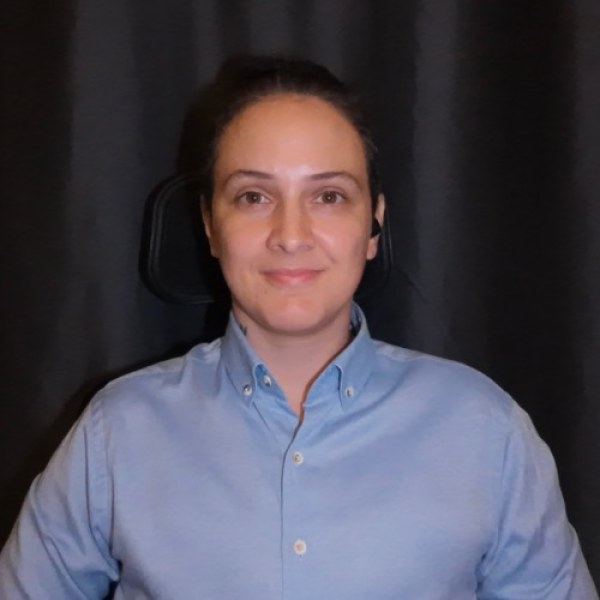
This text is not a declaration of a clinical diagnosis. I do not definitively position myself here under AuDHD or any other neurological diagnostic category. Nevertheless, within my life story, I recognize strong intersections with many patterns of experience discussed in the neurodiversity literature: intense sensory sensitivity, a detailed perception of the social world’s micro-signals, experiencing the need for justice and consistency at a bodily level, the need to withdraw in order to regulate in highly stimulating environments, and a profound cognitive interconnectedness that has persisted since childhood.
Living with a form of bodily and conscious diversity that disrupts conventional definitions of male and female—and that, although sometimes placed under the umbrella of a “third gender,” does not fully fit within any category—taught me very early how fragile normative classifications can be. The fact that my body and consciousness did not fit neatly into the gender map that society attempts to organize through rigid boundaries was not merely a biological or social condition; it was also a form of perceptual education.
As I moved through diagnoses, explanations, and medical conversations, I sometimes felt less like a subject seeking to be understood and more like a laboratory object being examined. Yet I am not a case, a sample, or an exception. I am a living existence that senses, relates, discovers meaning, recognizes its boundaries, and creates pathways through which regulation becomes possible. For this reason, throughout this text I approach concepts not as entities belonging to a Platonic realm of ideal forms, but within a nominalist framework—as tools that may help us move closer to the lived experience of body and consciousness.
Closed Circuits Formed in Childhood
In primary school, I would stare at the blackboard and wonder whether the universe was finite, and if it was, what might exist beyond its boundary. My system would operate with such intensity that at times I seemed to experience a kind of short circuit. Because of the homogenizing perceptions of the world around me, I was often misunderstood and punished for states that were interpreted as nonconformity. One day, when a teacher asked me, “Are you an alien?”, it may have seemed like nothing more than a response to a child’s absent-mindedness. Looking back today, however, I read that moment as an early indication of how average educational systems may fail to recognize certain minds’ capacities for depth, speed, and interconnectedness.
My childhood games also appear more meaningful to me now. I would push sofas together to create doors, passageways, and obstacles, collect keys, match the correct key with the correct door, and try to move through these spaces within a certain amount of time. Sometimes I would deliberately create obstacles for myself and proceed by rolling over or jumping across them. This was not merely play; it was a closed-loop system I created among body, time, space, memory, sequencing, and problem-solving. For my own nervous system, I was designing both the problem and its solution. Lego functioned in a similar way: it became a tangible space for thinking and experiencing, showing me how relationships between individual pieces could sustain an entire structure and revealing something of the vastness of creation itself.
Reading the World as Music
This kind of perception does not encounter the world only at its surface. It perceives sounds, faces, bodies, spaces, intentions, contradictions, silences, and symbols as parts of an interconnected network of meaning. This is why suggestions such as “You think too much,” “Just let it go,” or “Relax” can feel almost impossible from within. Some systems regulate themselves through the very act of making meaning.
For me, swimming in the sea is never simply a matter of entering the water. Knowing how that water came to be there, what cycles it has passed through, how it touches my body, what kind of entity I am encountering at the molecular level, and what forms of commonality exist between us does not diminish the pleasure of the experience; it deepens it. Understanding is not a form of distancing. It is a form of contact.
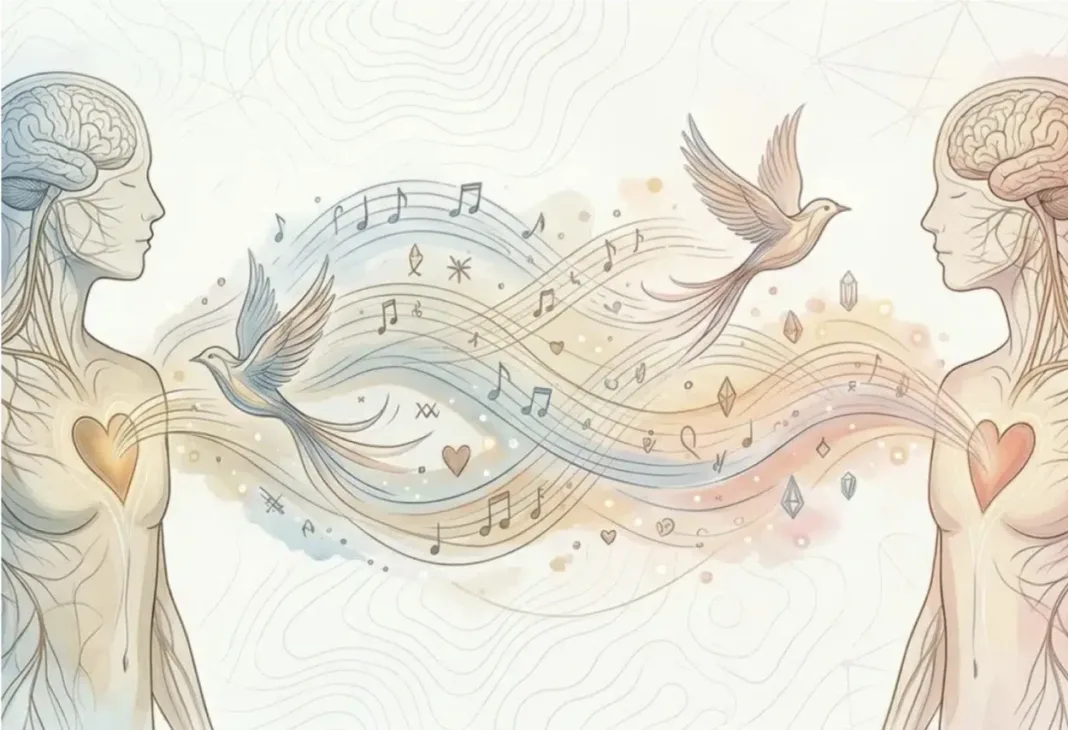
The issue is not that I choose to think excessively, but that the world reaches me as a multilayered sensory composition, almost like music. In order to hear this music without allowing it to become noise, to distinguish its elements, and to offer my own response to it, I need more space, silence, and time. I use the expression “a high-resolution system” to describe this experience. The intention is not to claim superiority, but to describe how high perceptual capacity and high sensitivity can coexist within the same system. A rapidly processing system may detect more patterns, yet it also requires rhythms that allow it to protect itself. This is vital.
Contact with Living Beings and the Rhythm of Connection
This perceptual openness also becomes apparent in my interactions with nonhuman animals and with people who require particular forms of attention and care. Body languages that do not depend on verbal explanation, rhythms, withdrawals, approaches, gazes, subtle changes in behavior, micro-expressions, and felt states often form a field that I can read quite directly. By carefully processing different modes of expression, as well as individual needs, boundaries, and emotional states, I can begin to understand them.
In this way, with a sentient being—human or nonhuman—we may discover channels of communication that are based on trust, unfold mutually, and allow for a more integrated form of contact. In my encounters with people who require greater attention, patience, and sensory subtlety, I can often observe how what remains unspoken finds expression through the body. This is not a mystical ability. It is a form of attention, experience, sensory openness, and an ethical-aesthetic curiosity, valuing, and mode of contact directed toward another being.
Intimacy is often established not through explicit sentences, but through symbols, songs, references, small bodily gestures, gazes, and touch. In some encounters, two highly sensitive or intensely activated nervous systems may both become paralyzed by the weight of directness. For this reason, connection may initially develop through an indirect, rhythmic, and low-intensity language. My system can perceive this language and often sense its subtlety.
Yet when contact suddenly becomes intense and is then completely withdrawn—when it repeatedly opens and closes—it creates a powerful bodily load within me. Both continuous stimulation and the complete removal of stimulation can place strain on my system. For this reason, safe intimacy, for me, is not built through sudden confessions or harsh forms of directness. It takes the form of an approach that is gentle and slow, yet does not sever contact entirely.
Conclusion: The Right to Translation
For me, justice is not merely a moral principle; it is a somatic alarm. When I perceive something as wrong, inconsistent, false, hierarchical, or concealed, I do not object only intellectually. My body responds as well.
Today, I can also understand the function that addictions once served in my life through this framework. Addiction should not be understood solely as a lack of willpower or a form of escape. In some life histories, addiction may represent an attempt by a nervous system—whose regulatory needs have not yet been recognized—to quiet itself, slow itself down, or temporarily withdraw from the intensity of the external world. Today, I no longer regard my need to withdraw as a malfunction, but as a protective protocol.
The point is that I now understand what it means to be an “alien.” What may appear as foreignness from the outside may, from within, be another perceptual order, another rhythm, another resolution.
This text is not a request for diagnosis, a claim of superiority, or a narrative of victimhood. It is an attempt at translation—one that reminds us that the living body and consciousness come before the concepts used to describe them. Neurodivergence, bodily diversity, regulation, justice, connection, and the search for meaning are not separate themes here; they are different layers of the same organism. The issue is the right of a system that perceives the world at a different resolution to translate itself into that world.
I wrote this text with the hope that it may open even a small space for singular forms of existence that extend beyond supposedly normal and homogenizing systems: a space in which they can explore their own rhythms, protect their boundaries, honor their ways of connecting, and share their maps of meaning with the world.
As we come to know ourselves and one another more deeply, the divides between being together and being alone begin to blur, opening the way for meaningful exchanges, productions, creations, and experiences.
Kaynakça
- Akmaner, E. A. (n.d.). Ejderhane: Personal/professional creative platform. https://ejderhane.com
- Frankl, V. E. (2006). Man’s search for meaning. Beacon Press. United Nations Free & Equal. (n.d.). Intersex people. United Nations Human Rights Office. https://unfe.org
- Walker, N. (2021). Neuroqueer heresies: Notes on the neurodiversity paradigm, autistic empowerment, and postnormal possibilities. Autonomous Press.