
Why Do We Hate “Almost Human” Faces?

Introduction
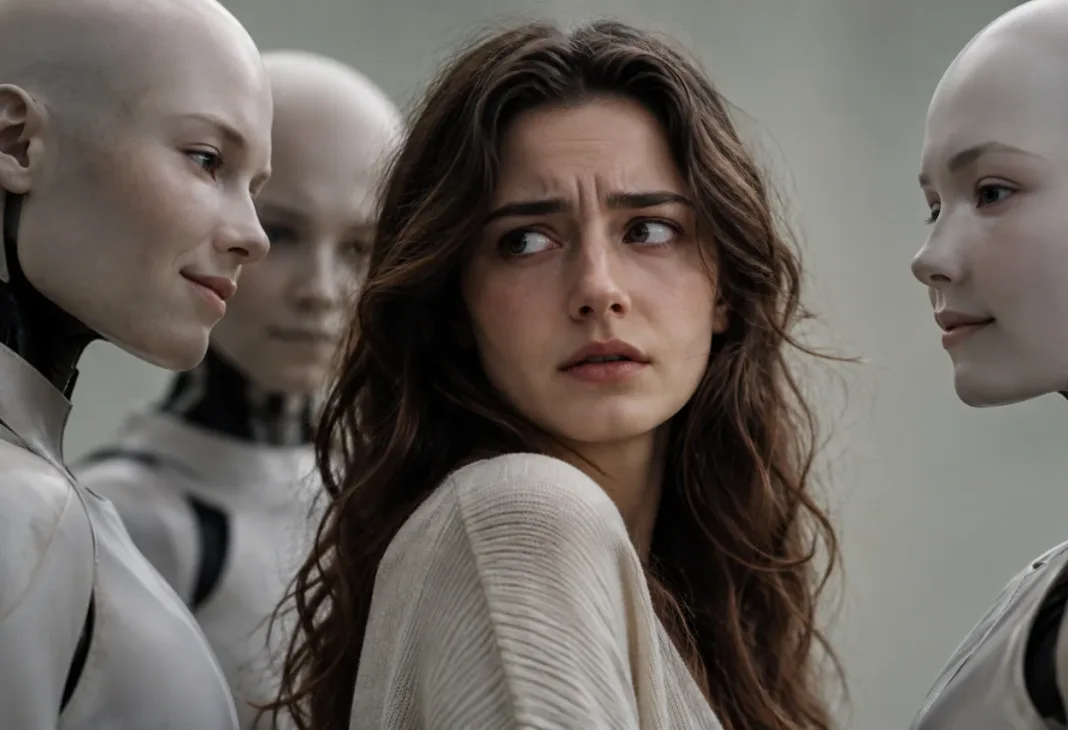
Have you ever seen a lifelike robot or a toy and got creeped out just by the sight of it? If yes, what you felt is a strange phenomenon called the “uncanny valley effect,” which is a huge topic of debate in psychology. This article explains the phenomenon, asks whether it really exists, and looks at the main ideas about why it happens.
What is the Uncanny Valley?
In 1970, the Japanese roboticist Masahiro Mori proposed the “uncanny valley hypothesis” (Wang et al., 2015). He had noticed that near-human artifacts can cause strong negative emotions in the person looking at them (Moore, 2012). His example was a prosthetic hand: it can trigger feelings of eeriness and repulsion, while a real human hand or a simple mechanical hand does not (Moore, 2012). He also suggested that the effect can be stronger when the object is moving compared to when it’s still (Moore, 2012). Mori compared the pattern to climbing a mountain, where the path to the top includes hills and valleys along the way. He wrote that as robots appear more human-like, our sense of their familiarity increases until we come to a valley (Wang et al., 2015). In other words, familiarity rises as a robot looks more like a person, until it abruptly drops into strong repulsion. If the resemblance to a person keeps increasing, the feeling rises again and eventually reaches the level of a real person (Wang et al., 2015).
Is the Valley Real?
Researchers are still debating the valley to this day. Some studies have found the dip, while others have failed to detect it, and Wang et al. (2015) concluded that existing evidence neither completely refutes nor proves the hypothesis. They pointed to three reasons for the inconsistent findings: likability, human-likeness, and the ambiguity of the shape of the curve. They argue that likability, the thing being measured, has lacked a consistent definition and a valid way of measuring it, human-likeness is a multifaceted idea that is hard to define and manipulate systematically, and also the fact that Mori's hypothesis does not specify the shape of the curve in advance, which leaves the interpretation of results open to researchers' biases (Wang et al., 2015). A more recent review was more supportive, on the other hand. Casas Arias (2025) examined 34 articles that used psychological and brain-imaging methods and concluded that the uncanny valley is a genuine, measurable effect. However, the review added that it’s not triggered by every kind of change in human likeness, nor by any single factor. Diel and Lewis (2024) also describe the effect as well replicated, but they question whether the classic N-shaped curve is the simplest way to describe it, because complex curves of that kind are unusual in nature.
What Happens in the Brain?
According to Casas Arias (2025), brain studies show that real and artificial faces are handled by similar processes. A face triggers an early brain signal about 170 milliseconds after it appears, and a brain region specialized for recognizing faces responds to artificial faces too. But artificial faces are processed less smoothly. The review reports that they need more time for the brain to adapt, that lifelike artificial faces triggered weaker brain responses than real faces, and that people were slower to classify faces near the border between real and artificial. This extra mental effort often brings an emotional response of rejection. The brain appears to keep predicting what it will see, and when those predictions fail, it generates an alert response (Casas Arias, 2025).
Why Might "Almost Human" Feel Wrong?
Researchers have proposed several explanations, and none is settled. Moore (2012) proposed that we judge whether something is human using many cues at once, such as facial features and eye movements. When the cues disagree, the conflict creates "perceptual tension," which may be felt as discomfort. A robot might look fully human from its face, for instance, but slightly odd eye movements could leave us unsure what it is. Casas Arias (2025) describes a related idea: a human face paired with a robotic voice can create a sense of mismatch. Not knowing what the thing actually is is another explanation. When something sits on the border between “human” and “not human,” the uncertainty may cause discomfort and rejection (Casas Arias, 2025). Wang et al. (2015), however, reviewed studies testing this idea and found conflicting results. Diel and Lewis (2024) brought another explanation to the table. They argue that our brains are highly specialized for human faces, so small flaws in realistic faces stand out, while a wide range of robot face designs can be acceptable. They tested 120 psychology students with five types of faces (real, cartoon, drawing, computer-generated, and robot), each distorted in steps by changing the eye spacing and mouth position. A memory test with upright and upside-down faces measured how specialized people were for each face type. Distortions made faces seem eerier, and more so for face types with stronger specialization. This explanation fit the ratings better than the classic valley curve (Diel & Lewis, 2024). There are some other explanations that come from evolution as well. Imperfections in a human-like replica might look like signs of disease and trigger disgust; the replica might remind us of our own death, or it might simply be unattractive. Wang et al. (2015) noted that these ideas have yet to be adequately tested. Casas Arias (2025) also describes a danger-avoidance response, which appears stronger for angry expressions, along with fear of new technology, rejection of the unfamiliar, and the unsettling sense of a mind where there may not be one. Wang et al. (2015) also proposed their own explanation, which they call the “dehumanization hypothesis.” They suggest that we first treat a very lifelike copy as a real person. Then any feature that reveals its machine nature, including its eyes, emotional expressions, voice, or movements, can make us question whether it has human-like qualities such as emotions and warmth. We then see it as a dehumanized, “robot-like” human, and that produces the uncanny feeling. The authors present this as a hypothesis that still needs testing.
Can the Uncanny Valley Effect Be Avoided?
Mori's advice, as described by Casas Arias (2025), was to aim for the first peak of the curve: a less humanlike design that keeps familiarity high, rather than risking the drop by trying to imitate humans perfectly. Diel and Lewis (2024) similarly suggest that more cartoonish designs may reduce the specialized processing that makes flaws stand out. They also warn that odd movement or behavior can feel uncanny even when a character's appearance is acceptable. In one study described by Casas Arias (2025), avatars that first seemed disturbing became more acceptable when people interacted with them in real time.
Conclusion
The unease caused by “almost human” faces has been studied for decades (Diel & Lewis, 2024), yet researchers still don’t know the best way to describe it. Wang et al. (2015) found the evidence mixed and open to debate, while Casas Arias (2025) reported broad support for a genuine, measurable effect with no single cause or universal trigger. The explanations on offer include conflicting cues (Moore, 2012), difficulty deciding whether a face is human (Casas Arias, 2025), our brains' specialization for human faces (Diel & Lewis, 2024), and the dehumanization of a lifelike replica (Wang et al., 2015). Wang et al. (2015) also separate the uncanny feeling from the valley model. The feeling is a psychological question, while the valley hypothesis raises an engineering problem, and an uncanny reaction does not by itself prove that the valley exists. In short, human-like faces can make observers uneasy, and researchers are still working out exactly why.
Kaynakça
- Wang, S., Lilienfeld, S. O., & Rochat, P. (2015). The uncanny valley: Existence and explanations. Review of General Psychology, 19(4), 393-407. https://doi.org/10.1037/gpr0000056
- Moore, R. K. (2012). A Bayesian explanation of the "uncanny valley" effect and related psychological phenomena. Scientific Reports, 2, 864. https://doi.org/10.1038/srep00864
- Diel, A., & Lewis, M. (2024). Rethinking the uncanny valley as a moderated linear function: Perceptual specialization increases the uncanniness of facial distortions. Computers in Human Behavior, 157, 108254. https://doi.org/10.1016/j.chb.2024.108254
- Casas Arias, M. (2025). Review of the psychological and neural evidence concerning the uncanny valley theory. Street Art & Urban Creativity, 11(5), 15-31. https://doi.org/10.62161/sauc.v11.5838