
The Chair Where No One Sits Anymore

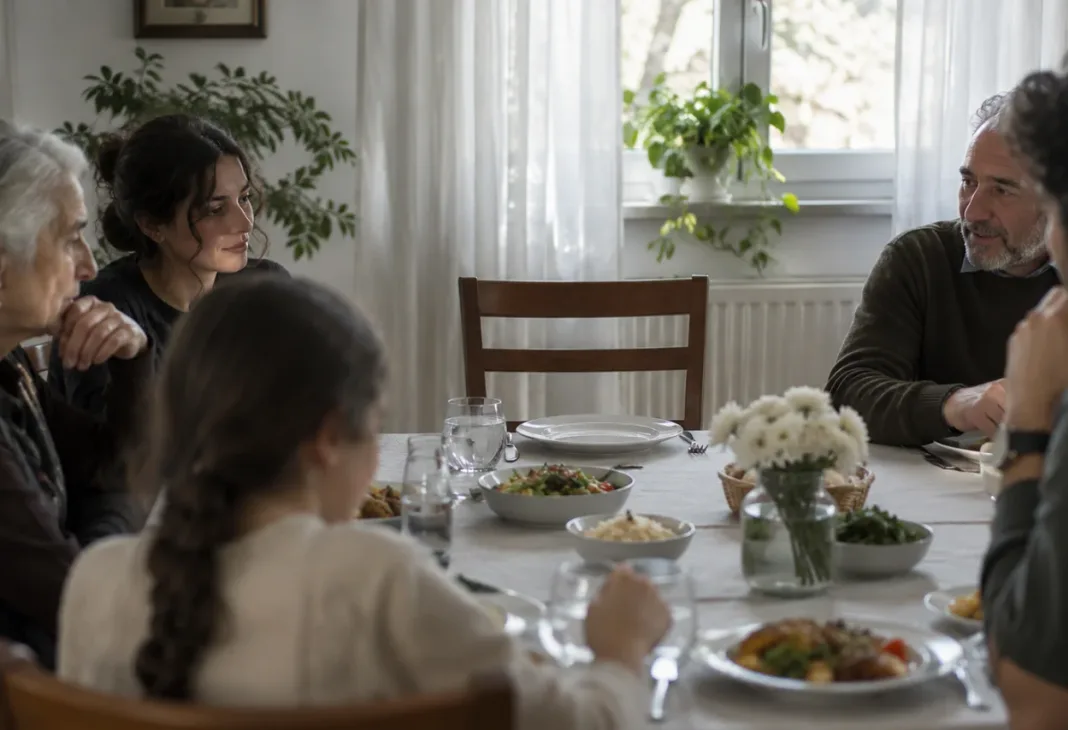
Some empty spaces are larger than the places they occupy. Around the table, the chairs are in their usual places, the plates are arranged in the same order, and conversations continue as always. Everything is as it should be; only a few chairs and a few plates remain empty. No one sits there or pulls them closer to the table. As life continues to flow, our eyes sometimes wander there involuntarily. Some absences become tangible "things" that can no longer be seen. Just because someone no longer sits in that chair does not mean they have completely disappeared from our lives.
Human relationships are not merely a collection of moments spent together. As time passes, we become part of each other's daily lives, habits, and even thoughts. The things we know they would like, the phone calls in which we expect to hear their voice, and the stories we save to tell them become ordinary parts of our everyday lives. Over time, these habits become so deeply rooted that we no longer need to see someone to feel their presence. Simply knowing they are there becomes enough.
However, when this familiar order changes one day, what remains is not only the absence of that person. The habits we built together, the memories we collected, and the dreams we unconsciously formed about the future are also affected. Sometimes, this is precisely why we struggle to describe what we miss or what we want. Because what is missing is more than just a person; it is also a part of the life that took shape around them.
The Traces of Absence in Everyday Life
The experience of "loss" is often associated with overwhelming emotions that are difficult to cope with. Intense longing, deep sadness, or a lump in the throat... Yet, the moments when loss becomes most noticeable are sometimes remarkably ordinary, everyday moments. Coming across a familiar product at the supermarket, reaching for the phone after receiving good news, or hearing the first notes of a song we used to listen to together.
All these small moments also reveal how our minds internalize relationships. The people close to us are not merely individuals we interact with in the outside world; they are also part of our minds, emotional worlds, and expectations. The representations we hold of them in our minds continue to influence us and our behavior, even when they are not physically beside us.
From the perspective of attachment theory, close human relationships play a significant role in the development of feelings of security and continuity. Becoming accustomed to someone's presence does not simply mean spending time with them; it also means developing the expectation that we can reach them whenever we want or need to. When these expectations change irreversibly, our familiar sense of security and our perception of continuity in everyday life may be disrupted.
Perhaps this is why empty chairs attract more attention than others. Because a person remembers not only the chair where someone once sat, but also the sense of security and familiarity that place once brought them.
Does a Bond Really End?
For a long time, the healthy experience of grief was associated with gradually leaving behind the emotional bonds formed with the person who was lost. However, contemporary approaches reveal that this process does not always unfold in this way.
According to the Continuing Bonds approach, people may maintain their psychological relationships with individuals who are no longer physically present in their lives in different ways. This bond sometimes reveals itself in a memory, sometimes in our everyday inner conversations, or in the questions we ask ourselves while making ordinary decisions: "What would they do if they were here? What would they say?"
This does not necessarily mean being stuck in the past. On the contrary, allowing the relationship with that person to take on a new meaning and form may be a meaningful and less difficult way for some individuals to adapt to a changing life.
Preparing a meal someone loved, continuing a gesture they taught us, or keeping something associated with that person in our lives can build strong, invisible bridges between our past and present. In this way, even if the relationship no longer continues in its original form, it continues to contribute to the person's life story and find a place of its own.
However, this experience may not be the same for everyone. While some people feel comfort when recalling memories, for others, those memories bring pain. Just as there is no single correct way to experience this concept, there are different valid ways of maintaining a bond for each individual.
As Life Goes On
Perhaps what is not easy is the fact that life does not lose its own rhythm despite changing circumstances. Tasks pile up, days pass, new people enter our lives, and new memories are formed. Ordinary tasks that initially seem almost impossible gradually begin to feel manageable again.
However, it is important to remember that returning to normal life does not mean that the past has lost its significance.
The Dual Process Model, developed by Schut and Stroebe, explains that coping with grief may involve a continuous movement between focusing on the loss and adapting to changing life circumstances. On some days, individuals may feel more attached to their memories, while on others, they may turn toward their everyday lives, new experiences, and the future.
These two tendencies are not opposites. A person can both long for a bond from the past and have new experiences in the present. Being able to laugh again, create new memories, or feel less sad on certain days does not mean that the love felt for someone from the past has diminished.
Still, people may sometimes experience guilt or feel as though they are doing something unfair because of these behaviors. They may confuse the easing of pain with forgetting, or continuing with life with leaving someone behind. Yet, the transformation of emotions over time does not diminish the value of memories that have been lived. The importance of a relationship cannot be measured by how long or how intensely sadness is felt after it ends.
The Chair Is Still There
Over time, some things in life change. The painful emptiness that once constantly caught our attention may become a quiet part of everyday life. Remembering and recalling may not always hurt with the same intensity. Sometimes longing may be accompanied by tenderness, and sometimes sadness by gratitude.
But it is not only our emotions that change. We also learn that someone who was once at the center of our lives, or simply part of them, now occupies a different place in our lives. We may remember them in an old photograph, a familiar voice, a dessert we eat, or even a completely unrelated memory.
Perhaps we are not obligated to leave certain people behind. We can reinterpret the bond we formed with them within the life we are living now. Not every empty space needs to be filled; some remind us how much of our lives was once filled with love.
Perhaps, over time, people learn to live without looking at the empty chair. But every time they sit at the table, they continue to know who once sat there and what memories they shared.
Kaynakça
- Bowlby, J. (1980). Attachment and loss: Vol. 3. Loss: Sadness and depression. Basic Books.
- Klass, D., Silverman, P. R., & Nickman, S. L. (Eds.). (1996). Continuing bonds: New understandings of grief. Taylor & Francis.
- Stroebe, M., & Schut, H. (1999). The dual process model of coping with bereavement: Rationale and description. Death Studies, 23(3), 197–224. https://doi.org/10.1080/074811899201046