
The Uncanny: Creepy Perspectives from Freud

Its German equivalent is das Unheimliche, meaning the return of the familiar after being repressed in the unconscious. Heimlich means ‘home, familiar, and safe,’ while its negative meaning, unheimlich, is translated into English as ‘uncanny,’ meaning ‘not at home,’ causing insecurity.
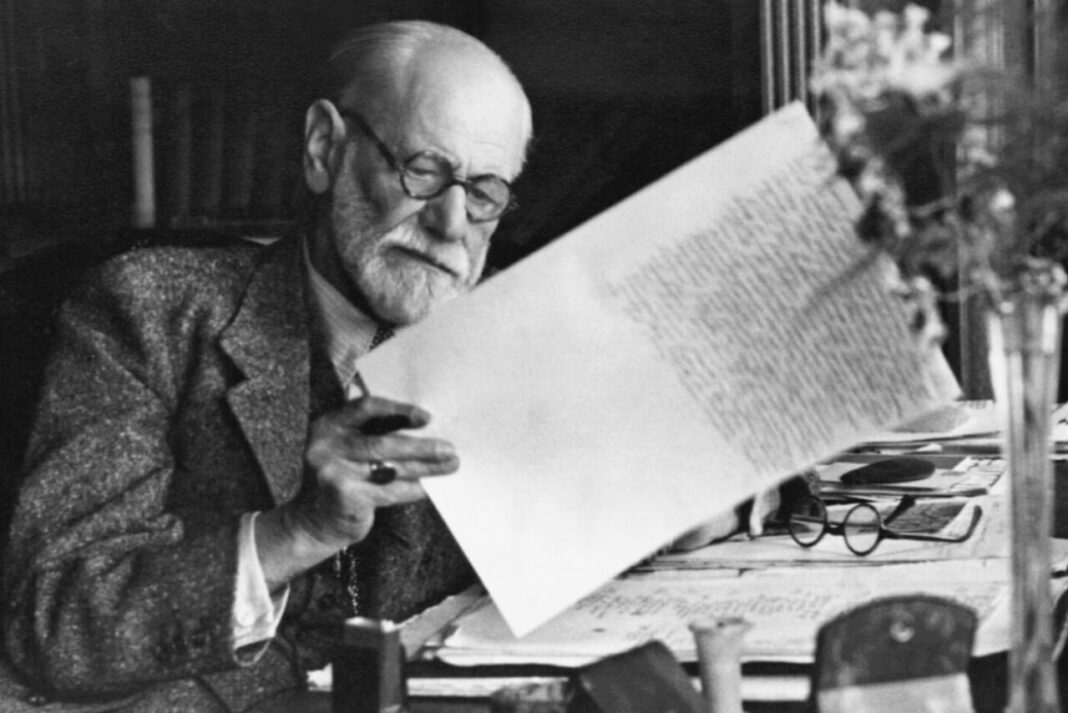
As Sigmund Freud explained in his article titled Uncanny and as the meanings of the word show us, uncanny is the repression of things that were previously familiar and safe to us, and become unsafe and foreign to us. This awakens a certain feeling of uncanniness in us. This disturbing feeling is encountered in many places in our lives.
Let’s talk about this term in more detail.
As Freud also stated in his article, what seems uncanny to us is something repressed. It is the emergence of a notion that we do not want to encounter, that we have buried in our unconscious. This frightens us and makes us feel insecure.
Freud used Hoffmann’s story The Sandman in his article to better explain this concept. Like this story, it is used as an element of fear in areas such as literature, art, and cinema. As Freud described, we can see this concept as the return of the familiar and the alienated, when the boundaries between reality and fantasy are blurred, or in threats to bodily integrity.
Let’s think of an example scene:
For example, imagine waking up one morning feeling sleepy, going to the sink, washing your face, and looking in the mirror: WOW, and instead of seeing a tired and sleepy face, your reflection is smiling at you. This can be shown as a threat to the integrity of the body.
Or you make eye contact with a doll. It winks at you, everyone thinks you’re crazy, but when you’re the only one looking, the doll continues to wink. You can’t be sure if it’s real or a dream.
Or you’re sitting at home, but you’re alone and the power has gone out. Your own home, the home you’ve lived in until now, starts to feel scary to you. The situation reveals all the fears you’ve suppressed about home.
So, in what other artistic themes can the concept of the uncanny be used?
Mirrors are used especially because they pose a threat to the integrity of the self. For example, we come across them a lot in the movie Black Swan and in literary works such as Alice in Wonderland.
The theme of twinship is also frequently used because it is related to bodily integrity. Therefore, shapeshifting creatures may have contributed to its inclusion in the horror category. For example, creatures such as the Shapeshifter in the TV series Supernatural can be given as an example.
Puppets and dolls, human-like objects, push us to wander on the line between reality and fantasy. This is also used in many works. Horror films such as Chucky, Annabelle, and the automatons in Hoffmann’s Sandman story that we mentioned earlier.
Displacement and loss of identity are also used a lot on this theme. We can think of movies such as Fight Club and Memento at this point.
The Others and the Uncanny
Alejandro Amenábar’s 2001 film The Others is a good example for us to examine the concept of the uncanny. Nicole Kidman, who plays the leading role as Grace, is a woman who sent her husband to World War II and lives in a huge mansion with her two children in the English countryside.
A classic(!) haunted house story is presented to us after the servants suddenly disappear and the new servants start working…
When we look at it from the perspective of the alienation of the familiar, the fact that the house where Grace and her children have been staying for a long time and felt safe has become a frightening place for them is a complete example of the uncanny. Objects moving, voices coming from the walls… Even Grace’s children start to feel alienated from her from time to time.
Believing these are real or not naturally leads to questioning reality. Was Grace’s cursed house real or were these games her mind playing? Sensing a presence but not being able to see it, not being sure, is exactly an example of uncanniness.
The rest contains spoilers!
We see Grace’s excessive obsession with religion and discipline throughout the film. The rules she imposes on her children are the source of conflict between her and her children throughout the film. Grace, who is also very religious, tries to raise her children with this understanding. This obsession can often reach a level that makes us uncomfortable while watching the film. Here, we actually witness the return of something repressed. This repressed is actually repressed by us throughout the film (not shown). What is repressed here is actually Grace’s guilt, and Grace escapes from this guilt thanks to religion.
So what is her guilt?
Drowning her children and committing suicide when she realized that her husband would not return from the war. Yes, they were actually the ghosts from the beginning. The entities they sense at home are the people they frighten. The objects of the uncanny are actually Grace and her children.
What these characters, who are unaware that they are dead, repress is death.
References
Freud, S. (1919). Das Unheimliche. Imago, 5(5–6), 297–324.