


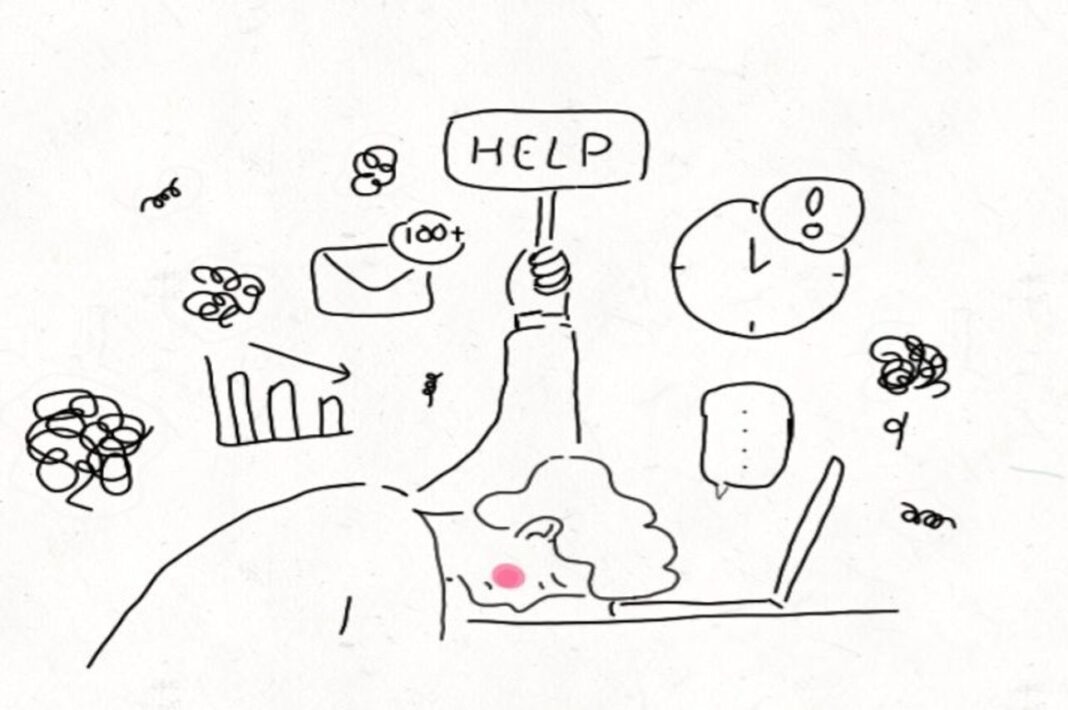

Anxiety is a natural and evolutionarily adaptive emotional response that individuals develop in reaction to perceived threat. Under normal conditions, it enables the individual to remain prepared for potential dangers and serves a vital function for survival. However, when this response occurs in the absence of an actual threat, or when it becomes excessively intense and persistent, it may develop into a clinical problem (American Psychiatric Association, 2013). In the clinical psychology literature, anxiety is conceptualized as a multidimensional construct explained by the interaction of both cognitive and physiological systems (David H. Barlow, 2002).
Biological Foundations Of Anxiety
During anxiety, the organism activates the “fight-or-flight” response. This response is mediated by the sympathetic nervous system and prepares the body for rapid action. Increased heart rate, accelerated respiration, muscle tension, and sweating are among the primary physiological manifestations of this process (Cannon, 1932).
The purpose of this system is to prepare the organism for survival in the face of a threat. However, when this mechanism is continuously activated, it may lead to chronic stress and anxiety disorders. In particular, the overactivation of the hypothalamic–pituitary–adrenal (HPA) axis results in prolonged elevation of stress hormones (such as cortisol), which negatively affects both physical and psychological health (McEwen, 2007).
Brain Structures and Anxiety
In anxiety processes, the amygdala and the prefrontal cortex play crucial roles. The amygdala is responsible for the rapid evaluation of perceived threats and functions as an “alarm system” (LeDoux, 2000). The prefrontal cortex, on the other hand, is involved in regulating these responses and enabling rational evaluation.
In anxiety disorders, the amygdala becomes hyperactive, while the regulatory influence of the prefrontal cortex weakens. This imbalance leads individuals to perceive threats even in the absence of actual danger (Rauch et al., 2006). Such neurobiological dysregulation is considered one of the fundamental mechanisms underlying clinical anxiety.
Anxiety In Daily Life
Anxiety is a commonly experienced phenomenon in everyday life. For example, stomach discomfort before an exam, heart palpitations during public speaking, or feelings of uncertainty about the future are typical examples of normal anxiety responses. These reactions are considered adaptive when they are short-lived and appropriate to the situation (Barlow, 2002).
However, when these responses become persistent, intensify, and impair an individual’s functioning, they may become pathological. Avoidance behaviors, social isolation, and a constant state of worry are key indicators of clinical anxiety (American Psychiatric Association, 2013).
Clinical Anxiety Disorders
At the clinical level, anxiety disorders are characterized by a disconnection between perceived threat and objective reality. Major anxiety disorders include generalized anxiety disorder, panic disorder, and social anxiety disorder (American Psychiatric Association, 2013).
In generalized anxiety disorder, individuals experience excessive and uncontrollable worry about everyday events. Panic disorder is characterized by sudden and intense episodes of fear (panic attacks). Social anxiety disorder involves a marked fear of being evaluated in social situations. These disorders are based on both biological predispositions and learned cognitive processes (Barlow, 2002).
Conclusion
Anxiety is a complex process grounded in both biological and psychological mechanisms. Although it serves an adaptive function under normal conditions, it can develop into clinical disorders when it becomes excessive and uncontrollable. The imbalance between the amygdala and the prefrontal cortex constitutes the neurobiological basis of this process. From a clinical psychology perspective, understanding anxiety is critical for the development of both preventive and therapeutic interventions.
References
-
American Psychiatric Association. (2013). Diagnostic and statistical manual of mental disorders (5th ed.). American Psychiatric Publishing.
-
Barlow, D. H. (2002). Anxiety and its disorders: The nature and treatment of anxiety and panic (2nd ed.). Guilford Press.
-
Cannon, W. B. (1932). The wisdom of the body. W. W. Norton.
-
LeDoux, J. (2000). Emotion circuits in the brain. Annual Review of Neuroscience, 23, 155–184. https://doi.org/10.1146/annurev.neuro.23.1.155
-
McEwen, B. S. (2007). Physiology and neurobiology of stress and adaptation. Physiological Reviews, 87(3), 873–904. https://doi.org/10.1152/physrev.00041.2006
-
Rauch, S. L., Shin, L. M., & Phelps, E. A. (2006). Neurocircuitry models of posttraumatic stress disorder and extinction. Biological Psychiatry, 60(4), 376–382. https://doi.org/10.1016/j.biopsych.2006.06.004