
Can We Feel Too Much Until We Feel Nothing?
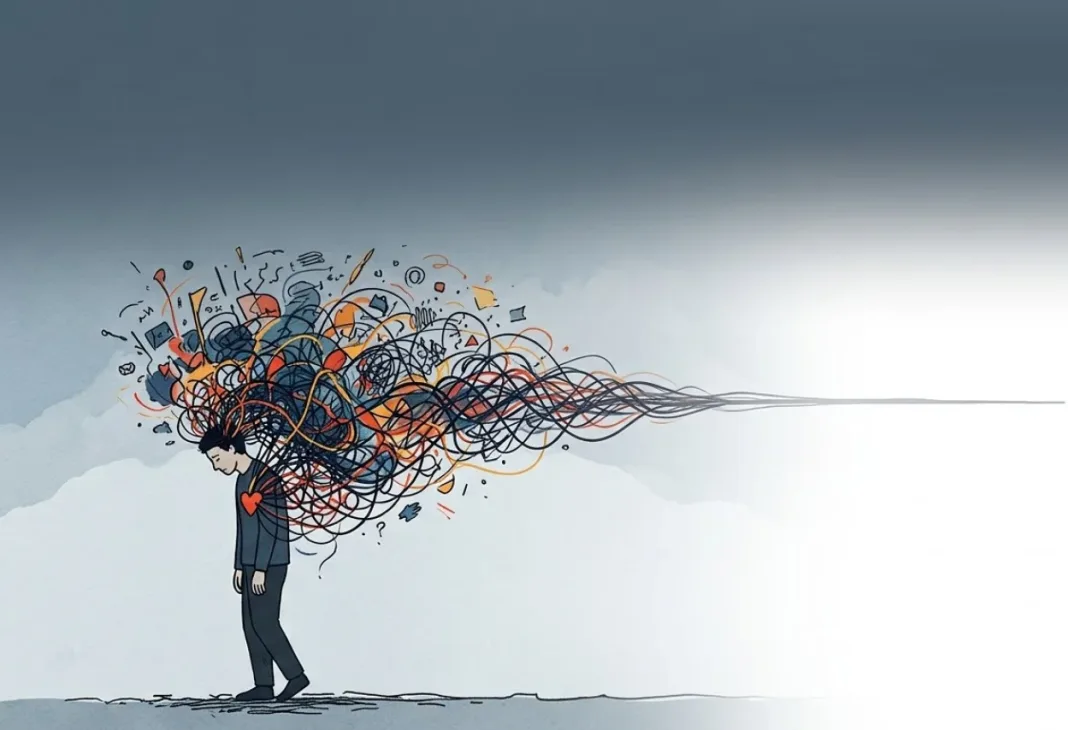
Have you ever felt so tired of your emotions that you just wanted to stop feeling anything? Sometimes, we experience so many things at the same time that even our own feelings become difficult to understand. We may care about someone, but feel too tired to show it. We may want to cry, but find ourselves unable to do so. And sometimes, we simply stop reacting to things that once meant a lot to us.
But why does this happen? Can a person really feel so much that they eventually feel nothing?
I think one of the most interesting things about human emotions is how much they can change over time. A situation that once made us extremely happy may not have the same effect on us anymore. Someone we used to miss every day may slowly become a person we no longer think about as much. This does not always happen because we stop caring. Sometimes, we simply become emotionally tired.
When Emotions Become Too Much
Think about how exhausting it can be to constantly worry about something. You think about it during the day, before sleeping, and even when you are trying to enjoy yourself. At first, you may try to understand your feelings and solve the problem. But when the same emotions continue for a long time, dealing with them can become exhausting.
Psychologists use the term emotional exhaustion to describe a state in which a person feels emotionally drained. It is often connected to long periods of stress and situations that require too much emotional energy (Gonçalves & Matos, 2025). In simple words, sometimes we do not become tired because we feel nothing, but because we have been feeling too much for too long.
This makes me think about how often people expect themselves to stay emotionally strong. We try to understand everyone, forgive things that hurt us, and continue our daily lives as if nothing happened. But emotions also need time and space. We cannot always expect ourselves to feel everything deeply and still be okay.
When We Start Feeling Less
One day, you may notice that something which used to upset you no longer affects you in the same way. Maybe you do not get as angry as before, or maybe you no longer feel the need to explain yourself. At first, this change can feel strange. You might even wonder whether you have become a different person.
This experience can sometimes be related to emotional numbness, which refers to feeling emotionally disconnected or experiencing emotions less intensely. However, it is important to remember that not every change in our feelings means emotional numbness. Sometimes, we simply become more comfortable with situations that once felt difficult.
Still, I think there is an interesting question here: What happens when we spend so much time trying to protect ourselves from emotional pain that we also become distant from the things that make us happy?
Research on emotional exhaustion and burnout shows that prolonged stress can affect not only our energy but also the way we relate to our surroundings and other people (van de Leur et al., 2024). This is why emotional exhaustion should not always be understood as simple tiredness. It can influence how we experience everyday life.
Does Feeling Less Mean Caring Less?
I think this is one of the most confusing parts of human relationships. When someone becomes quieter, less emotional, or less interested in discussing problems, we may immediately think that their feelings have changed.
But feelings are not always that easy to understand.
Sometimes, a person may still care but no longer have the emotional energy to express it in the same way. Other times, emotional distance may actually be a sign that their feelings or needs have changed. These two situations can look very similar from the outside, even though their meanings are different.
This is why I believe we should be careful about judging emotions only through behavior. A person who does not react the way they used to may be experiencing something we cannot see. At the same time, emotional exhaustion should not be used to explain every distance or every change in a relationship. Understanding what is happening requires time, communication, and honesty.
Maybe We Do Not Need to Feel More
We often think that feeling deeply is always a good thing. We want to love more, care more, and understand everything. But perhaps there are moments when what we really need is not to feel more, but to understand what we are already feeling.
Maybe we need to stop asking ourselves why we are no longer the same and start asking what made us feel so tired in the first place.
Because sometimes, the answer is not that we have lost our emotions. Maybe we have simply spent too much energy trying to carry them.
And perhaps the most important thing is learning that we do not have to ignore our feelings to protect ourselves. We can listen to them, understand them, and give ourselves time to recover.
After all, being human does not mean feeling everything all the time. Sometimes, it also means knowing when we need a little emotional rest.
Kaynakça
- Gonçalves, S. D., & Matos, R. S. (2025). Understanding emotional fatigue: A systematic review of causes, consequences, and coping strategies. Enfermería Clínica (English Edition), 35(5), 502190. https://doi.org/10.1016/j.enfcle.2025.502190  van de Leur, J. C., Jovicic, F., Åhslund, A., McCracken, L. M., & Buhrman, M. (2024). Psychological treatment of exhaustion due to persistent non-traumatic stress: A scoping review. International Journal of Behavioral Medicine, 31, 175–191. https://doi.org/10.1007/s12529-023-10185-y