
The Hidden Psychological Cost of Animal Research

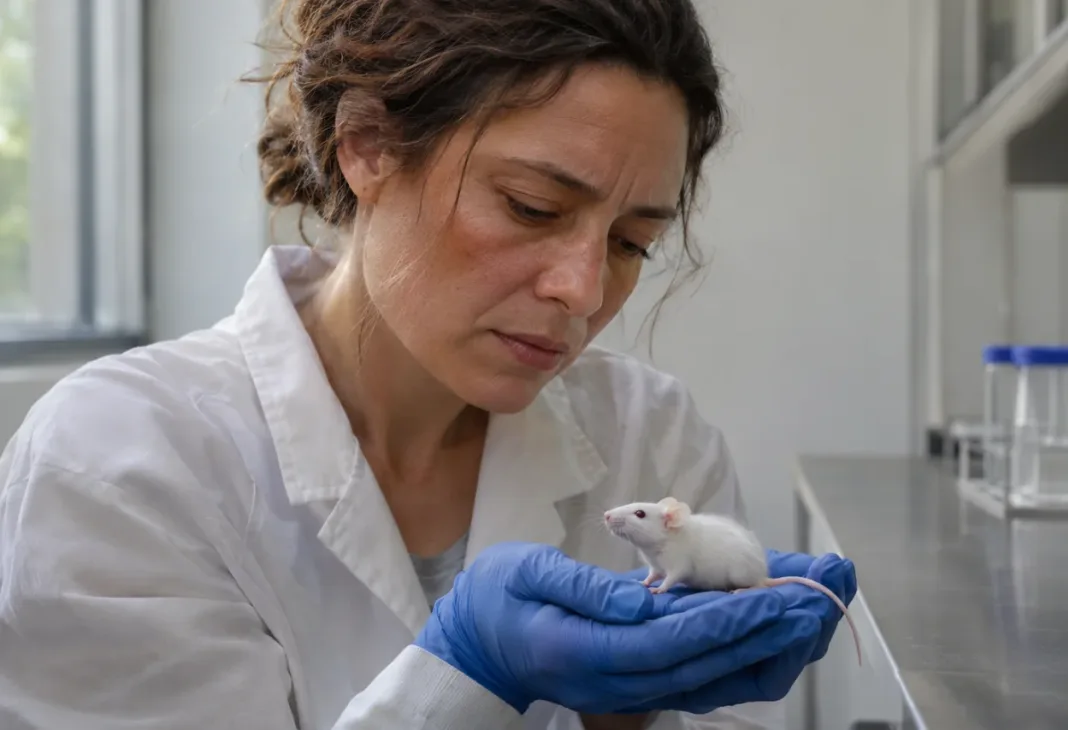
Have you ever wondered whether some of the emotional exhaustion or unease you experience at work could be connected to performing experiments on animals?
A person can learn to euthanize an animal with technical precision and still struggle with having done it. A procedure may be authorized, carefully performed, and scientifically justified in their eyes. None of these things guarantees an uncomplicated emotional experience. Professional competence can coexist with grief, guilt, and uncertainty.
The gap between practical training and emotional preparation is measurable. In a 2026 survey of 339 laboratory animal professionals, 69% felt technically well trained for euthanasia, but only 23% felt emotionally prepared. Fifty-seven percent reported negative mental health effects from participating. These voluntary survey findings cannot represent the whole profession, but they identify a problem that technical instruction alone cannot resolve (Kogan & Niemiec, 2026).
The burden extends beyond scientists. Technicians, veterinary staff, and caretakers may know animals individually while having limited authority over their fate. Researchers describe a caring–killing paradox: the person protecting an animal’s comfort may later end its life. Experimental harm can also involve inducing illness or observing deterioration. The difficulty arises partly from having to act against an enduring commitment to care (Milford et al., 2026).
A survey of 309 laboratory animal veterinarians and veterinary technicians illustrates this conflict. Participants strongly supported both animal welfare and animal research, yet reported frustration when protocols prevented treatment or required illness as part of the model. Ethical discomfort can therefore arise within a committed scientific identity (Engel et al., 2020).
The meaning of a death matters. Relieving suffering, collecting tissue, and killing healthy animals because a project cannot continue may carry different emotional meanings. During COVID-19, laboratory personnel described guilt, depression, anxiety, and a sense of betraying animals whose anticipated research purpose had disappeared. Pandemic pressures prevent attributing these experiences solely to euthanasia, but perceived necessity clearly deserves attention (Thurston et al., 2021).
Loss can also become difficult to acknowledge. Sociologist Arnold Arluke described laboratory technicians limiting attachments and struggling to discuss ethical unease. An animal can be interchangeable within an experimental design yet familiar to its caretaker. Disenfranchised grief offers a useful interpretation: a loss may hurt without being socially recognized as something a person is entitled to mourn. Performing the euthanasia can complicate that experience further. Laboratory animal medicine guidance consequently recommends opportunities to express grief and discuss difficult procedures (Arluke, 1999; Newsome et al., 2019).
When distress concerns deeply held values, moral distress may be more informative than ordinary job stress. Moral injury describes more enduring disruption following experiences that violate important moral beliefs, potentially involving shame or damaged trust. Neither term should become an automatic diagnosis. They help identify distress about what someone did, could not prevent, or was required to do (McNally, 2026b).
A 2026 study of 291 US animal care workers found that moral injury was distinguishable from burnout, secondary traumatic stress, and depression, and explained additional variation in depression and functional impairment. The sample covered different animal care sectors, so it cannot establish prevalence among laboratory scientists or show that animal experimentation causes depression. It nevertheless suggests that burnout measures alone may overlook important experiences (McNally, 2026a).
The terminology remains debated. Marty and Vezirian (2026) argue that compassion fatigue or secondary traumatic stress may inadequately describe distress when workers directly participate in harming animals. Their conceptual argument draws attention to institutional decisions and personal agency, which can disappear when the problem is framed simply as fatigue from caring.
What about the colleague who says, “I am fine”? That statement may be accurate. Some people find the work meaningful, maintain their capacity for care, and receive effective support. Others may mean that they can continue working, rather than that nothing troubles them. Neither a steady hand nor an untroubled expression reveals the whole experience. Equally, feeling well should not automatically be dismissed as denial.
Experimental psychology helps explain this distinction. Gross and Levenson (1993) found that participants instructed to suppress reactions to a distressing film displayed less emotion without reporting less emotional experience. Some physiological responses indicated increased sympathetic activity. This was not a study of laboratory workers or long-term illness. It demonstrates the narrower point that concealing emotion and resolving it are different processes.
In laboratory work, expectations of stoicism and social stigma may make difficult experiences harder to discuss (Newsome et al., 2019). However, professional distance is not necessarily emotional numbness. In the veterinary survey, participants generally disagreed that animal suffering affected them less over time; views about maintaining distance were divided (Engel et al., 2020). Repeated exposure does not inevitably produce indifference.
The more useful question is whether coping remains flexible. Can someone acknowledge sadness and still function? Are they avoiding experiences that continue to trouble them? Has withdrawal spread into relationships outside work? These possibilities deserve attention, but should not be assumed. Research must distinguish professional boundaries from persistent emotional blunting.
Working conditions also shape the burden. A study of 801 laboratory animal personnel found that poorer professional quality of life was associated with less social support, greater reported animal pain or stress, and less choice about personally performing euthanasia. Euthanasia frequency itself was not significantly associated with these outcomes. Relationship-building interactions with animals were associated with both compassion satisfaction and secondary traumatic stress: attachment could be rewarding and painful (LaFollette et al., 2020).
A separate survey of 422 professionals identified understaffing, difficult relationships with superiors, close animal relationships, and inadequate support among perceived contributors to compassion fatigue (Randall et al., 2021). Among 932 respondents, almost all in Germany, work interfering with private life showed the strongest association with psychological strain among the workplace factors examined. Caretakers reported greater strain than scientists and veterinarians. These findings connect well-being to staffing, recovery time, and the distribution of responsibility (Rumpel et al., 2026).
Trauma-related symptoms have also been reported. In a 2005 study of 148 workers across veterinary practices, shelters, and laboratories, 11% reported moderate traumatic stress symptoms associated with euthanasia. This was not evidence that 11% of laboratory scientists had PTSD: the sample included several occupations, and a symptom questionnaire did not establish clinical diagnoses (Rohlf & Bennett, 2005).
Depression deserves the same precision. Self-reported anxiety or depression, burnout scores, and trauma symptoms are not interchangeable with diagnosed disorders. Much of the evidence is cross-sectional, leaving uncertainty about causes, persistence, and what happens after people leave animal work. The literature does not establish inevitable delayed depression in people who currently feel well. Its documented distress is sufficient reason to act without making that stronger claim.
Workforce surveys may also miss those who have already left. A 2024 study of 198 personnel linked burnout with lower job satisfaction, and compassion satisfaction with greater job satisfaction and intention to remain. Recruitment through current workplaces excludes former staff; voluntary participation can introduce further biases. The visible workforce is therefore an incomplete record of occupational experience (Young et al., 2024).
Institutional responses should address the conditions generating distress. Confidential support, time to discuss difficult events, adequate staffing, and meaningful input into welfare decisions are reasonable measures. Where feasible, staff should have a choice about personally euthanizing animals with which they have formed bonds. Improving animal welfare also deserves attention as part of improving the working environment. These proposals are informed by observational findings; their benefits require evaluation (LaFollette et al., 2020; Randall et al., 2021).
Support programs should not be assumed effective simply because they exist. A two-year study followed 53 personnel with analyzable responses at both time points after organizations introduced compassion fatigue programs. Knowledge and use of coping strategies increased, but professional quality of life and several other outcomes did not change significantly. Attrition and the absence of an untreated control group limit interpretation. This calls for better evaluation, rather than abandoning support or promising that training will solve structural problems (Young et al., 2026).
Animal ethics committees have responsibilities here too. King and Zohny (2022) argue that oversight should consider the psychological burden on personnel. NC3Rs resources on a culture of care provide a framework for discussing animal welfare alongside staff experience (NC3Rs, 2023). Such discussions should influence decisions about avoidable animal use and harm, and allow staff to question procedures without being treated as weak or disloyal.
Alternatives belong within that conversation. Human cell and tissue cultures, organoids, organs-on-chips, and computational models can address particular research questions without experiments on live animals. Their suitability depends on the question, the model’s validity, and its limitations. They cannot yet replace every animal experiment, but researchers can assess replacement opportunities when designing each study (National Institutes of Health, n.d.; NC3Rs, n.d.-a, n.d.-b).
Changing methods should not be presented as a proven treatment for researchers’ mental health: direct evidence for that claim remains limited. However, replacing a procedure involving animal suffering or killing removes that particular occupational exposure. This makes investment in suitable alternatives relevant to the conditions under which people work, as well as to animal welfare.
For the sake of animals and our own psychological well-being, scientifically suitable alternatives should have a central place in research design. There is always room to ask whether a question could be answered using human in vitro models, computational methods, or organoids, and to develop those possibilities where they are not yet adequate. A research career should leave room for scientific curiosity and for the capacity to care.
Kaynakça
- Arluke, A. (1999). Uneasiness among laboratory technicians. Occupational Medicine, 14(2), 305–316.
- Engel, R. M., Silver, C. C., Veeder, C. L., & Banks, R. E. (2020). Cognitive dissonance in laboratory animal medicine and implications for animal welfare. Journal of the American Association for Laboratory Animal Science, 59(2), 132–138.
- Gross, J. J., & Levenson, R. W. (1993). Emotional suppression: Physiology, self-report, and expressive behavior. Journal of Personality and Social Psychology, 64(6), 970–986.
- King, M., & Zohny, H. (2022). Animal researchers shoulder a psychological burden that animal ethics committees ought to address. Journal of Medical Ethics, 48(5), 299–303.
- Kogan, L. R., & Niemiec, R. (2026). Perceived animal welfare and quality debriefing practices are linked to laboratory animal professionals’ job fulfillment and burnout. Journal of the American Veterinary Medical Association, 264(6), 730–741.
- LaFollette, M. R., Riley, M. C., Cloutier, S., Brady, C. M., O’Haire, M. E., & Gaskill, B. N. (2020). Laboratory animal welfare meets human welfare: A cross-sectional study of professional quality of life, including compassion fatigue in laboratory animal personnel. Frontiers in Veterinary Science, 7, Article 114.
- Marty, N., & Vezirian, K. (2026). Psychosocial harms of laboratory animal personnel are not a matter of compassion fatigue or secondary traumatic stress: A response to Milford et al (2026). JME Practical Bioethics, 2(3), Article e000315.
- McNally, J. (2026a). Distinguishing moral injury from burnout, secondary traumatic stress, and depression in animal care workers: A condition differentiation analysis. Psychological Trauma: Theory, Research, Practice, and Policy. Advance online publication.
- McNally, J. (2026b). Moral injury in animal care workers: Prevalence, pathways, and phenomenology in a cross-sector sample. Frontiers in Psychiatry, 17, Article 1820899.
- Milford, A., Elger, B. S., Rodriguez, C., Shaw, D., Genevieve, L., & De Clercq, E. (2026). Secondary victims of animal experimentation: Psychosocial hazards in animal laboratories. JME Practical Bioethics, 2(2), Article e000030. National Institutes of Health. (n.d.). When are alternatives to animals used in research?
- NC3Rs. (2023). Culture of care: Creating the right environment for animal care. NC3Rs. (n.d.-a). DRIVER recommendations: Experimental model. NC3Rs. (n.d.-b). The 3Rs.
- Newsome, J. T., Clemmons, E. A., Fitzhugh, D. C., Gluckman, T. L., Creamer-Hente, M. A., Tambrallo, L. J., & Wilder-Kofie, T. (2019). Compassion fatigue, euthanasia stress, and their management in laboratory animal research. Journal of the American Association for Laboratory Animal Science, 58(3), 289–292.
- Randall, M. S., Moody, C. M., & Turner, P. V. (2021). Mental wellbeing in laboratory animal professionals: A cross-sectional study of compassion fatigue, contributing factors, and coping mechanisms. Journal of the American Association for Laboratory Animal Science, 60(1), 54–63.
- Rohlf, V., & Bennett, P. (2005). Perpetration-induced traumatic stress in persons who euthanize nonhuman animals in surgeries, animal shelters, and laboratories. Society & Animals, 13(3), 201–220.
- Rumpel, S., Kempen, R., Merle, R., & Thöne-Reineke, C. (2026). Caring, killing and an always busy schedule: A cross-sectional study on stress and strain in laboratory animal professionals in German-speaking countries. Laboratory Animals, 60(3), 305–317.
- Thurston, S. E., Chan, G., Burlingame, L. A., Jones, J. A., Lester, P. A., & Martin, T. L. (2021). Compassion fatigue in laboratory animal personnel during the COVID-19 pandemic. Journal of the American Association for Laboratory Animal Science, 60(6), 646–654.
- Young, L., Ferrara, F., Kelly, L., Martin, T., Thompson-Iritani, S., & LaFollette, M. R. (2024). Professional quality of life in animal research personnel is linked to retention & job satisfaction: A mixed-methods cross-sectional survey on compassion fatigue in the USA. PLOS ONE, 19(4), Article e0298744.
- Young, L., Thompson-Iritani, S., Bellanca, R. U., Ferrara, F., Bell, K., Martin, T., & LaFollette, M. R. (2026). Building resilience in animal research: A two-year mixed methods survey of organizational support programs. Frontiers in Veterinary Science, 12, Article 1736974.