
From Hysteria to Lobotomy: The Medicalisation of Women’s Emotions

*When did being overly emotional, crying frequently, experiencing anxiety, or failing to behave as society expected become regarded as a medical problem for women? More importantly, how did intervening in a woman's body, brain, and personality in an attempt to eliminate these problems become acceptable?*
The history of psychiatry is not only a history of scientific developments aimed at understanding the human mind, but also one of misconceptions and social prejudices from the past. When it comes to women's mental health in particular, the boundary between medical explanations and the social expectations of the time was not always clear. For centuries, women's emotions, behaviours, and physical complaints were explained through different medical concepts. One of the most striking of these was hysteria.
The history stretching from nineteenth-century debates about hysteria to the lobotomy procedures performed in the twentieth century raises questions about how women's mental health was assessed and under what circumstances medical interventions were justified. Although these two practices were not directly connected as successive treatments, both provide important examples for examining the medical beliefs of their respective periods and the position of women within healthcare.
## Hysteria: When Women's Emotions Became an Illness
The history of hysteria dates back much further than the nineteenth century. The term originates from the Greek word *hystera*, meaning uterus. In ancient medical thought, hysterical symptoms were believed to be related to the womb. Although these explanations changed over time, hysteria continued to exist as a broad medical concept particularly associated with women (Trimble & Reynolds, 2016).
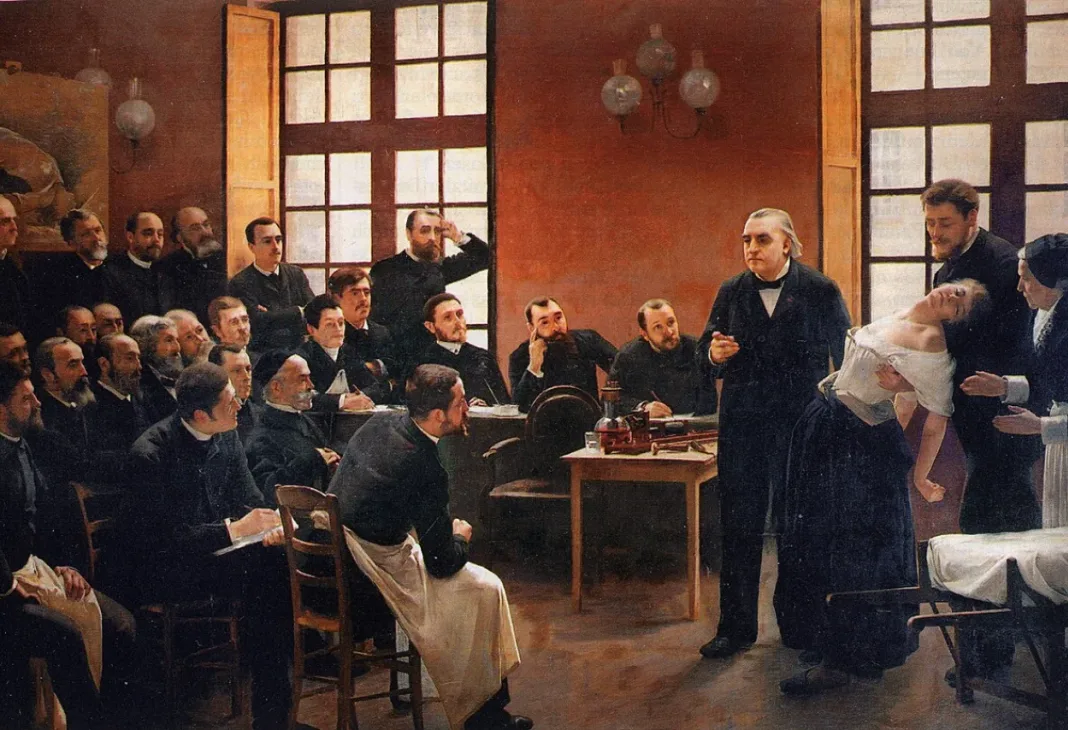
By the nineteenth century, hysteria had become an important subject of investigation within European medicine. One of the most well-known figures of this period was the French neurologist Jean-Martin Charcot. At the Salpêtrière Hospital in Paris, Charcot examined patients diagnosed with hysteria, studying symptoms such as seizures, paralysis-like conditions, sensory loss, and the use of hypnosis.
Charcot's work was also important because he demonstrated that hysteria was not exclusive to women. He argued that similar symptoms could occur in men. Nevertheless, the fact that female patients at the Salpêtrière were at the centre of medical observations and public clinical demonstrations remains a subject of discussion in relation to doctor-patient relationships during that period (Bogousslavsky, 2020).
Another important figure in the study of hysteria was Sigmund Freud. In *Studies on Hysteria*, published in 1895, Freud and Josef Breuer explored the relationship between psychological processes and physical symptoms. Their idea that repressed emotions and traumatic experiences could manifest themselves through physical symptoms contributed to the development of psychological explanations for such conditions.
However, the historical significance of hysteria was not limited to medical theories. Women's fears, anxieties, and behaviours were also interpreted within the framework of the social expectations of the time. Although it would be inaccurate to explain every psychological problem experienced by women solely through gender prejudice, the way women's behaviour was assessed became an important subject of debate in the history of medicine.
## From Hysteria to Lobotomy: Changing Treatments, Similar Questions
By the twentieth century, psychiatry was increasingly turning towards biological and neurological approaches to explain the human mind and behaviour. As researchers investigated the effects of different brain regions on behaviour and emotions, the idea of using surgical interventions to alter severe psychiatric symptoms also emerged.
One of the most controversial examples of these developments was lobotomy.
In 1935, Portuguese neurologist António Egas Moniz developed a surgical procedure known as prefrontal leucotomy. The procedure aimed to sever nerve connections between the prefrontal regions of the brain and other areas. Moniz's work was considered an important innovation at a time when psychiatric treatment options were limited, and he was awarded the Nobel Prize in Physiology or Medicine in 1949 (Ögren et al., 2013).
In the United States, neurologist Walter Freeman and neurosurgeon James Watts played an important role in popularising the procedure. The pair performed the first prefrontal lobotomy in the United States on 14 September 1936. They later developed the technique and popularised the procedure known as the Freeman-Watts lobotomy.
In the mid-1940s, Freeman began using the transorbital lobotomy technique. In this procedure, a pointed instrument called an orbitoclast was inserted through the upper part of the eye socket to reach the frontal lobes. The speed with which the procedure could be performed contributed to its use in an increasing number of patients.
Lobotomy was particularly used for patients experiencing severe schizophrenia, depression, and other serious psychiatric symptoms. However, some patients experienced personality changes, loss of motivation, cognitive impairment, and significant difficulties with independent living following the operation.
## Why Did Women Make Up a Significant Proportion of Lobotomy Patients?
One of the most striking aspects of the history of lobotomy is that women were disproportionately subjected to these operations. An article by Tone and Koziol (2018), published in the *Canadian Medical Association Journal*, draws attention to this inequality.
Five of the six patients included in Freeman and Watts's first case series, published in 1937, were women. Their complaints included symptoms such as anxiety, insomnia, and apprehension. Furthermore, by 1942, approximately 75 per cent of the lobotomies performed by the pair were reported to have been carried out on women.
These statistics raise an important question: What role did gender expectations play in the referral of women for psychiatric treatment?
During the first half of the twentieth century, women were generally expected to be calm, compliant, and devoted to family life. Behaviours that challenged these expectations could sometimes be interpreted as signs of psychiatric problems. Intense emotional reactions, restlessness, and conflicts within the family could lead some women to undergo psychiatric assessment.
Of course, it would be inaccurate to claim that all women who underwent lobotomy were operated on simply because they did not conform to social expectations. Some patients were experiencing severe psychiatric symptoms. Nevertheless, the disproportionately high representation of women among those undergoing these operations makes it necessary to examine psychiatric practices of the time from a gender perspective.
More importantly, the fact that patients became calmer and less reactive following surgery was sometimes regarded as a positive outcome. However, when this came at the cost of changes to a person's personality or the loss of independence, how appropriate was it to describe this as recovery?
## Rosemary Kennedy: An Operation That Changed a Life
One of the most well-known examples illustrating the impact of lobotomy on human life is the story of Rosemary Kennedy.
Rosemary, the sister of US President John F. Kennedy, had experienced developmental and learning difficulties since childhood. In 1941, at the age of just 23, she underwent a lobotomy arranged by her father. The operation was performed by Walter Freeman and James Watts.
The consequences of the operation were severe. Rosemary lost much of her ability to speak and walk and became unable to live independently. She required care and support for the rest of her life. The biographical account published by the US National Park Service also documents the significant difficulties she experienced following the operation.
Rosemary's story demonstrates that lobotomy was not merely a medical procedure, but a decision that could affect a person's life, identity, and independence.
Her case raises a particularly important question: When a decision is made to perform an operation serious enough to change someone's future, to what extent are that person's own wishes and rights taken into consideration?
## The Brain, Personality and Psychological Consequences
One of the reasons lobotomy is important from a psychological perspective is that it directly raises questions about the influence of the brain on behaviour and personality.
The frontal lobes play an important role in functions such as decision-making, planning, impulse control, social behaviour, and emotional regulation. Interventions involving these regions could affect not only specific symptoms but also patients' personalities and everyday lives.
Following lobotomy, some patients experienced a loss of motivation, reduced emotional responses, difficulties with decision-making, and impairments in cognitive functioning.
This brings us to one of the fundamental questions in psychology: Does changing a person's behaviour necessarily mean improving their psychological well-being?
Did a patient who became less angry, less reactive, or less likely to have conflicts with others genuinely feel better? Or had they simply lost the ability to express their emotions and make their own decisions?
These questions remind us that psychological well-being cannot be evaluated solely through externally observable behaviour.
## From the Past to the Present: What Has Changed in Psychiatry?
Over time, the concept of hysteria lost its validity as a medical diagnosis. Today, some symptoms that were historically grouped under this term may be considered within different diagnostic categories, such as Functional Neurological Symptom Disorder. However, it would be inaccurate to claim that historical hysteria directly corresponds to a single modern diagnosis.
Lobotomy, meanwhile, gradually fell out of use, particularly from the 1950s onwards, as antipsychotic medications developed, its serious side effects became better understood, and ethical criticism increased.
Looking at these two historical periods, we can see that psychiatry has changed considerably. Today, patients' rights, informed consent, scientific evidence, and ethical oversight are among the fundamental elements of treatment.
However, the questions left behind by the past remain important: When were women's psychological difficulties genuinely assessed as symptoms of an illness, and when were they interpreted according to social expectations?
The removal of hysteria from medical terminology is also more recent than many people might assume. In particular, with the publication of the DSM-III in 1980, older diagnostic terms such as *hysterical neurosis* were abandoned. However, the modern diagnoses that replaced these concepts are not identical to the historical understanding of hysteria. Therefore, the issue is not simply the disappearance of a diagnosis, but also the need to question how women's emotions and behaviours have been interpreted throughout history.
Studying the history of women's mental health is important not only for understanding past harmful treatments but also for recognising the significance of social and cultural factors in the assessment of psychological symptoms. Perhaps the most important lesson of this historical journey from hysteria to lobotomy is this: **Changing a woman's emotions, behaviour, or personality is not the same as improving her mental health.**
As a science that seeks to understand people, psychiatry should aim not only to eliminate symptoms but also to protect individuals' experiences, rights, and identities.
Kaynakça
- Bogousslavsky, J. (2020). The mysteries of hysteria: A historical perspective. International Review of Psychiatry, 32(5–6), 437–450. https://doi.org/10.1080/09540261.2020.1772731
- Cassady, M. (2019). Hysteria to functional neurologic disorders: A historical perspective. American Journal of Psychiatry Residents' Journal.
- Ögren, K., Sandlund, M., & others (2013). Violence, mental illness, and the brain – A brief history of psychosurgery: Part 1 – From trephination to lobotomy. Surgical Neurology International.
- Trimble, M., & Reynolds, E. H. (2016). A brief history of hysteria: From the ancient to the modern. Handbook of Clinical Neurology, 139, 3–10. https://doi.org/10.1016/B978-0-12-801772-2.00001-1
- Tone, A., & Koziol, M. (2018). Failing women in psychiatry: Lessons from a painful past. CMAJ, 190, E624–E625. https://doi.org/10.1503/cmaj.171277 U.S. National Park Service. Rosemary Kennedy, The Eldest Kennedy Daughter. https://home.nps.gov/articles/000/rosemary-kennedy-the-eldest-kennedy-daughter.htm