
Is Procrastination Laziness, or an Attempt to Protect Ourselves?

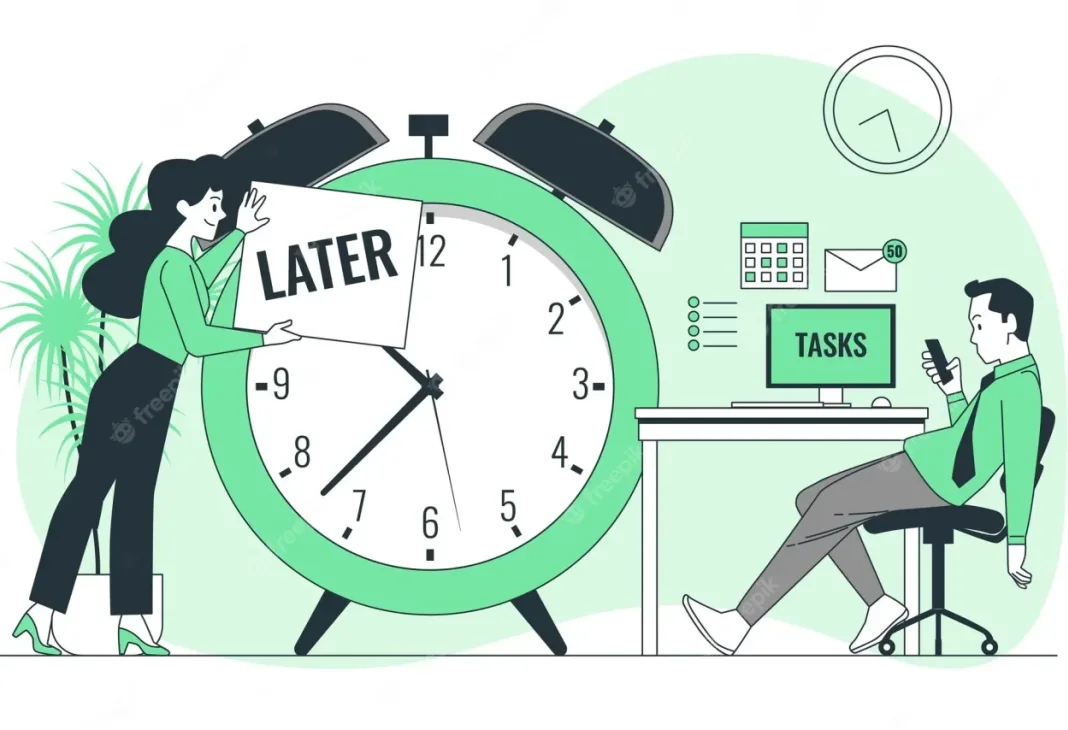
There is a task that needs to be done. You sit at your desk, turn on your computer, and prepare the necessary documents. Yet somehow, you cannot seem to get started. First, you take a short break, then check your phone, followed by the thought, “I’ll be more productive in a little while.” As the day goes by, the task remains unfinished while the pressure in your mind gradually increases. Although many people define this as “laziness,” procrastination is often associated with much more complex psychological processes than it appears.
Procrastination can be defined as the voluntary delay of a task that is intended to be completed, often despite knowing the potential negative consequences of delaying it. From the outside, this may appear to be a time-management problem. However, many studies suggest that procrastination cannot be explained solely by poor time management. In many cases, it is not the task itself that is being avoided, but the uncomfortable emotions that arise in relation to it.
Some tasks can be challenging not only because they require effort, but also because they evoke anxiety, fear of failure, uncertainty, or feelings of inadequacy. In such situations, the mind seeks a solution that will provide short-term relief. When the task is postponed, the person may experience a temporary sense of relief. However, this relief does not last long. The approaching deadline, increasing time pressure, and unfinished tasks eventually become new sources of stress. In this context, procrastination can create a cycle between short-term relief and long-term stress.
Perfectionism is one of the important factors contributing to this cycle. From the outside, perfectionistic individuals may be perceived as disciplined. Yet in some cases, high standards can make it more difficult rather than easier to take action. When a person believes that their work must be flawless, even taking the first step can become anxiety-provoking. The thought, “If I cannot do it well enough, I might as well not start,” can gradually reinforce procrastination. In other words, procrastination may sometimes result not from a lack of motivation, but from a fear of making mistakes.
Self-efficacy also plays an important role in procrastination. Individuals who have low confidence in their ability to complete a task may be more likely to delay starting it. This may be because starting the task makes the possibility of failure more visible. However, postponing a task does not eliminate the possibility of failure; it only delays confronting it. Over time, this can further weaken a person’s confidence in their own abilities.
The way emotions are regulated is also closely related to procrastination. Individuals experiencing intense anxiety, frustration, boredom, or mental exhaustion may turn toward more enjoyable or easier activities in order to distance themselves from these emotions. Spending time on social media, watching a series, or constantly keeping oneself busy with other tasks may not always stem from laziness, but rather from a desire to temporarily escape difficult emotions. However, as this avoidance continues, the postponed task becomes more overwhelming, the pressure increases, and the process becomes even more difficult.
Procrastination does not occur only in academic or professional life. Delaying health appointments, postponing important phone calls, continuously putting off decisions, or avoiding emotionally difficult conversations can also be different forms of procrastination. In other words, this behavior can appear in many areas of life and affect an individual’s functioning in various ways.
So, is it possible to overcome procrastination? The first step may be to try to understand the behavior rather than judging oneself for it. Instead of asking, “Why did I procrastinate again?” it may be more useful to ask, “What emotion comes up for me when I think about starting this task?” Sometimes the problem is not the size of the task itself, but the emotions it evokes. Once these emotions become more visible, it may become easier to understand what lies beneath the procrastination.
Another important approach is to divide larger goals into smaller and more manageable steps. The brain may perceive vague and extensive tasks as more threatening or difficult to approach. In contrast, small and concrete steps can make it easier to begin. Sometimes, simply focusing on the task for ten minutes or aiming to complete only the first part can help reduce mental resistance. In many cases, starting is the most difficult part of continuing.
The way a person talks to themselves can also play a significant role in this process. Statements such as “I’m always like this” or “I can never do anything on time” after procrastinating may feed hopelessness rather than increase motivation. Developing a more realistic and compassionate inner dialogue can be more supportive of behavioral change. Because a mind that is constantly criticized often develops more avoidance rather than more courage.
Environmental adjustments can also help reduce procrastination. Reducing distractions, organizing the workspace, focusing on a single task during specific periods, and planning realistic breaks can make it easier to get started. Similarly, tracking progress through small steps and focusing not only on the outcome but also on the process can contribute to maintaining motivation.
In conclusion, procrastination is often related more to emotional regulation than to time management. Although the reasons behind procrastination may differ from person to person, psychological processes such as anxiety, uncertainty, fear of failure, and perfectionism may underlie the behavior in many cases. Therefore, lasting change does not come only from better planning; it also requires understanding one’s emotions, thoughts, and expectations. Perhaps the first step toward changing procrastination is not asking ourselves, “Why am I not starting?” but becoming curious about the question, “What is making it difficult for me to start?”
Kaynakça
- Burka, J. B., & Yuen, L. M. (2008). Procrastination: Why You Do It, What to Do About It Now. Da Capo Press.