
Why Do We Become Attached to Artificial Intelligence?

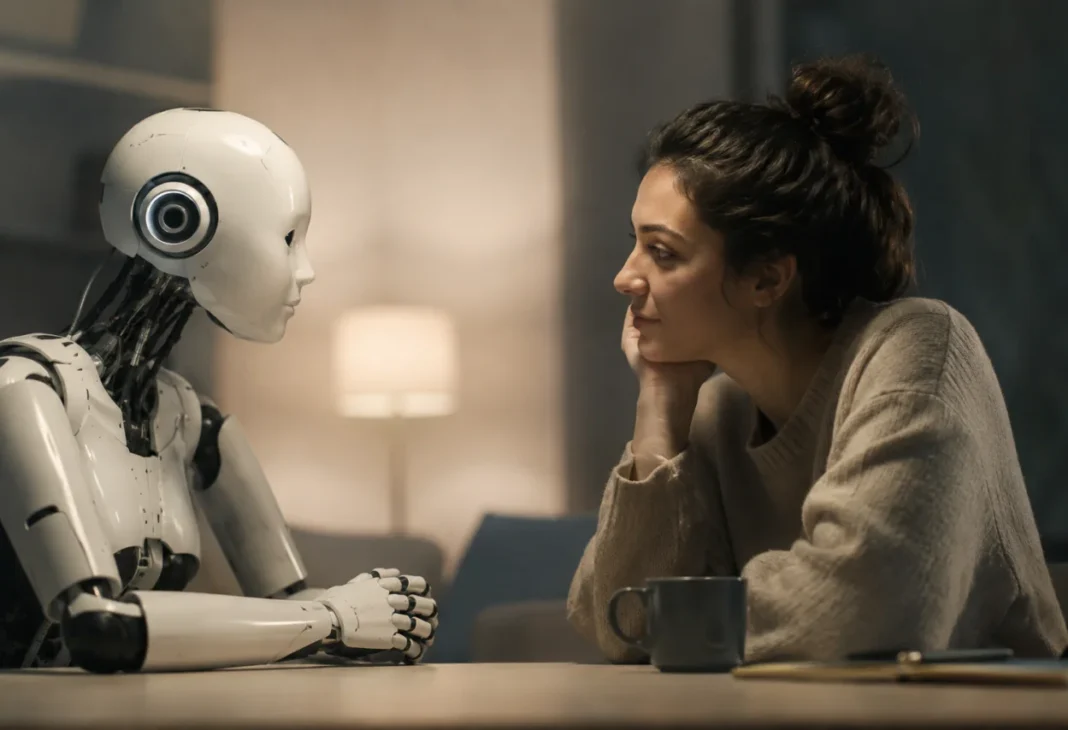
Artificial intelligence is no longer merely a tool for information retrieval; for many people, it has become an interlocutor with whom they plan their day, seek advice, and even share emotions they cannot express to anyone else. Some users report feeling more understood and less lonely following these interactions. This observation raises an important question: How can the human brain form an emotional bond with an algorithm that lacks consciousness?
Contrary to common assumptions, the answer lies not so much in the capabilities of artificial intelligence as in the social nature of the human mind. The human brain interprets cues such as attentive listening, consistent communication, and a nonjudgmental approach as indicators of safe social interaction. When advanced AI systems are capable of generating these social cues, users may experience these interactions in ways that resemble interpersonal communication.
The Human Mind Does Not Miss Social Cues
Behaviors such as giving a name to a computer or thanking a robotic vacuum cleaner reflect a psychological tendency known as anthropomorphism. Anthropomorphism refers to the tendency to attribute emotions, intentions, and human-like characteristics to non-human entities (Epley, Waytz, & Cacioppo, 2007). Research has long demonstrated that people can respond to computers that provide sufficient social cues as though they were interacting with another human being. With the emergence of generative artificial intelligence, this topic has regained prominence.
Thanking chatbots or wishing them “good night” does not stem from technology acquiring consciousness; rather, it reflects the tendency of the human brain to apply its social norms to digital environments. In most cases, this is not a deliberate choice but an automatic and habitual social response.
Why Do Some People Become Attached More Easily?
According to Bowlby’s (2008) Attachment Theory, attachment patterns developed during childhood continue to influence close relationships in adulthood. Individuals with an anxious attachment style may be more likely to develop a sense of closeness toward AI systems that provide continuous availability, patience, and nonjudgmental communication. One possible explanation is that AI does not produce experiences of rejection or negative evaluation that may occur in human relationships.
However, an important distinction must be acknowledged. Artificial intelligence may simulate the experience of a relationship, but it does not possess subjective experience, conscious emotional awareness, or the capacity to engage in a genuinely reciprocal relationship. Consequently, processes such as assuming mutual responsibility, establishing boundaries, resolving conflicts, and experiencing the transformative nature of relationships remain unique to human interactions.
Is It Because We Are Lonely, or Because We Feel Misunderstood?
Loneliness is associated less with the number of relationships one has than with the quality of those relationships and the satisfaction derived from them (Hawkley & Cacioppo, 2010). Among the characteristics users value most in AI are the ability to speak without fear of judgment, to express themselves without interruption, and to access communication at any time.
This phenomenon can be explained through the psychological concept of self-disclosure. People are more likely to share their thoughts and emotions when they believe they will not be judged (Joinson, 2001). However, being able to express oneself comfortably is not equivalent to being genuinely understood. Artificial intelligence does not subjectively experience the user’s life; instead, it analyzes linguistic patterns and generates contextually appropriate responses. Overlooking this distinction may provide temporary emotional relief while simultaneously delaying the development of the reciprocal human relationships that individuals fundamentally need.
Can Artificial Intelligence Replace Loneliness?
Research in social psychology suggests that people may occasionally perceive beloved fictional characters or non-human figures as sources of social connectedness (Gardner & Knowles, 2008). Artificial intelligence makes this experience more interactive through its ability to engage in conversation, provide personalized responses, and retain information from previous interactions.
Nevertheless, researchers emphasize that such support is generally temporary and cannot replace genuine human relationships in the long term because it lacks essential relational components, including reciprocity, shared experiences, emotional responsibility, and authentic attachment (Gardner & Knowles, 2008).
Boundaries and Risks
A recent scoping review indicates that human-like characteristics of artificial intelligence—such as names, voices, and communication styles—are associated with users perceiving the system as more trustworthy and with a greater willingness to continue using it (Reuter, Kirchhoff, Franke, Radüntz, & Peifer, 2025).
This increasing sense of closeness may also introduce certain risks. Excessive anthropomorphism may lead users to overlook the limitations of the system. Individuals experiencing profound loneliness may become increasingly inclined to rely on artificial intelligence instead of developing real interpersonal relationships. Furthermore, the privacy of information shared with AI varies across platforms, and the information provided by these systems is not always accurate. Therefore, particularly in the field of mental health, artificial intelligence should not replace professional assessment or psychological support.
Artificial Intelligence as a Supportive Clinical Tool
From the perspective of psychologists, artificial intelligence may be viewed not as a competitor but as a new area of professional practice. It may be beneficial for psychoeducation, emotion journaling, cognitive behavioral therapy (CBT)-based exercises, and applications designed to support clients throughout the therapeutic process.
However, clinical assessment, ethical responsibility, the establishment of a therapeutic alliance, and the capacity to understand an individual’s complex life history holistically remain uniquely within the domain of mental health professionals. Accordingly, artificial intelligence should be regarded not as a substitute for psychotherapy but as a tool that supports therapeutic processes within appropriate ethical and clinical boundaries.
Conclusion
The emotional bonds people develop with artificial intelligence provide important insights not so much into AI itself as into the human mind’s capacity for forming relationships. The fundamental question is not whether artificial intelligence truly understands us, but why the human brain responds so strongly to social cues.
Artificial intelligence serves as a new mirror that reveals the human tendency to seek connection. However, regardless of technological advances, genuine empathy, reciprocity, and emotional responsibility remain the foundations of relationships that can only exist between human beings.
References
Bowlby, J. (2008). A secure base: Parent-child attachment and healthy human development. Basic Books.
Epley, N., Waytz, A., & Cacioppo, J. T. (2007). On seeing human: A three-factor theory of anthropomorphism. Psychological Review, 114(4), 864–886.
Gardner, W. L., & Knowles, M. L. (2008). Love makes you real: Favorite television characters are perceived as “real” in a social facilitation paradigm. Social Cognition, 26(2), 156–168.
Hawkley, L. C., & Cacioppo, J. T. (2010). Loneliness matters: A theoretical and empirical review of consequences and mechanisms. Annals of Behavioral Medicine, 40(2), 218–227.
Joinson, A. N. (2001). Self-disclosure in computer-mediated communication: The role of self-awareness and visual anonymity. European Journal of Social Psychology, 31(2), 177–192.
Reuter, M., Kirchhoff, B. M., Franke, T., Radüntz, T., & Peifer, C. (2025). To trust or not to trust a human (-like) AI—A scoping review and conjoint analyses on factors influencing anthropomorphism and trust. Zeitschrift für Arbeitswissenschaft, 79(3), 402–432.