
Loving, Being Loved, and What We Lose: Why Does the Brain Never Forget the One It Loves?

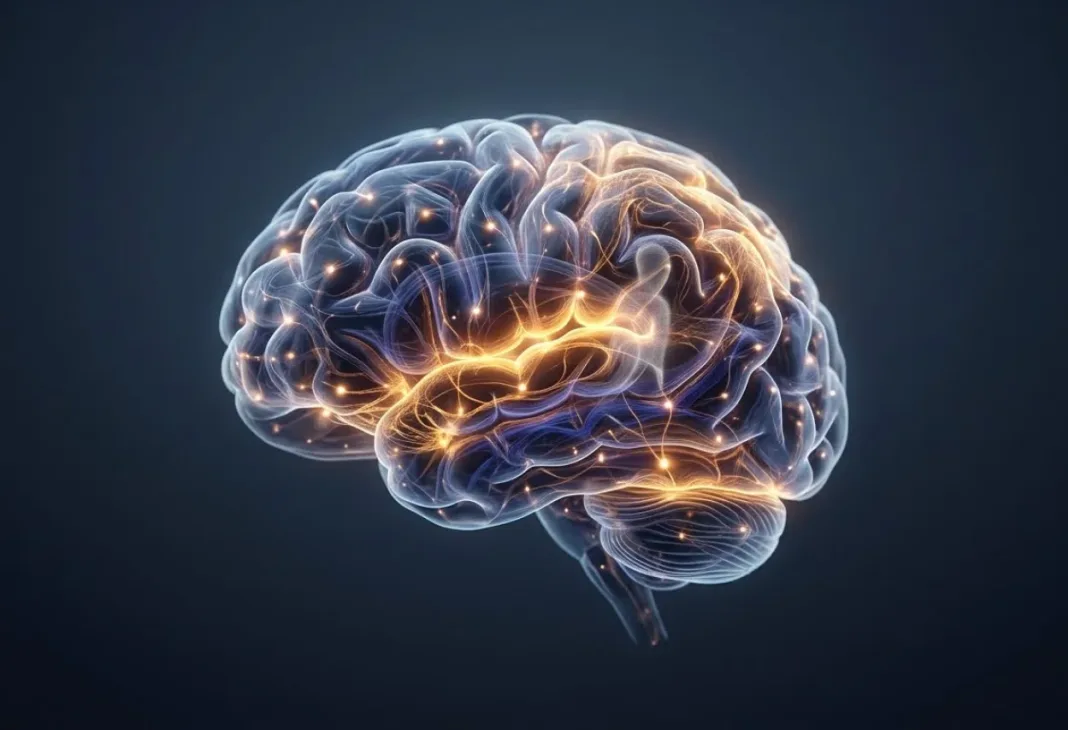
From the very first moment the human mind opens its eyes to the world, it searches for the answer to a single question: "Am I safe, and am I loved?" Beginning with the first breath that fills our lungs at birth, this quiet search becomes the invisible architect of the decisions we make, the fears we avoid, the people we choose, and our deepest vulnerabilities until the final day of our lives. In the rush of everyday life, we often view loving and being loved as a romantic need, a metaphor fit for poetry, or merely an emotional desire; yet from the perspective of evolutionary psychology and modern neuroscience, they are among the brain’s most fundamental, primitive, and indispensable survival mechanisms.
Behind the shared helplessness I have encountered most frequently over the years in the therapy room—asked by clients in trembling voices—lies the very same knot: "Years have passed, I have moved on with my life, I have met new people, so why does my mind still keep them as vivid as the first day? Why does my brain never forget who it loved?" The answer does not lie in cognitive weakness or dwelling in the past; it lies in how seriously—almost as a matter of life and death—the brain encodes love and attachment.
First Contact and the Roots of Attachment: How Our Mental Templates Form
Compared with many other creatures in nature, the human infant enters the world in a state of marked vulnerability and dependency, unable to walk, feed itself, or defend against external threats. This helplessness makes clinging to a caregiver—most often the mother—essential for survival. Attachment Theory, founded by John Bowlby, shows that early caregiving builds enduring mental templates known as "internal working models."
When a responsive adult soothes a crying baby with warmth, eye contact, and a gentle voice, the brain encodes a foundational belief: "This is a safe place, I am worthy of being loved, and someone will be there when I need help." Inconsistent or neglectful care, by contrast, links love with anxiety, fear of abandonment, or hypervigilance. In adult relationships, we unconsciously re-enact this early search for safety, using love and connection to signal to the nervous system that immediate threat has passed.
The Neurobiology of Attachment: How the Brain Encodes Love
Loving someone deeply triggers a physical, electrical, and chemical restructuring in the brain. Romantic bonding and deep affection activate reward and motivation hubs—the ventral tegmental area and the nucleus accumbens—where three core neurochemicals place the loved person at the center of attention and cognition.
Dopamine fuels motivation, desire, and reward anticipation, signaling that the loved one is vital to well-being and survival. Oxytocin, the "bonding hormone," rises during touch, eye contact, trust, and intimacy, calming the amygdala—the brain’s fear and threat hub—so we can lower our defenses. Vasopressin supports long-term pair bonding, protective instincts, and fidelity, marking the loved one as part of "us."
Under the principle that "neurons that fire together, wire together," shared laughter, conversations, and even conflicts strengthen synaptic pathways. Voice, gait, warmth, and scent become woven into neural networks, turning the loved person into an extension of our self-concept, daily routines, and inner map.
Loss and Grief: The Brain’s "Map" Illusion and Physical Pain
What happens internally when we lose that person through death, sudden separation, or growing emotional distance? Grief is not a passive state of sorrow; it is a demanding process of adaptation in which the brain must relearn its reality from the ground up.
In The Grieving Brain, neurobiologist Dr. Mary-Frances O’Connor explains this through the brain’s spacetime map, which encodes loved ones not only by "who they are," but also by "where and when they are." When physical absence occurs, conscious logic may register the loss immediately, yet deep neural maps take time to update—explaining why we reach for a ringing phone, catch our breath at a familiar silhouette in a crowd, or briefly wake thinking everything is unchanged.
Functional MRI studies show that social exclusion, rejection, or bereavement activates pain-processing regions—especially the anterior cingulate cortex and the insula. Because ancestral isolation threatened survival, the brain processes relational loss much like physical injury, making phrases such as "a broken heart" neurobiologically grounded. Rumination, late-night photos, or "if only" thoughts reflect attempts to re-engage familiar reward circuits, while the shift from "I" to "we" means losing a shared future and part of our own identity as well.
The Power of Emotional Memory: Why the Brain Never Forgets Who It Loved
Struggling to forget is not a mental flaw or obsession, but an evolutionary protective mechanism. Routine details fade quickly, whereas high emotional arousal engages the amygdala and hippocampus to seal meaningful experiences into durable long-term memory as guides for future survival.
Because love carries intense emotional weight, memories of a loved one remain readily accessible. Sensory cues—especially smell and hearing—reach emotional circuitry directly without heavy cognitive filtering, allowing a scent on the street or a song in a café to reactivate hippocampal pathways in seconds and bring the person back with striking immediacy.
Not Forgetting, but Integrating: Living Alongside Grief and Love
Modern culture often pressures us to rush past pain, "move on" quickly, and erase the past. Psychological science, however, shows that healing comes from integrating a loved one’s absence and enduring mark into our ongoing life story rather than scraping them from memory.
In contemporary psychotherapy, the Continuing Bonds framework recognizes that while physical connection ends, internal and symbolic bonds can transform and endure through shared lessons, comforting inner voices, or acts honoring their memory. As acute grief eases, neuroplasticity helps the brain build new routines, relationships, and meanings around the loss while keeping older neural pathways intact without letting them remain the only path forward.
Designed for deep connection, the human mind holds onto those we love as foundational threads of our identity. Rather than fighting emptiness endlessly, we learn over time to live while carrying that love quietly within us.
Kaynakça
- Bowlby, J. (1969). Attachment and loss: Vol. 1. Attachment. Basic Books.
- Eisenberger, N. I., Lieberman, M. D., & Williams, K. D. (2003). Does rejection hurt? An fMRI study of social exclusion. Science, 302(5643), 290–292.
- Fisher, H. (2004). Why we love: The nature and chemistry of romantic love. Henry Holt and Company.
- Hebb, D. O. (1949). The organization of behavior: A neuropsychological theory. John Wiley & Sons.
- Klass, D., Silverman, P. R., & Nickman, S. L. (Eds.). (1996). Continuing bonds: New understandings of grief. Taylor & Francis.
- LeDoux, J. E. (2000). Emotion circuits in the brain. Annual Review of Neuroscience, 23, 155–184.
- O'Connor, M. F. (2022). The grieving brain: The surprising science of how we learn from love and loss. HarperOne.