
Circles of Intimacy: Why Adults Need to Understand Boundaries, Too

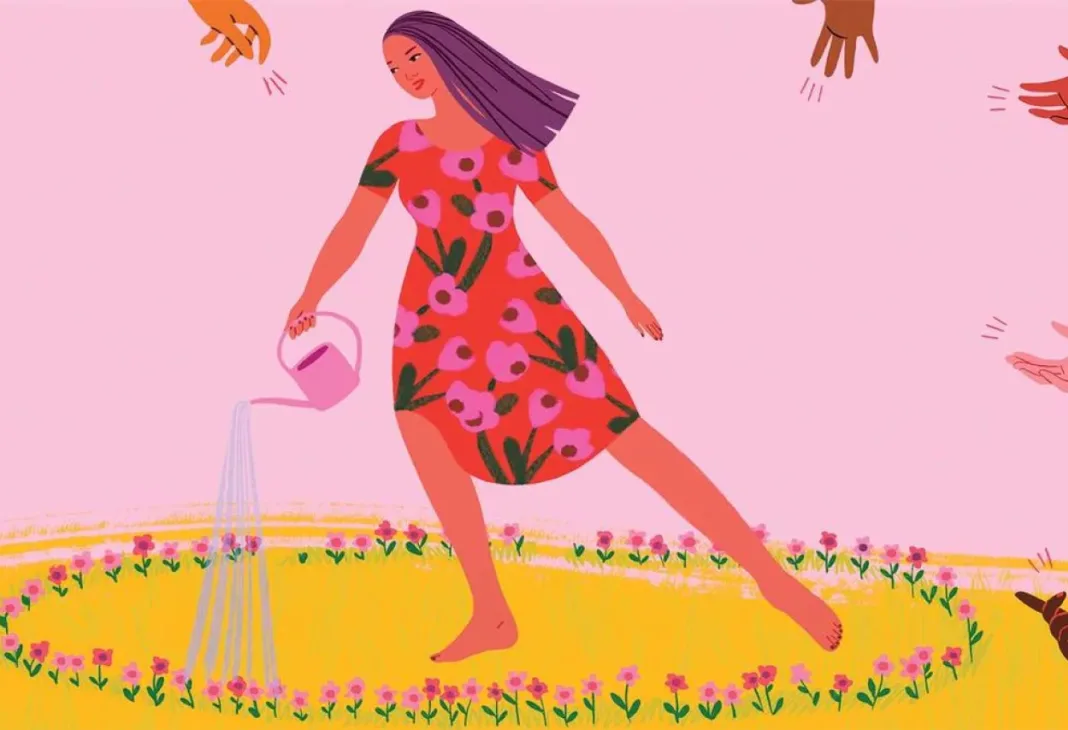
Through my work with children with additional support needs, I have used the Circles of Intimacy resource, developed by Leslie Walker-Hirsch and Marklyn P. Champagne (1993), to help children understand relationships, personal boundaries, and appropriate social interactions.
The resource uses coloured, concentric circles to represent different levels of intimacy in our relationships. At the centre are the people closest to us, with each successive circle representing relationships that are generally less intimate, extending outwards towards acquaintances and strangers.
It is a simple but effective visual tool. It helps children understand that not everyone has the same relationship with us, and that our behaviour, expectations, and boundaries should reflect the nature of each relationship. We might share personal information with someone we deeply trust, seek comfort from a close friend or family member, exchange greetings with an acquaintance, or maintain more personal space with a stranger.
The circles are not intended as rigid rules, but as a starting point for conversations about trust, closeness, and respect.
However, the more I have used this resource, the more I have wondered whether adults need to revisit these circles just as much as children do.
Understanding Our Relationships
As adults, we navigate a complex network of relationships. We may be parents, partners, siblings, friends, colleagues, and carers, often all at once. Each relationship carries different levels of closeness, expectations, and emotional responsibility.
Yet we do not always recognise these differences in our everyday interactions. We might feel obliged to answer every message, agree to every request, or make ourselves available whenever someone needs us. Sometimes, we take on responsibilities because we feel guilty saying no or worry that setting a boundary will make us appear selfish or uncaring.
The circles offer a useful reminder: being kind does not mean giving everyone the same level of access to our time, energy, or personal lives.
We can care about someone without being constantly available, support a friend without becoming responsible for solving every problem, and respect a colleague without taking on responsibilities that are not ours.
Healthy boundaries are not about being distant or unkind. They help us recognise what is appropriate within each relationship and what we can realistically offer.
When Expectations Don't Match Reality
Another valuable lesson from the circles is the opportunity to examine what we expect from other people.
We may expect family members to provide emotional support, friends to offer reassurance, or partners to understand our needs. But what happens when the relationship does not reflect those expectations?
Sometimes, we continue seeking support from a family member because we believe that is what family should provide. We may keep investing in a friendship that repeatedly disappoints us, hoping that giving more will eventually make the relationship what we need it to be.
In these situations, we may be responding not to the relationship we actually have, but to the relationship we wish we had.
Recognising this can be uncomfortable. However, we cannot control another person's behaviour, emotional availability, or willingness to meet our needs. What we can control is how we respond, what we expect, and how much we continue to invest.
This does not mean labelling people as good or bad, or deciding that every difficult relationship must end. It means acknowledging that people have different capacities and that not every relationship can provide the closeness, support, or consistency we hope for.
Sometimes, adjusting our expectations is an important part of protecting our emotional wellbeing.
Our Circles Can Change
One of the most important things to remember is that our circles are not permanent.
Relationships evolve as circumstances change and trust develops or diminishes. Someone who once occupied a central place in our lives may gradually move further out. Equally, someone we initially considered an acquaintance may become a trusted friend over time.
Yet we sometimes continue relating to people according to the roles they once held in our lives, rather than recognising how the relationship has changed.
For example, we may continue sharing personal information with someone whose trustworthiness has changed or feel responsible for supporting someone simply because we have always done so.
Revisiting our circles allows us to reflect on whether our relationships still feel appropriate and whether our expectations need to change.
Moving someone further away does not necessarily mean ending a relationship. It might simply mean sharing less, creating more emotional distance, or reconsidering how available we make ourselves. Similarly, allowing someone closer can happen gradually as mutual trust and respect develop.
The important thing is to recognise that we are allowed to reconsider our boundaries as we grow and our circumstances change.
A Practical Exercise: Revisit Your Circles
Take a piece of paper and draw three or four concentric circles. Think about the people in your life and place them according to the level of trust, closeness, and access that feels appropriate today.
Then consider these six questions:
What do I give?
Am I offering more time, energy, or emotional support than I genuinely have?
What do I expect?
Are my expectations based on the relationship as it is, or on what I wish it could be?
What am I responsible for?
Am I taking responsibility for someone else's feelings, choices, or problems?
How do I feel?
Do I feel comfortable, respected, and able to be myself in this relationship, or do I often feel drained, anxious, or obligated?
What do I allow?
Am I accepting behaviour that makes me uncomfortable, or allowing someone more access to my personal life than feels appropriate?
What needs to change?
Is there a boundary I need to establish, an expectation I need to reconsider, or a relationship I need to see differently?
Remember that boundaries work both ways. Just as we cannot meet every request made of us, other people have their own needs, limitations, and right to establish boundaries.
The circles are not a test, nor are they intended to categorise people permanently. They are a tool for reflection, helping us become more aware of how we relate to others.
Perhaps the real lesson is that boundaries are not simply about knowing when to say no. They are about understanding relationships, recognising our own needs, and respecting those of others. We can be caring without being endlessly available, supportive without carrying everything, and compassionate without abandoning ourselves.
Sometimes, one of the healthiest things we can do is recognise that not everyone belongs in our innermost circle, and that this is perfectly okay.
Kaynakça
- Circles of intimacy: Teaching relationship boundaries. Stanfield. (2026, June 3). https://stanfield.com/blog/circles-of-intimacy-relationship-boundaries?srsltid=AYCX9vKNWaHIxyGhWFh5eEy66N7Cbb6ZG3Z7d0J0GxDtCNd29jkF7CYc
- Walker-Hirsch, L., & Champagne, M. P. (1993). Circles, Level 1: Intimacy and relationships. Santa Barbara, CA: James Stanfield Publishing Company.