


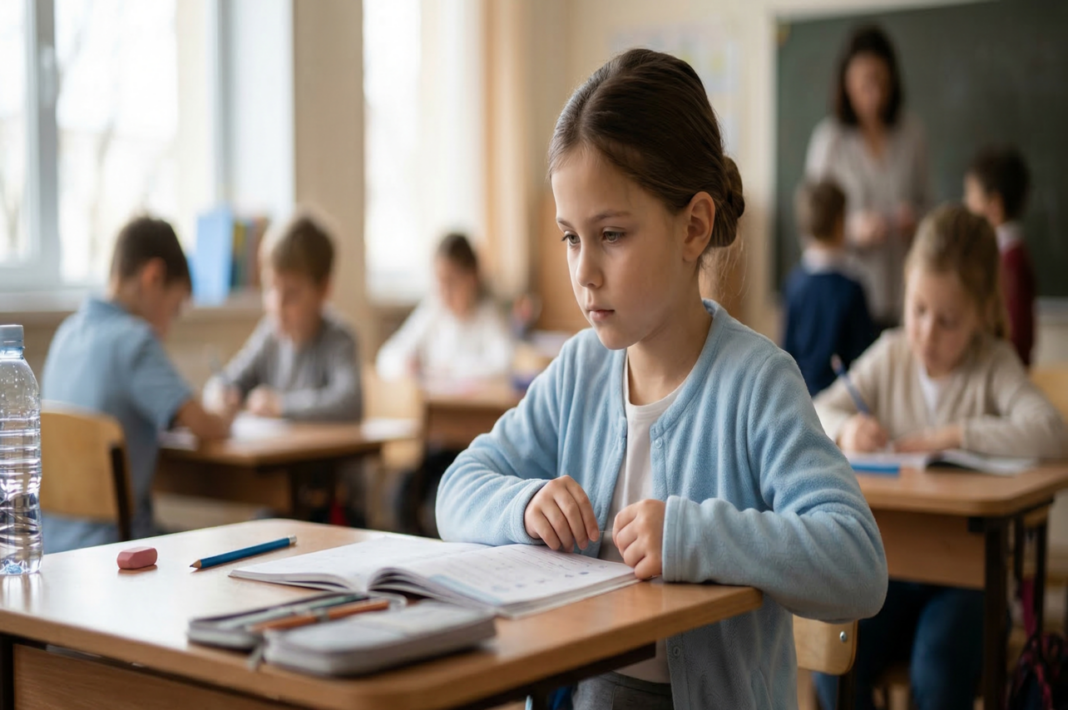

When a child is quiet, follows rules, performs well in school, and is described by teachers as “very well-behaved,” most adults assume everything is going well. These children often do not disrupt the classroom, try to meet expectations, and appear responsible for their age. Because of this, they are rarely seen as children who might be struggling emotionally.
However, psychological research reminds us of an important truth: not all struggles are visible. Some children experience emotional difficulties internally rather than expressing them through behavior. In psychology, these experiences are often described as internalizing symptoms, which can include anxiety, excessive worry, self-criticism, sadness, or overthinking.
What Are Internalizing Difficulties?
In childhood psychology, behavioral and emotional difficulties are often categorized into two broad groups: externalizing problems and internalizing problems. Externalizing problems are easier to notice because they involve outward behaviors such as aggression, rule-breaking, impulsivity, or anger outbursts. These behaviors usually draw immediate attention from teachers and parents.
Internalizing problems are more subtle. Feelings such as anxiety, fear, or sadness are often experienced privately by the child. As a result, they may go unnoticed for long periods of time. Research shows that anxiety symptoms appearing in childhood can continue into adolescence and adulthood if they are not recognized and addressed early (McLaughlin & King, 2015).
The Hidden Anxiety Of “Good” Children
Many children who experience anxiety do not openly express their distress. In fact, some children cope with anxiety by becoming overly compliant or perfectionistic. They may try very hard to avoid making mistakes or disappointing others.
Examples of this pattern may include:
-
Constantly trying to do everything “perfectly”
-
Being extremely afraid of making mistakes
-
Worrying about disappointing parents or teachers
-
Putting excessive pressure on themselves academically
-
Avoiding sharing their worries or emotions
Because these children appear responsible, mature, and cooperative, adults may view them as “problem-free.” Yet beneath this outward calm, the child may be experiencing significant stress or anxiety. Research suggests that perfectionism and high pressure to meet expectations can be linked to anxiety symptoms in children (Affrunti & Woodruff-Borden, 2015). When children believe that mistakes are unacceptable or that their worth depends on performance, they may remain in a constant state of tension.
Emotion Regulation and Anxiety
Learning how to recognize and manage emotions is a key part of healthy psychological development. When children struggle with emotion regulation, they may not know how to express or cope with their anxiety.
In some cases, anxiety may appear through physical symptoms, such as:
-
stomachaches
-
headaches
-
sleep difficulties
-
reluctance to attend school
Children may also attempt to suppress or hide their emotions. However, studies show that consistently suppressing emotions is associated with higher levels of internalizing difficulties over time (Gross & John, 2003).
The Role Of Parents and Caregivers
Parents and caregivers play an important role in shaping how children understand and manage their emotions. Children often learn emotional responses by observing how the adults around them handle stress, fear, and disappointment.
For example, when a child’s worries are dismissed with phrases such as “You’re overreacting” or “There’s nothing to worry about,” the child may learn to hide their emotions. Over time, this can make it harder for them to express distress or seek support.
On the other hand, when children grow up in environments where emotions are acknowledged and discussed openly, they may feel safer sharing their worries. Research also suggests that parental anxiety can influence children’s anxiety levels through both genetic and environmental pathways (Ginsburg et al., 2015).
How Adults Can Help
Recognizing anxiety in “well-behaved” children requires looking beyond outward behavior and paying attention to emotional experiences. Adults can support children in several ways:
-
Listening to children’s concerns without immediately dismissing them
-
Reassuring children that making mistakes is a natural part of learning
-
Emphasizing effort rather than perfection
-
Creating a safe space where children feel comfortable expressing emotions
-
Reminding children that they do not have to be perfect to be valued
These supportive approaches not only help reduce anxiety but also encourage the development of emotional resilience.
Children experience anxiety in many different ways. Some express distress through visible behaviors, while others carry their worries quietly within themselves. A child who appears calm, obedient, and successful may still be experiencing a significant internal struggle. For this reason, it is important to pay attention not only to children’s behavior but also to their emotional needs. Sometimes the quietest children are the ones who need understanding the most.
References
Affrunti NW, Woodruff-Borden J. Parental perfectionism and overcontrol: examining mechanisms in the development of child anxiety. J Abnorm Child Psychol. 2015 Apr;43(3):517-29. doi: 10.1007/s10802-014-9914-5. PMID: 25030793.
Ginsburg GS, Drake KL, Tein JY, Teetsel R, Riddle MA. Preventing Onset of Anxiety Disorders in Offspring of Anxious Parents: A Randomized Controlled Trial of a Family-Based Intervention. Am J Psychiatry. 2015 Dec;172(12):1207-14. doi: 10.1176/appi.ajp.2015.14091178. Epub 2015 Sep 25. PMID: 26404420; PMCID: PMC6013063.
Gross JJ, John OP. Individual differences in two emotion regulation processes: implications for affect, relationships, and well-being. J Pers Soc Psychol. 2003 Aug;85(2):348-62. doi: 10.1037/0022-3514.85.2.348. PMID: 12916575.
Nivard MG, Lubke GH, Dolan CV, Evans DM, St Pourcain B, Munafò MR, Middeldorp CM. Joint developmental trajectories of internalizing and externalizing disorders between childhood and adolescence. Dev Psychopathol. 2017 Aug;29(3):919-928. doi: 10.1017/S0954579416000572. Epub 2016 Jul 18. PMID: 27427290.
Merikangas KR, He JP, Burstein M, Swanson SA, Avenevoli S, Cui L, Benjet C, Georgiades K, Swendsen J. Lifetime prevalence of mental disorders in U.S. adolescents: resultsfrom the National Comorbidity Survey Replication–Adolescent Supplement (NCS-A). J Am Acad Child Adolesc Psychiatry. 2010 Oct;49(10):980-9. doi: 10.1016/j.jaac.2010.05.017. Epub 2010 Jul 31. PMID: 20855043; PMCID: PMC2946114.