


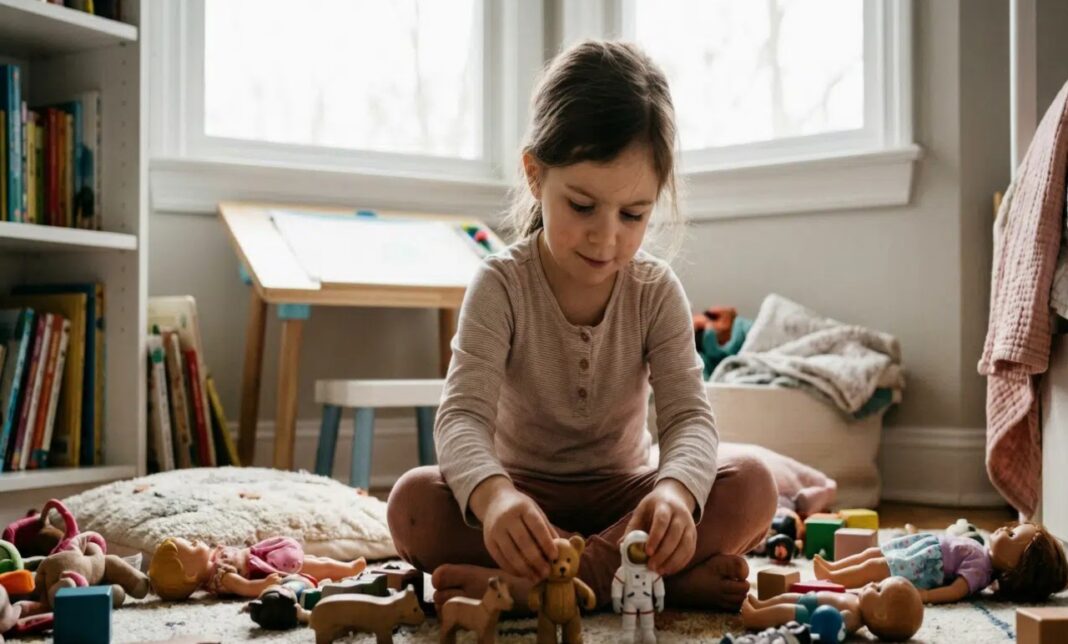

Childhood is the most critical stage of human life, where the foundations of a lifelong mental architecture are laid and the raw clay of personality begins to take shape. Child psychology is not merely about “mischief” or “adjustment” issues; it is a vast labyrinth spanning from neurobiological development to attachment theories, and from cognitive schemas to emotional regulation.
Secure Attachment: The Soul’s First Anchor
At the heart of child psychology lies Attachment Theory. This framework, founded by John Bowlby, argues that the relationship a baby forms with their primary caregiver (usually the mother) serves as the prototype for all future romantic and social relationships.
-
Secure Attachment: The child knows the caregiver will be there when needed. This sense of trust creates the “secure base” necessary to explore the world.
-
Anxious/Avoidant Attachment: Inconsistent or cold behavior from the caregiver triggers a schema in the child: “The world is a dangerous place, and I am not worthy of love.”
This initial bond determines the balance between the brain’s amygdala (fear center) and the prefrontal cortex (logic center). A securely attached child can more easily self-soothe during times of stress.
Cognitive Development: The Quest To Make Sense Of The World
According to Jean Piaget’s theory, children are like “little scientists.” They constantly conduct experiments to understand the world. However, the greatest mistake adults make is assuming children are “miniature adults.” In reality, a child’s logical filter operates entirely differently.
The Preoperational Stage (Ages 2-7)
Egocentrism dominates this phase. A child can only see the world from their own perspective. If they close their eyes while playing hide-and-seek, they truly believe no one can see them. This is not stubbornness; it is a cognitive limitation. Approaching children of this age with abstract concepts (like “honesty”) is less effective than using concrete examples, which is much healthier for their psychological development.
Emotional Regulation and Temper Tantrums
The “terrible twos” or pre-adolescent conflicts, which are often the most challenging periods for parents, are actually “declarations of independence.” In child psychology, emotional regulation is the ability to manage intense emotions (anger, sadness, excitement). Since a child’s prefrontal cortex is not yet fully developed, their “rational thinking” faculties are bypassed during a crisis. Asking a screaming child, “Why are you crying?” is like asking for a brainstorm in the middle of a hurricane; the child lacks the biological hardware to analyze the cause at that moment. This is where the “Mirroring” technique comes in: “You are very angry right now because your toy broke.” This sentence helps the child label the emotion and begin to calm down.
Play: The Child’s Native Tongue
In the psychoanalytic school, play is the purest realm where a child’s subconscious is projected. Theorists like Melanie Klein and Donald Winnicott argue that play is not just entertainment but a healing mechanism.
-
Prototyping: A child overcomes their fear of hospitals by playing “doctor.”
-
Role Rehearsal: By playing “house,” they simulate concepts of authority and caregiving.
If a child cannot play, or if their play is excessively repetitive and rigid, it may signal trauma or a developmental disruption. This is why play therapy is as valuable in child psychology as “surgical intervention.”
The Shadow Of The Modern Age: Screens and Social Isolation
Traditional approaches to child psychology are facing a new test today: Digital Exposure. Apps built on dopamine loops erode a child’s capacity to “wait” and “be bored.” Yet, boredom is the birth pang of creativity. A mind constantly bombarded by external stimuli cannot turn inward to write its own story.
Furthermore, the “perfect child” image created by social media puts hidden pressure on parents, which reflects onto children as conditional love. The message “You are loved only if you succeed” creates deep feelings of inadequacy and chronic anxiety in the child.
The Child As The Parent’s Mirror
Perhaps the deepest truth of child psychology is this: a child carries the unprojected shadows of the parent. The parent’s own childhood traumas, unresolved grief, or suppressed anger come to life again in the relationship with the child.
This is known as intergenerational trauma transmission. Solving a child’s behavioral problem often requires the parent to confront the “wounded child” within themselves. Children do not copy what we say; they copy what we live and what we feel.
Conclusion: The Need To Be Seen and Validated
In summary, child psychology is the process of fulfilling an individual’s need to say, “I am seen, I am heard, and I am accepted as I am.” The greatest psychological support we can give a child is not to provide a perfect life, but to equip them with self-compassion and resilience to handle life’s inevitable challenges.
It must be remembered that every child is a flower blooming at its own pace. Trying to force them open only damages their petals; all that is required is to provide secure, loving soil where their roots can grow deep. A healthy childhood is the strongest armor for adulthood.