


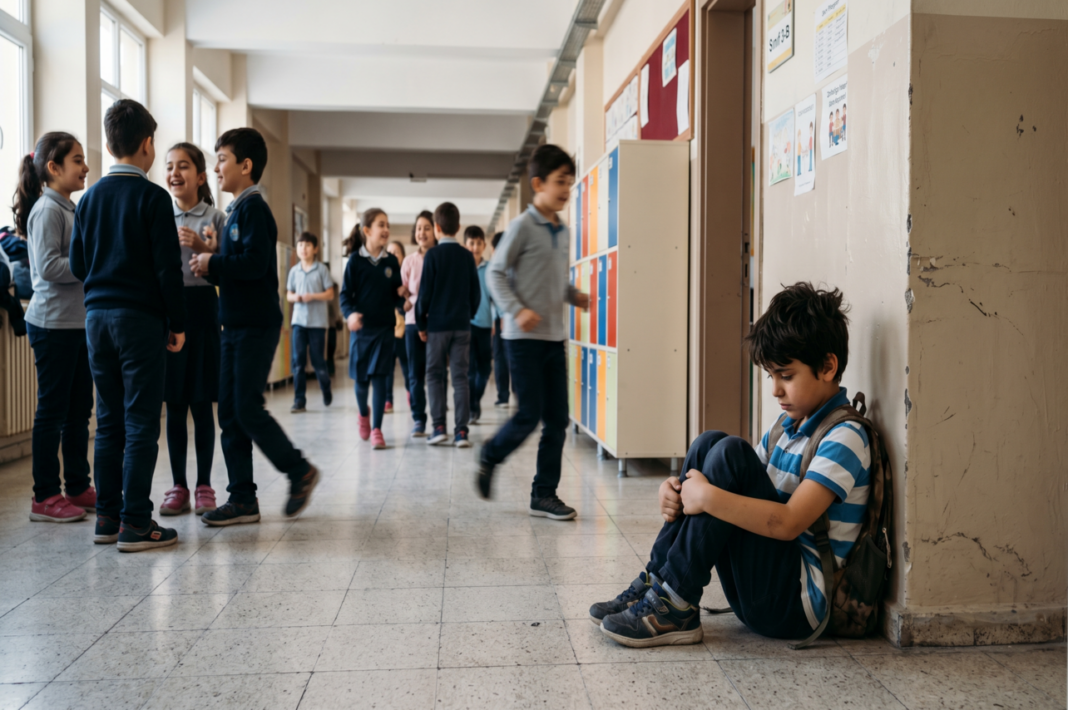

School is not only an environment where children acquire academic knowledge, but also a fundamental space where they develop social relationships and shape their emotional world. Therefore, feeling safe at school plays a critical role in children’s psychological development. However, not every child experiences school as a safe environment. Factors such as peer bullying, teacher attitudes, social exclusion, and an unsupportive school climate can lead to a sense of insecurity. This feeling often remains unnoticed, yet it can leave deep and lasting effects on a child’s inner world. This article examines the emotional, cognitive, and behavioral impacts of feeling unsafe at school on children.
The Fundamental Need For A Secure Base
A sense of safety is a fundamental psychological need for healthy child development. According to attachment theory, individuals are more likely to explore, learn, and build relationships in environments where they feel secure (Bowlby, 1988). When this sense of safety is disrupted in the school setting, children’s motivation to learn may decrease, and their academic performance may suffer. Children who feel unsafe may avoid participating in class due to fear of making mistakes, leading to a more passive learning experience over time.
Peer Bullying and Its Psychological Impact
One of the most common causes of insecurity at school is peer bullying. Children who are exposed to bullying are at a higher risk of experiencing anxiety, depression, loneliness, and low self-esteem (Olweis, 1993). Over time, these children may develop a negative attitude toward school and may even engage in school avoidance behaviors. Importantly, the effects of insecurity are not limited to victims of bullying; children who witness bullying may also feel threatened, which can negatively influence their overall sense of safety.
The Influence Of Teacher Attitudes On Safety
Teacher attitudes also play a significant role in shaping children’s perception of safety. Supportive and empathetic teachers create an environment in which students feel comfortable expressing themselves. In contrast, overly critical or authoritarian approaches may increase anxiety and fear. Children who are constantly criticized or ignored may develop feelings of worthlessness and withdraw from social interactions. This can hinder the development of self-confidence and negatively affect both academic and social functioning.
Physical and Social Structures Of The School
In addition, the physical and social structure of the school environment contributes to children’s sense of safety. Overcrowded classrooms, lack of supervision, and exclusionary peer relationships can make children feel isolated and vulnerable. When children do not feel a sense of belonging, their attachment to school weakens, and their ability to form healthy social relationships may be impaired.
Cognitive Processes and Academic Performance
The effects of insecurity are not limited to emotional experiences; they also directly impact cognitive processes. Children who constantly perceive threats have difficulty maintaining attention and concentration. The brain prioritizes detecting potential dangers rather than focusing on learning tasks, which reduces the efficiency of learning and negatively affects academic performance (Immordino-Yang & Damasio, 2007).
Long-Term Consequences For Mental Health
In the long term, chronic feelings of insecurity can reduce children’s psychological resilience. Prolonged exposure to stress may impair emotional regulation and increase the risk of developing anxiety disorders or depression later in life. Therefore, insecurity at school should not be viewed as a temporary issue, but rather as a significant risk factor that may affect children’s long-term mental health.
Conclusion
Feeling unsafe at school is a critical factor that influences children’s emotional, cognitive, and social development. For this reason, schools should not focus solely on academic achievement but also prioritize creating safe and supportive environments. Teachers’ empathetic and inclusive approaches, the implementation of anti-bullying programs, and the promotion of a positive school climate are essential. A safe school environment not only fosters academic success but also contributes to raising psychologically healthy individuals.
References
Bowlby, J. (1988). A secure base: Parent-child attachment and healthy human development. Basic Books.
Immordino-Yang, M. H., & Damasio, A. (2007). We feel, therefore we learn: The relevance of affective and social neuroscience to education. Mind, Brain, and Education, 1(1), 3–10.
Olweus, D. (1993). Bullying at school: What we know and what we can do. Blackwell.