
Understanding Or Transforming The Self? The Intersection Of Modern Psychology and Sufi Psychology

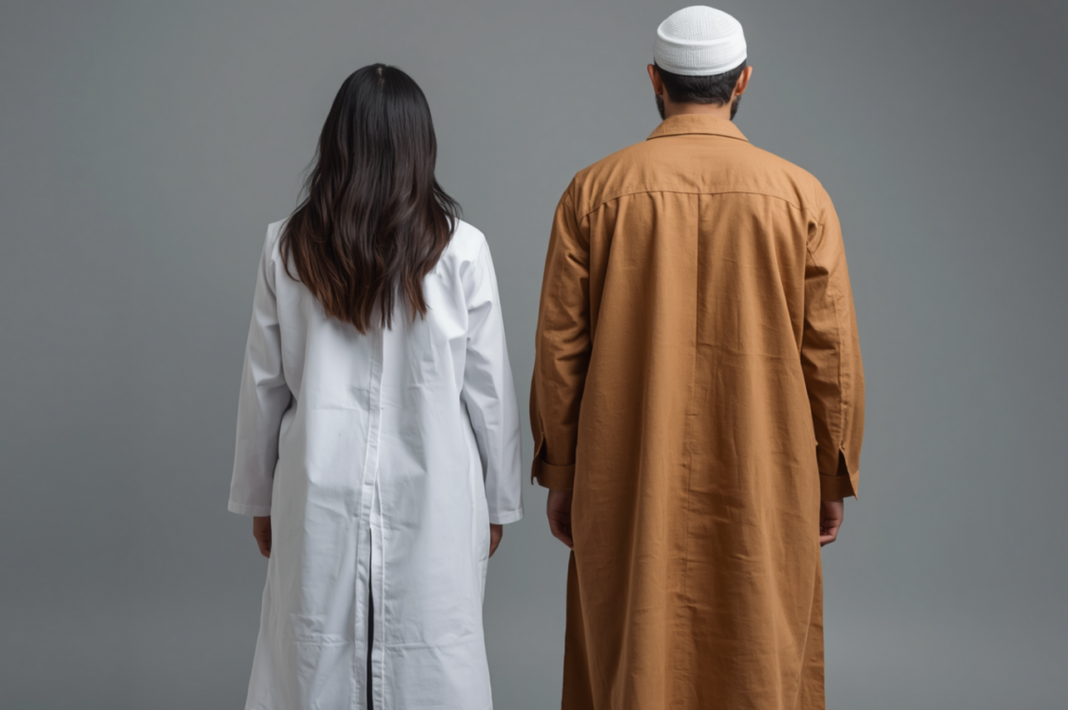
Modern psychology is a highly powerful field in understanding human behavior. Especially through cognitive-behavioral approaches and other theoretical frameworks, many psychological problems can be better understood. However, some aspects still remain insufficiently explained. In particular, deeper issues such as the search for meaning, inner emptiness, and self-questioning are not always adequately addressed.
The increasing prevalence of problems such as narcissism, identity confusion, and loneliness in recent years also supports this view. Research suggests that these issues are not only related to cognitive distortions but also to the individual’s inner world and self-structure. At this point, Sufi psychology offers a different perspective, as it considers the human being not only through the mind but also through the heart and soul.
The Human Being In Sufism: A Continuously Evolving Self
According to Sufism, the human being is not a fixed entity but a constantly changing and developing one. This transformation is primarily explained through the concept of the “nafs” (self/ego). The nafs has different stages, and individuals progress through these stages toward greater maturity.
Sufism defines this process as the “purification of the nafs.” In this process, traits such as arrogance, self-admiration, and showing off are seen as major obstacles. These traits are also considered similar to narcissistic tendencies described in modern psychology. The key point here is that Sufism does not view these issues merely as behavioral problems, but rather as imbalances within the individual’s inner world. Therefore, the solution begins from within rather than from external interventions.
Self-Actualization Or Self-Transcendence?
Humanistic psychology, developed by figures such as Abraham Maslow and Carl Rogers, emphasizes that human beings possess an inherent potential and strive to realize it. Sufism also accepts that individuals can develop. However, there is an important distinction. While humanistic psychology focuses primarily on the individual self, Sufism emphasizes establishing a relationship with a transcendent reality (the divine). For this reason, the goal in humanistic psychology is “self-actualization,” whereas in Sufism it is more about maturation and transformation.
Sufi Practices and Psychology
Sufism is not only a theoretical system but also includes practical applications. Practices such as dhikr (remembrance), muraqaba (self-observation), and self-reflection help individuals turn inward. Studies show that these practices help individuals:
-
regulate their emotions more effectively
-
cope with stress
-
improve their social relationships
In some respects, these practices resemble techniques used in modern psychology. For example, dhikr is similar to attention and awareness processes, while muraqaba resembles meditation and introspection. However, these are not identical concepts; they only share functional similarities.
What Do Studies Show?
Research on Sufi psychology is still limited. Existing studies present complex findings. For instance, one study found that Sufism influences individuals’ spiritual behaviors, whereas the direct effect of Sufi psychology was not statistically significant. This suggests that the influence of Sufism may not be direct but rather indirect. In other words, instead of immediately changing behavior, it may first transform the individual’s inner world.
Are Rituals Only Belief, Or Also A Psychological Tool?
Sufi practices are not only individual but also have a social dimension. Rituals, in particular, help people form connections with one another and unite around shared meanings. It is suggested that these rituals guide attention and regulate emotional processes. They also contribute to the development of more cooperative and prosocial behaviors.
Transformation Through The Eyes Of A Poet: Âgâh Osman Pasha’s Crisis and Sufi Healing Process
The influence of Sufism is visible not only in psychology but also in literature. In classical Turkish poetry, inner struggles and the process of overcoming them are frequently depicted. A concrete example of such an inner transformation can be seen in the experience of Âgâh Osman Pasha. He was a 19th-century Ottoman statesman who served in various regions and was also a poet with a divan. His experience represents not only a psychological struggle but also a process of inner transformation.
Due to years of service in different regions and heavy responsibilities, he experienced significant psychological strain. In his own accounts, this appears as intense anxiety, restlessness, and especially a deep crisis accompanied by fear of death. He also describes this condition at times as a form of “delusional illness.”
During this period, he consulted various physicians but found no solution, eventually realizing that his condition could not be resolved through physical methods alone. Over time, feelings of helplessness and hopelessness increased, leading to a deeper internal crisis. At this point, he encountered a person who told him that his condition was spiritual in nature and directed him to a Sufi lodge.
After going to the lodge, a process involving prayer, guidance, and spiritual suggestion began under the supervision of a sheikh. Within a short time, a noticeable improvement in his psychological state occurred. His inner distress decreased, and his mental confusion gave way to a more balanced state. According to his own account, the pressure within him disappeared and a sense of balance was restored. This experience was not merely a recovery but also a transformation. Pasha turned toward a Sufi path, joined the lodge, and expressed his experience through poetry. In this sense, the crisis became not an end but a new beginning. Therefore, this example shows that Sufi psychology offers not only healing but also a process of reconstructing the self.
Can Psychology and Sufism Work Together?
It is possible to consider modern psychology and Sufi psychology together. In particular:
-
Cognition (thought processes)
-
Emotional regulation
-
The transcendence of the ego
These are areas where these two approaches can complement each other. However, such integration should be approached carefully, as the foundational assumptions of the two perspectives differ.
Conclusion
Modern psychology is highly effective in understanding human behavior. However, Sufi psychology complements this understanding by focusing on deeper and spiritual dimensions of the human experience. Considering these two approaches together may provide a more comprehensive perspective, especially for individuals seeking to understand themselves.
References
Çalışkan, Nurettin – Ünal, Mehmet. “Klasik Türk Şiirinde Tahkiyeli Kaside: Âgâh Osman Paşa’nın Bunalımı ve Şifa Buluşu”. Kahramanmaraş Sütçü İmam Üniversitesi İlahiyat Fakültesi Dergisi. 45 (01 Haziran 2025): 505-522. https://doi.org/10.35209/ksuifd.1648810.
Koç, M. (2026). Hümanistik psikoloji ve tasavvuf psikolojisi perspektifinden “model insan” tasarımı: Karşılaştırmalı semantik analizler. Gümüşhane Üniversitesi İlahiyat Fakültesi Dergisi, 15(29), 216–250. https://doi.org/10.53683/gifad.1766391
Maharani, M. D., & Wakhidah, R. L. (2025). Psychology and Sufism approaches to narcissistic personality disorder (NPD): Toward an integrative model. Journal of Islamic Guidance and Counseling, 9(1), 11 19.
Naan, Muliadi, Muhlas, & Jais, A. (2025). Haul, kyai, and barakah: Integrating ritual theory and Sufi psychology in pesantren studies. Living Islam: Journal of Islamic Discourses, 8(1), 38–46.
Ünsal, Rümeysa – Dogan, Rumeysa Nur. “Ruh Sağlığı Ve Tasavvuft Yaşantı Arasındakt İltşkt; Ststemattk Btr Ltteratür Taraması Ve Analtzt”. Düzce İlahtyat Dergtst 9/1 (June 1, 2025): 170-202. https://dot.org/10.61272/dutd.1603688.