


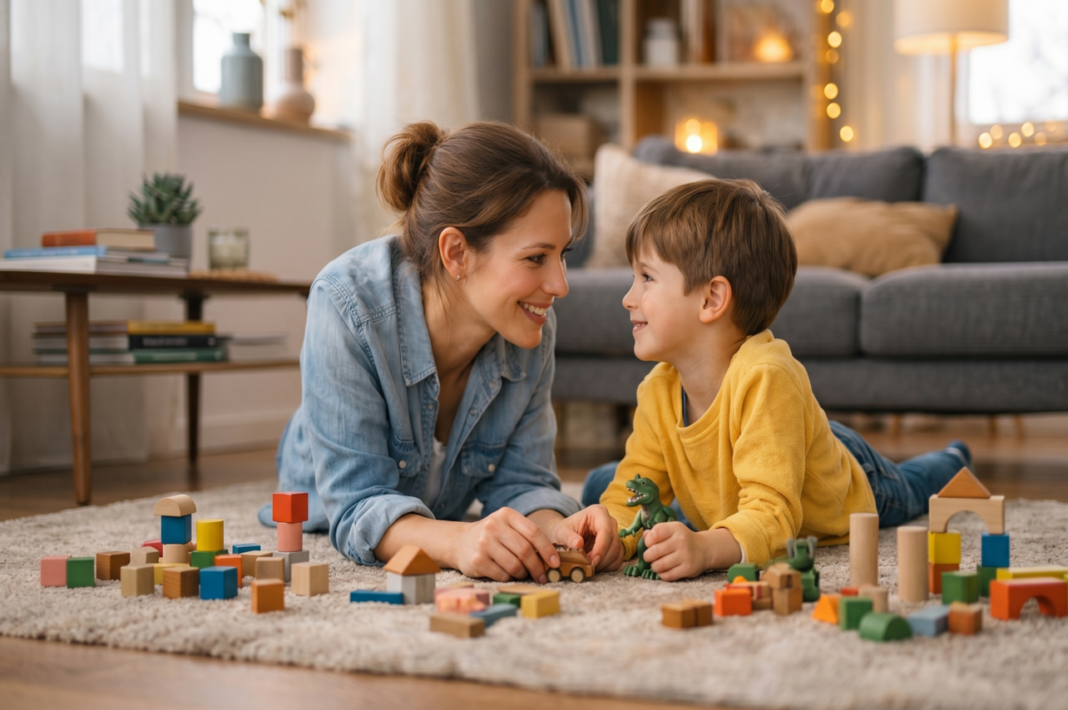

One of the most subtle misconceptions of modern parenting is the belief that children’s needs can be fulfilled through material offerings. Toys, courses, digital devices, carefully planned activities—most are given with love and good intentions. Parents want their children to be happy, successful, and well-supported. Yet an essential truth is often overlooked: what children need most cannot be purchased. The greatest gift we can offer a child is our genuine attention.
Attention does not simply mean being physically present in the same space. Living in the same home, sharing meals, or spending time in the same room does not automatically create emotional connection. For a child, attention means being seen, heard, and valued. It is the experience of an adult who listens with curiosity, makes eye contact, and creates emotional space for the child’s inner world. Children recognize the quality of attention long before they understand words.
The Challenges Of Modern Parenting
Today’s parents live within intense and demanding routines. Work responsibilities, financial concerns, and the constant pull of digital distractions divide attention into smaller and smaller fragments. Within this fast-paced environment, time spent with children can unintentionally become something scheduled merely to fulfill a parental duty. Children who are occupied with toys, entertained by screens, or constantly moved between activities may appear supported from the outside, yet emotionally they may feel alone.
Giving a child a toy to keep them busy often brings short-term relief for the parent. The child becomes quiet; the environment feels manageable again. However, children may internalize a different message: It is easier to keep me occupied than to be with me. Objects can entertain and even support development, but they cannot create emotional bonds. Connection is formed only through human presence.
The Illusion Of Productivity In Development
A similar dynamic appears when children’s lives are filled with endless activities. Modern parenting frequently equates development with productivity—language lessons, sports practices, artistic workshops, structured programs. While these opportunities can be beneficial, they cannot replace relational connection. From a child’s perspective, the value of an activity lies not in what is being done, but in the emotional interaction within it. Ten minutes of spontaneous, joyful play in the park can nurture a child far more deeply than hours of carefully organized but emotionally distant engagement.
Children possess remarkably sensitive emotional awareness. While adults often focus on verbal communication, children read behavior. When a parent says, “I’m listening,” but continues scrolling through a phone, the child receives a clear emotional message: I am not fully important right now. Conversations carried out mechanically or playtime approached as an obligation are easily sensed by children. What they seek is not entertainment, but shared presence.
Building Psychological Safety Through Connection
At this point, an important distinction emerges: children do not primarily need to be constantly stimulated; they need to feel connected. Experiencing a caregiver as emotionally available forms the foundation of psychological safety. This sense of safety develops not through grand gestures, but through repeated small moments—making eye contact when they return from school, listening patiently to a story that may seem trivial, accepting an invitation to play with genuine willingness, or simply sitting beside them without distraction.
From a developmental psychology perspective, a child’s sense of self is closely shaped by experiences of attention received from caregivers. A child who feels seen develops a sense of worth. A child who feels heard learns that emotions matter. A child who is taken seriously grows into an adult who can express needs with confidence. In contrast, children who repeatedly experience emotional postponement or partial attention may develop patterns of excessive approval-seeking, emotional withdrawal, or difficulty recognizing their own needs.
The Importance Of Authentic Interaction
It is important to emphasize that parenting does not require perfection. No parent can remain fully attentive at every moment of the day. The goal is not constant availability, but authentic connection. Research consistently shows that the quality of time shared with children matters more than its quantity. Even brief periods of undivided attention—free from distractions—can provide powerful emotional nourishment.
Childhood, from an adult perspective, may appear filled with toys, achievements, and activities. Yet psychologically, it is built from emotional experiences rather than material memories. As adults, people rarely remember exactly which toys they owned; instead, they remember how they felt in the presence of significant adults. They remember whether they felt safe, welcomed, and important. Children grow up sensing whether they were truly accompanied or simply managed. They remember the adults who paused, turned toward them, and entered their world with genuine interest. These moments quietly shape resilience, self-esteem, and the ability to form healthy relationships later in life.
Conclusion
Parenting is often associated with doing more—providing more opportunities, more resources, more structured experiences. Yet what children truly need is often not more, but more real. Attention directed toward a child nurtures belonging, strengthens self-worth, and supports secure attachment. It is one of the most powerful psychological investments a caregiver can make.
What ultimately shapes a child’s development is not how busy a parent is, but how emotionally present that parent becomes during shared moments. Children remember not our explanations, but the sincerity of our presence.
In the end, the most lasting gift we can give children is neither perfection nor material abundance. It is the experience of being worthy of someone’s time, focus, and emotional presence. Sometimes the most meaningful act of parenting is simply to pause, turn toward the child, and accompany them in their world—without teaching, correcting, or rushing.
Because for a child, the deepest message of love is this: You are worth my attention.
References
Ainsworth, M. D. S., Blehar, M., Waters, E., & Wall, S. (1978). Patterns of attachment: A psychological study of the strange situation. Hillsdale, NJ: Lawrence Erlbaum Associates.
Bowlby, J. (1969). Attachment and loss: Vol. 1. Attachment. New York: Basic Books.
Feldman, R. (2007). Parent–infant synchrony and the construction of shared timing; physiological precursors, developmental outcomes, and risk conditions. Developmental Psychology, 43(2), 329–354.
Ginsburg, K. R. (2007). The importance of play in promoting healthy child development and maintaining strong parent–child bonds. Pediatrics, 119(1), 182–191.
Kabat-Zinn, M., & Kabat-Zinn, J. (1997). Everyday blessings: The inner work of mindful parenting. New York: Hyperion.
Siegel, D. J., & Bryson, T. P. (2011). The whole-brain child: 12 revolutionary strategies to nurture your child’s developing mind. New York: Delacorte Press.
Siegel, D. J., & Hartzell, M. (2003). Parenting from the inside out: How a deeper self-understanding can help you raise children who thrive. New York: Tarcher/Perigee.
Winnicott, D. W. (1965). The maturational processes and the facilitating environment: Studies in the theory of emotional development. London: Hogarth Press.