



‘’Being a human being in such an age is enough of a test for all of us.’’
Sometimes the weight of this test becomes so heavy that Manga’s quote feels like it’s mixed with reality: ‘’I was born at the end of the world…’’
The news we see when we wake up in the morning; wars, natural disasters, economic crises all over the world, tiny bodies dying of starvation on the one hand while fighting obesity on the other… It is as if the world is getting heavier and heavier and we are becoming unable to breathe under this weight. Many of us find ourselves asking the question: How can I have hope when so many bad things are happening?
Hopelessness is more than just individual disappointment; it can also be a collective feeling. But is there a psychological basis for this feeling? And is it possible to hope again despite everything?
Psychological Bases of Hopelessness
-
Learned Helplessness: Martin Seligman’s work shows that constant exposure to negative events beyond our control creates in us the belief that ‘’nothing will change no matter what I do.’’ News of war, poverty, or societal misdeeds triggers powerlessness.
-
Negativity Bias: Our brains are evolutionarily programmed to recognize danger. This is why we focus on negative news more than we focus on positive news. One good news story doesn’t balance out ten bad ones; our sense of hope is weakened as our minds constantly scan for threats.
-
Trauma and Secondary Traumatization: The devastating events we see in the news can create a ‘’secondary traumatization’’ effect even if we do not experience them directly. The images of violence and chaos we are constantly exposed to, especially on social media, damage our sense of security and cause us to become emotionally exhausted.
Is the World So Bad, or Is It Our Perception?
We need to make an important distinction here: The world has historically always been surrounded by challenges. Power struggles have led to protracted wars between empires, and the use of ideologies as weapons of mass destruction has led to genocides that will long be remembered.
Despite all these atrocities, I don’t think that individuals today suffer from collective despair as much as individuals did in the past, because the uncensored violent content that is immediately served to the media unfortunately allows us to witness chaos and brutality first-hand.
This content, which affects all of us, big and small, hits our already tired bodies and minds with extra blows, making us feel weaker and more inadequate than we already are. As a result, the following voices begin to echo in our minds: ‘’Where is the world going?’’
Dear reader, behind this question lies the following thought: ‘’The world I live in is no longer safe and is becoming more unsafe by the day. What does the future hold for me and my loved ones?’’ This question comes out of our survival mechanism and is quite normal. One of the things that the human mind cannot tolerate is uncertainty. And when faced with some kind of uncertainty, the human mind naturally immediately goes in search of security.
But this uncertainty is not new. Throughout history, our ancestors have faced perhaps hundreds of uncertainties. What makes today different is that we are exposed to all these events instantly and uncensored. Wars, which were only a phenomenon in history books, are now in our pockets.
This constant exposure triggers the danger-oriented structure of our brains, causing us to feel despair in spades. So, rather than asking ‘’Where is the world going?’’, we need to ask ourselves a better question: ‘’Where am I going?’’
From Hopelessness to Hope: Psychological Approaches
-
Theory of Hope: According to C.R. Synder, hope consists of three components:
-
Goal: Knowing what we want to achieve
-
Pathways: Being able to see the paths to this goal
-
Motivation: Finding the energy to walk those paths
When these three elements are combined, it is possible to re-sprout a sense of hope even in difficult times.
-
The Search for Meaning: Based on his experiences in the Nazi camps, Frankl says that ‘’meaning’’ is the most important factor that enables people to survive even in the most difficult circumstances. Asking ourselves, ‘’What value can I find in this suffering?’’ is a powerful tool for transforming despair.
-
Small Impacts, Big Waves: Our individual power may seem limited in the face of social problems, but small contributors (support for charity campaigns, raising social awareness, supporting our immediate community) psychologically strengthen the feeling that ‘’I can have an impact’’ and ‘’I can make a difference.’’
Managing News Exposure
-
Set limits: Receiving updates at certain times of the day instead of constant news monitoring
-
Dose Adjustment: Prefer verified written news reports over images of disasters
-
Create Balance: Making space for positive developments and solidarity stories
Last Word: Looking for Hope in Small Places
As Zarifoglu said: ‘’Being a person of such an age is enough for all of us as a test.’’
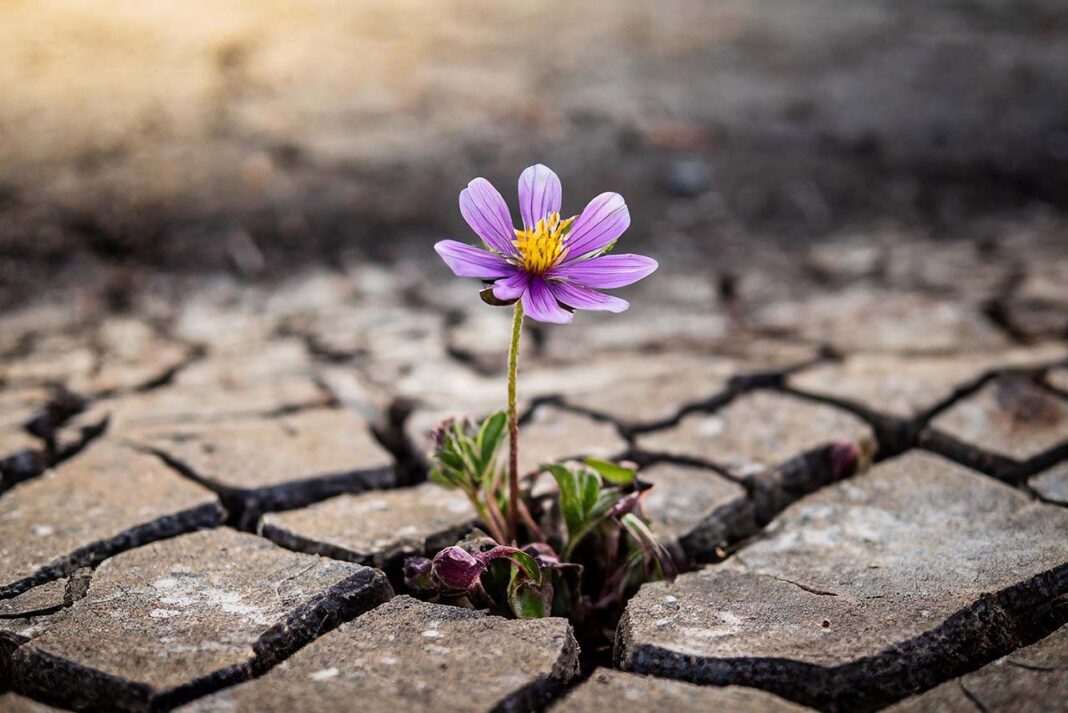
Perhaps this is precisely why we should look for hope not in big changes, but in small human stories, in solidarity, in the possibility of making a single life beautiful.
Despair is as much a part of being human as hope. And sometimes it is possible to hope even when it feels like the world is coming to an end.