
Dreams Caught Offside: What Did the World Cup Teach Us?

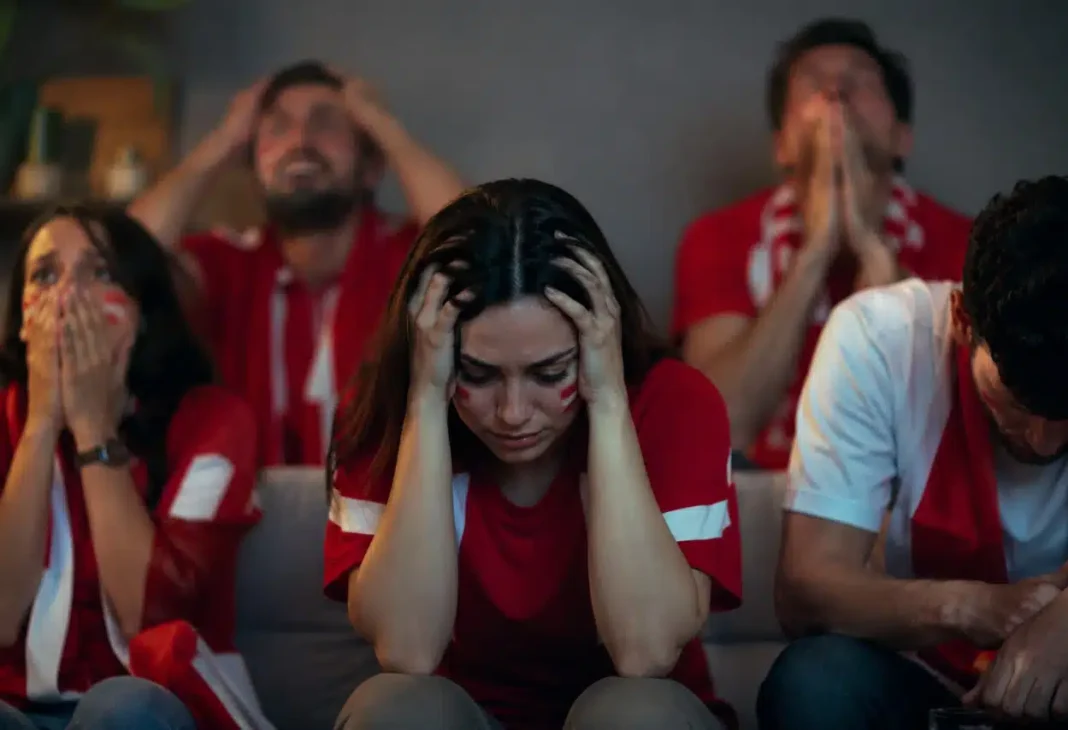
Major tournaments such as the FIFA World Cup are much more than football competitions. They bring a nation’s hopes, dreams, shared excitement, and the emotions of millions of people onto the pitch. Therefore, when a team is eliminated, it is not only the players who experience disappointment, but also the millions of supporters who share in a profound sense of loss.
So why does a team sometimes fail to perform as expected? Can everything be explained by technical ability alone? Or are there invisible psychological factors that significantly influence the outcome?
Performance Under Pressure
Why is it that an athlete can successfully perform a skill hundreds of times during training, yet struggle to execute the same skill in a match watched by millions?
One of the most important reasons is performance pressure.
When the human brain perceives a threat, the “fight-or-flight” response is activated (Güçlü, 2001). Heart rate increases, muscles become tense, breathing patterns change, and attention begins to narrow. This mechanism originally evolved to ensure our survival. However, in competitive sports, the very same system can become one of the greatest obstacles to optimal performance.
Instead of focusing on the game itself, athletes begin to focus on avoiding mistakes.
However, successful performance is often less about avoiding mistakes and more about being able to continue playing despite them.
The Weight of Expectations
Athletes competing in international tournaments do not play only for themselves. They carry the expectations of millions of people.
“We have to win the trophy.”
“The country expects this from us.”
At first glance, these statements may appear motivating (Menevşe, 2019). However, they can also create a considerable psychological burden.
As expectations rise, so does the fear of making mistakes.
Athletes are not only striving to defeat their opponents but are also trying not to disappoint millions of supporters. This increases cognitive load and may negatively affect decision-making during competition.
The Invisible Power of Fans
When people think of fans, they often imagine cheering crowds in the stands. However, the psychological influence of supporters extends far beyond stadium chants. A supportive atmosphere can increase athletes’ motivation, strengthen their self-confidence, and help them regain focus during difficult moments in competition (Taşmektepligil et al., 2015).
However, there is another side to the story.
Intense criticism before matches, insults on social media, online shaming, and constant comparisons can all increase athletes’ psychological burden. Thousands of negative comments posted after a single match may remain in an athlete’s mind long after the final whistle.
Coping with Criticism Is Also Part of Professionalism
For athletes representing their national team, psychological resilience is just as important as physical preparation. Wearing the national jersey means carrying not only the love and support of millions but also their expectations and, inevitably, their criticism.
Of course, no athlete should ever be subjected to insults or degrading comments. However, accepting constructive criticism is also part of being a professional. Recently, some football players have perceived criticism as a personal attack and responded harshly, demonstrating that coping with criticism is itself a psychological skill that can be developed.
Growth often begins with acknowledging one’s shortcomings. One of the characteristics that distinguishes successful athletes is their ability to learn from their mistakes rather than deny them.
Psychological Recovery After Mistakes
Some teams completely lose momentum after conceding a goal, while others manage to regain their balance within minutes. Much of this difference can be attributed to psychological resilience.
Psychological resilience does not mean never making mistakes. Rather, it is the ability to regain focus after making one (Karademir & Açak, 2019).
A missed penalty or an early conceded goal should not define the remainder of the match.
Being able to leave those moments in the past is one of the psychological skills that athletes should develop.
Football is a game decided by split-second decisions. Dwelling on a single mistake can negatively influence dozens of subsequent plays.
Social Identity and the Emotional Meaning of Defeat
The disappointment and sadness experienced by supporters after a defeat can largely be explained through the concept of social identity (Zelyurt, 2019).
People often experience the success of the team they support as if it were their own. When the team wins, we say, “We won.” When it loses, we say, “We were eliminated.” A sense of belonging transforms the team’s achievements into part of our own identity (Zelyurt, 2019). This phenomenon becomes even more pronounced when the team represents an entire nation.
As a result, defeat becomes more than a sporting outcome—it becomes an emotional experience.
Why Is Psychological Preparation Still Overlooked?
In Türkiye, discussions about sports continue to focus primarily on physical preparation, tactics, and technical skills. However, many of the world’s leading clubs and national teams now regard sport psychology as an indispensable component of performance, with sport psychologists serving as integral members of their performance staff. Despite this global shift, sport psychology has yet to receive the recognition it deserves in our country (Bayar, 2011).
During the most recent tournament, when the national team’s coaching staff was asked whether they had a sport psychologist, the response, “I am their psychologist,” reflected the prevailing attitude toward this field.
Coaches can certainly provide emotional support to their players. Nevertheless, this cannot replace the scientific expertise and professional role of a qualified sport psychologist. Anxiety management, decision-making under pressure, psychological recovery after mistakes, and effective team communication all require specialised knowledge.
Perhaps it is time to ask ourselves an important question:
Are we ready to value mental performance as much as physical performance?
Final Thoughts
Saying goodbye to a World Cup is undoubtedly disappointing. However, defeats often reveal not only our weaknesses but also our opportunities for growth.
Perhaps the real question is not, “Why did we lose?” Instead, it is, “What has this experience taught us?”
True success is not simply about lifting a trophy. It is about maintaining hope, learning from mistakes, and finding the strength to stand up again.
Football teaches us much more than how to play a game. It teaches us about human psychology, coping with pressure, working together, and beginning again after failure.
That is why some matches end on the scoreboard, yet continue to live on in our minds and emotions long after the final whistle.
References
Bayar, P. (2011). Türkiye’de spor psikolojisinin gelişimi. SPORMETRE Beden Eğitimi ve Spor Bilimleri Dergisi, 8(4), 131–136.
Güçlü, N. (2001). Stres yönetimi. Gazi Eğitim Fakültesi Dergisi, 21(1).
Karademir, T., & Açak, M. (2019). Üniversiteli sporcuların psikolojik dayanıklılık düzeylerinin incelenmesi. Kahramanmaraş Sütçü İmam Üniversitesi Sosyal Bilimler Dergisi, 16(2), 803–816.
Menevşe, A. (2019). Hizmet kalitesine yönelik beklenti ve algıların takım ve bireysel millî sporcularda karşılaştırılması. Spor Eğitim Dergisi, 3(3), 32–39.
Taşmektepligil, M. Y., Çankaya, S., & Tunç, T. (2015). Futbol taraftarı fanatiklik ölçeği. Spor ve Performans Araştırmaları Dergisi, 6(1), 41–49.
Zelyurt, M. K. (2019). Futbol taraftarlığı, özdeşleşme ve kimlik: Taraftarlıktan fanatizme. Sportif Bakış: Spor ve Eğitim Bilimleri Dergisi, 6(1), 85–105.