


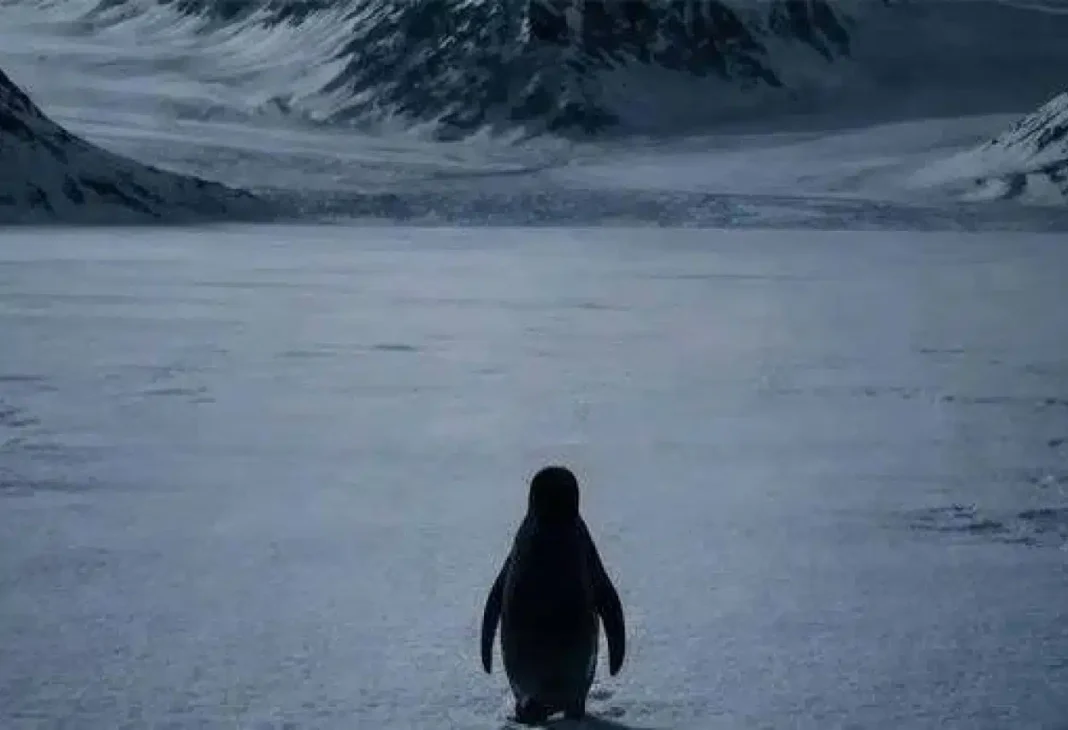

This year, a video suddenly began circulating across social media.
It showed a lone penguin walking away from its colony.
The footage itself was not new. It first appeared in Werner Herzog’s 2007 documentary Encounters at the End of the World. Years later, it resurfaced and captured the attention of millions.
But why?
Because people were not simply watching a penguin.
They were debating its decision.
Some admired its courage.
Others believed it had made the greatest mistake of its life by leaving the colony.
Some even suggested that it was walking toward its own death.
Yet while reading the comments, one in particular stayed with me.
Someone wrote:
“Even if I knew this would be my end, I would still want to say that I chose to walk that path as myself. That I didn’t give up who I was just to fit into a group or meet other people’s expectations.”
I kept thinking about that comment.
Because perhaps we were never really talking about the penguin.
Perhaps we were all thinking about that walk in our own lives.
Do we listen to our inner voice?
Or do we choose the safer, more familiar path—the one everyone else is already walking?
Maybe that is why the penguin became something more than simply a penguin walking alone.
It became a reflection of ourselves.
They Tried to Stop Him
The documentary crew and the scientists observing the penguin did not try to stop it.
Years later, however, the people watching the video did.
Some said,
“It shouldn’t leave the colony. Something bad will happen.”
Others believed it was heading in the wrong direction.
Some argued that it was merely following a faulty instinct.
Others viewed it as an example of natural selection.
From each perspective, these interpretations were understandable.
My own perspective, however, is a little more psychological.
Because similar situations occur throughout our own lives.
Whenever we decide to move to another city, leave a job, change careers, or step beyond what is considered normal, someone inevitably tries to stop us.
Sometimes people genuinely want to protect us.
Sometimes they are trying to understand us.
And sometimes they are simply projecting their own fears onto us.
To be honest, it is not always easy to distinguish between these possibilities.
Yet perhaps all those voices ultimately communicate the same message:
“Stop.”
“Think about it one more time.”
“What if you’re wrong?”
But the Penguin Kept Walking
Perhaps that is what struck me the most.
Nobody knew how the story would end.
Not even the penguin.
And yet, it kept walking.
I think that is where courage truly begins.
Courage is not choosing a path when you already know where it leads.
It is taking the first step despite uncertainty.
As I write this, I realise I am also writing, in some small way, about myself.
Because I, too, am moving through a similar season of life.
I wish I had all the answers from the very beginning.
I wish I knew exactly how everything would unfold.
I wish I had never doubted myself.
But life rarely works that way.
Some answers reveal themselves only after we begin walking.
Perhaps that is why the penguin did not seem foolish to me.
It seemed brave.
Not because it ignored advice—
but because it chose to keep walking without knowing what lay ahead.
Individuation: The Courage to Become Yourself
There is another reason I admire the penguin.
It chose its own direction.
It did not simply follow the colony.
At first glance, that may appear to be a simple decision.
Psychologically, however, it is anything but simple.
Human beings are social creatures.
We want to belong.
We want to be accepted.
We fear rejection.
That is why we sometimes defend opinions we privately question simply because they are shared by the majority.
Or we abandon our own desires simply to avoid being alone.
Psychology offers different ways of understanding this tension.
On one hand, there is conformity.
On the other, there is individuation.
Individuation refers to the gradual process of moving beyond becoming the person others expect you to be and beginning to build a life shaped by your own values, beliefs, and choices.
And that process is rarely as easy as it sounds.
Because choosing your own path sometimes means accepting that you may have to walk part of it alone.
Perhaps that is why I found the penguin so courageous.
Not because it rebelled against the colony.
But because it chose its own direction.
Individuation is not about choosing to be different from everyone else.
It is about choosing to become yourself.
Disappointing Others and Taking Responsibility
Choosing to be yourself does not mean everyone will support—or even understand—your decisions.
Sometimes people build dreams on your behalf.
They decide what kind of life you should live, which career you should pursue, or which path would be best for you.
When you choose differently, they may feel disappointed.
I used to believe that disappointing others was always something negative.
Now I think it is sometimes a natural part of growth.
Because growing up often means stepping away from the life other people imagined for you.
Making your own decisions is not only about freedom.
It is also about responsibility.
If your choices bring happiness, you should be able to embrace that happiness.
If they lead to disappointment, you should also be willing to accept the consequences without placing the responsibility elsewhere.
Because choosing your own life also means taking ownership of it.
Perhaps that is what maturity really is.
Not controlling life—
but understanding its outcomes, learning from them, and adapting when circumstances change.
Perhaps what ultimately helps us survive is not avoiding mistakes altogether, but developing the ability to adapt.
Uncertainty and Courage
Perhaps courage is not the absence of fear.
Perhaps courage is taking the first step despite uncertainty, without having every answer in advance.
Because none of life’s most important decisions come with guarantees.
Not choosing a university.
Not moving to another country.
Not beginning—or ending—a relationship.
None of us knows exactly how our story will unfold.
Maybe uncertainty is not the opposite of courage.
Perhaps courage can exist only where uncertainty exists.
And perhaps, at some point in life, we all become that penguin.
We choose a path that others believe is wrong.
We disappoint some people.
We have no idea how the story will end.
Yet we keep walking.
Because sometimes what helps us grow is not discovering the perfect path—
but having the courage to choose our own.