


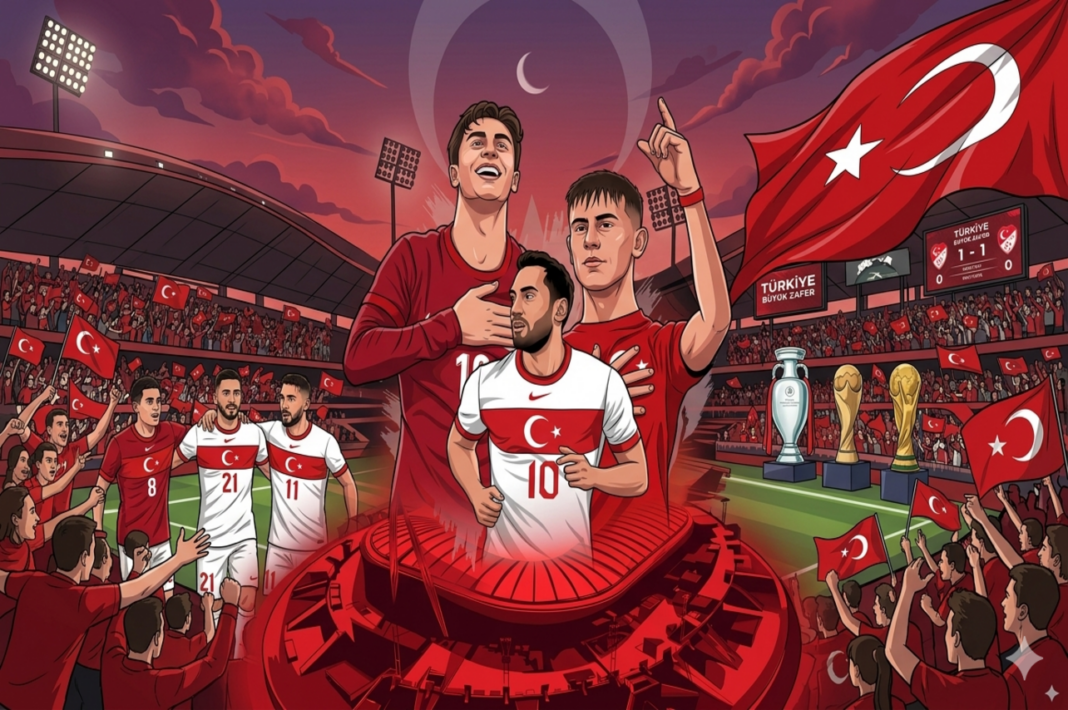

Football is often perceived as just a game. However, there are moments when what happens on the field is far more than a match. The qualification of the Turkey National Football Team for the World Cup represents much more than a sporting achievement. This process turns into a powerful psychological experience that reveals how individuals define themselves, how they connect to a society, and how they share their emotions.
The Psychology Of “We”: Belonging and Identity
Human beings, by nature, feel the need to belong to a group. This is not only a social preference but also a psychological necessity. The national team is one of the most visible reflections of this need. Even the language used while watching a match clearly demonstrates this sense of belonging: Not “they won,” but “we won.” Not “the national team,” but “Our Boys.” This shift in expression is not merely a linguistic choice; it reflects how individuals position themselves as part of the team. The national team creates a collective identity that goes beyond individual identity. People from different cities and lifestyles can unite around the same jersey. This unity contributes to the strengthening of social bonds.
Emotional Synchronization: Collective Joy And Disappointment
One of the most striking aspects of national matches is the simultaneous experience of emotions. The fact that millions of people feel joy or disappointment at the same time is defined in psychology as “emotional contagion” (Limon, 2019). When a goal is scored:
-
You may hug people you do not even know
-
Streets suddenly become lively
-
Social media fills with the same emotion
This is the transformation of an individual emotion into a collective experience. People feel that they are not alone. Especially in an increasingly individualistic modern world, this creates a strong sense of togetherness.
A Breathing Space: The Psychological Function Of Sport
Daily life is full of stress, responsibilities, and uncertainties. At this point, sports—especially national team matches—serve as a short-term “psychological break” for people. However, this is not an escape; rather, it is a mechanism of emotional regulation (Bilir, 2020). While watching matches, people:
-
Express their emotions
-
Release tension
-
Focus on a shared point
This process alleviates the individual’s psychological burden. Particularly during socially challenging times, the unifying and relieving effect of sports becomes much more evident.
The Invisible Burden On The Field: Performance and Pressure
What is a source of excitement for fans represents a significant psychological burden for players. Wearing the national jersey is not just a career step; it also means carrying the expectations of millions. This can:
-
Increase performance anxiety
-
Trigger fear of making mistakes
-
Make concentration more difficult
However, a certain level of pressure can enhance performance. The key is keeping this pressure at a manageable level (Yılmaz, 2021). Otherwise, a decline in performance becomes inevitable. For this reason, sports psychology focuses not only on physical strength but also on mental resilience.
The Public Eye: The Cycle Of Idealization and Devaluation
When it comes to the national team, the role of society is highly influential. Athletes are quickly glorified during moments of success and just as quickly criticized during moments of failure. This creates a dual psychological effect:
-
Success → Excessive idealization
-
Failure → Harsh criticism and devaluation
This fluctuation can directly affect athletes’ self-esteem and motivation (Yılmaz, 2021). With the influence of social media, this pressure has become more visible and intense. Performance is no longer evaluated only on the field but also within millions of comments.
Shared Pride and Hope: Impact On Collective Mood
International success of the national team has a strong psychological impact on society. People feel stronger, more hopeful, and more connected. Sometimes a single goal can:
-
Boost morale
-
Revive hope
-
Strengthen the sense of unity
Therefore, sports achievements cannot be evaluated solely by the score. They should also be assessed in terms of their contribution to the collective emotional state of society.
Conclusion: An Experience Extending From The Field To The Heart
The national team’s participation in the World Cup or its success cannot be explained solely through sports. This process encompasses many psychological dynamics such as identity, belonging, emotional sharing, and social bonds. There are matches that are played on the field, but their impact is felt in the stands, in the streets, and most importantly, within people. That is why national matches are not merely competitions played on the field; they are a reflection of how a nation feels and expresses itself.
A small note: We are proud of you, “Our Boys.”
References
Bilir, H. (2020). Sporun toplumsal işlevi: Sosyolojik bir yaklaşım. Aksaray Üniversitesi İktisadi ve İdari Bilimler Fakültesi Dergisi, 12(4).
Limon, S. (2019). Sağlık kuruluşlarında duygusal bulaşma ve iş motivasyonu: Tıbbi sekreterler üzerinde bir uygulama. Bucak İşletme Fakültesi Dergisi, 2(2), 224–241.
Yılmaz, A. (2021). Sporda zihinsel dayanıklılık. Uluslararası Dağcılık ve Tırmanış Dergisi, 4(2), 23–42.