
When a Person Leaves, the Bond Remains: Art in the Process of Grief

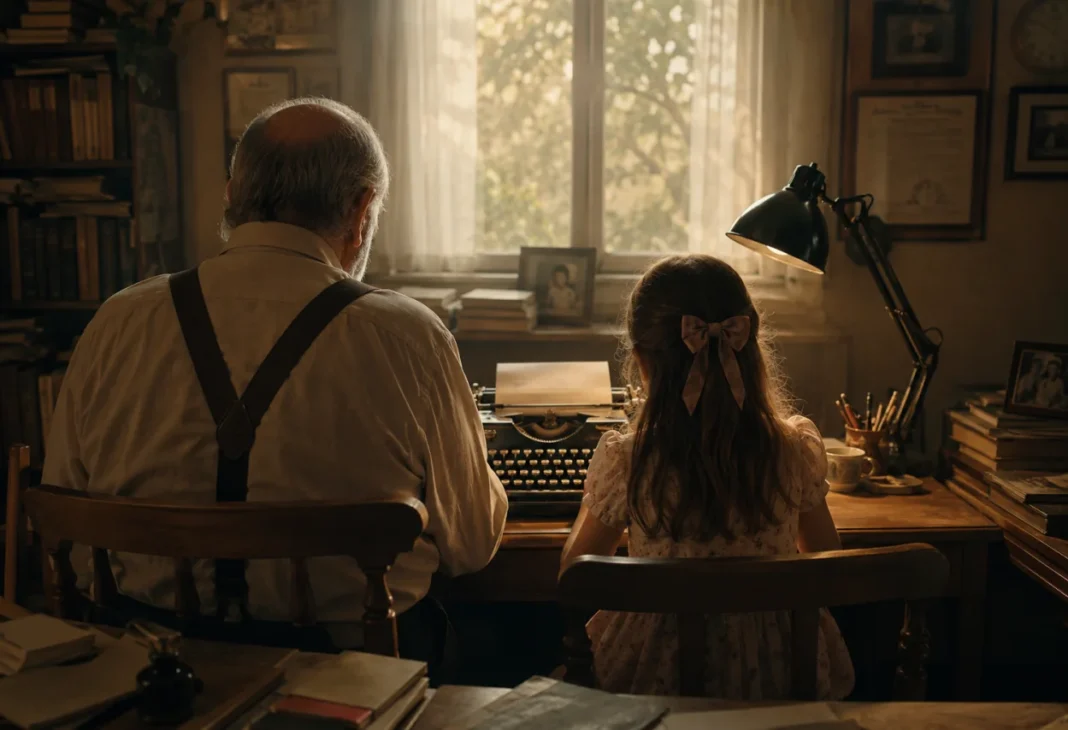
When I was a child, my grandfather had a typewriter. Back then, to me, it was simply an object that made sounds when I pressed its keys—something that sparked a different kind of curiosity with every letter. For my grandfather, who was a lawyer, it had been a part of his profession for many years. As a little girl, I would sit at his typewriter and press the keys at random. Every time, my grandfather would say the same thing to me: “Write, my girl.” I never knew that one day, those two words would come to mean so much in my life. Now, I write. But this time, I write for him.
Some people in our lives are part of the world in which we feel safe. Our childhood, our memories, our habits, and certain parts of who we are are held within our relationship with them. For this reason, losing an important attachment figure is not simply losing a person. Sometimes, it can feel as though we have lost a part of our past along with them—a part of the world that once felt familiar and safe. Perhaps grief is, in part, about this. Someone is no longer beside us. Yet the bond we formed with them does not suddenly disappear. A scent can take us back years. A song can unexpectedly leave a lump in our throat. In front of a photograph, time can seem to stop for a few seconds. When our fingers trace the surface of an object, it can feel as though we are touching once again the place where that person touched our lives.
Some bonds are not made only of the time we spend together. They are also made of the traces people leave within us. For this reason, grief may be less about learning to forget the person we loved and more about learning to live with their absence—to carry the bond we shared with them in a new form. And perhaps this is exactly where art can accompany us.
Where Words Are Not Enough
Sometimes, in the midst of grief, we cannot find the words to describe what we feel. You say, “I miss them,” but the entirety of that longing does not fit inside those words. You say, “I am deeply sad,” but it is still not enough to describe the place that person held in your life. Art can begin to speak where words fall silent. A painting, a poem, a song, a photograph, a piece of ceramics… None of these can bring back the person we have lost. Yet they can create a space through which we may bring outward what is happening within us.
Sometimes, a colour can hold a feeling we have not yet been able to put into words. Sometimes, our hands shape something our minds are not yet able to explain. Sometimes, a letter allows us to say the words we could no longer say to someone who is no longer there to receive them. Perhaps this is one of the most valuable roles art can play in grief: creating space for pain without immediately trying to make it disappear. Not every emotion needs to be resolved. Some emotions first need to be seen, felt, and expressed.
Loss and Continuing the Bond
At some point in grief, we may hear people say, “You need to let go now,” “You need to move on with your life,” or “With time, you will forget.” Yet when we lose someone we love, our bond with them does not necessarily have to come to a complete end. The bond can change. Something we once did together may become a memory. A sentence they used to say may cross our minds on a difficult day. An object, a scent, or a song may carry a small part of our relationship with them into the present.
In psychology, the concept of continuing bonds suggests that our relationship with someone we have lost can continue after death in different forms. Research suggests that these bonds may be sustained through memories, symbols, rituals, and an ongoing inner relationship with the person, and that, in some circumstances, they may help us make sense of loss and adapt to the new form of the relationship. Art can also be one way of making this bond visible. Writing a letter to someone we have lost, creating a painting about them, listening again to a song we once shared, making a collage from photographs, or incorporating an object they left behind into a work of art…
All of these can become different ways of saying, “I have not forgotten you.”
They may also create a small space in which we can move from the feeling of “I can no longer carry you beside me” to “I carry you beside me in a different way.”
Sometimes, Art Is a Way of Remembering Healing from grief does not mean that the pain disappears completely. Some forms of pain simply change shape over time. At first, a memory that does nothing but hurt may, years later, become a precious part of the bond we remember with someone we loved. A song that once brought tears to our eyes may one day make us smile. Looking at a photograph, we may feel both longing and gratitude at the same time.
Art can accompany us through this transformation. To create something is not always about giving meaning to the loss we have experienced. Sometimes, it is about recognising once again the meaning that the person we lost left behind in our lives. Sometimes, the work we create belongs not only to the person we lost, but also to the place they continue to occupy within us. Because when people leave our lives, they do not take all of their traces with them.
Some of their sentences remain. Some of their habits remain. Certain looks, certain scents, certain stories remain. And sometimes, years later, a person’s voice continues to live on as a part of our own inner voice.
For My Grandfather…
When I was a child, sitting at your typewriter and pressing the keys at random, I had no idea what I was doing. You would say to me, “Write, my girl.” Now I think that perhaps, even then, you were teaching me not only how to write, but also that there could be a way for me to express myself. Now, I am no longer sitting at that typewriter. There is a computer screen in front of me. But my fingers are still resting on the keys. And once again, I am writing. This time, for you.
I write about your absence. I write about how much I miss you. I write about the pieces of my childhood that remain with you. I write about the words you left behind for me. Perhaps I will no longer be able to hold your hand. Perhaps I will no longer hear your voice. Perhaps I will no longer be able to tell you the things I want to share in the way I once could, looking into your face. But you left something with me. Something far greater than a typewriter. “Write, my girl.” And now, Grandpa, I am writing.
Perhaps grief is a little like this. It is not about removing the person we loved entirely from our lives. It is about learning to live our bond with them in another form… I will no longer carry you beside me. I will carry you within me. In my childhood. In my memories. In the words you left behind. And perhaps, from now on, you will have a place somewhere within everything I write. One day, when I think of a memory of you, I hope my eyes will fill not only with tears, but with love as well. Because some people leave our lives, but they never leave our story. Some bonds do not end with death. They simply continue to live in another form. And perhaps, from now on, whenever I write, I will quietly say to you: “Look, Grandpa, I’m writing.”