
Attachment Problems In Children And The Importance Of Secure Attachment: The 0–6 Age Period, Caregiver Changes, School Process, And Children With Special Needs

Introduction
Early childhood (0–6 years) is one of the most critical developmental periods in which the foundations of emotional, social, and cognitive development are established. During this period, the attachment relationship formed between the child and the caregiver directly influences the child’s future relationships, ability to cope with stress, and self-perception. Attachment is defined as the strong emotional bond that a child develops with a person who makes them feel safe (Bowlby, 1988). The quality of this bond plays a determining role in whether the child perceives the world as a safe or threatening place.
Attachment Theory and Attachment Styles
Attachment theory was developed by John Bowlby and later systematized through Mary Ainsworth’s “Strange Situation” studies (Ainsworth et al., 1978). According to this theory, children develop different attachment styles depending on their caregivers’ attitudes. Children with secure attachment know that their caregivers will be available when needed and explore their environment with confidence. In anxious/ambivalent attachment, the child becomes overly dependent on the caregiver and experiences intense anxiety during separation. Children with avoidant attachment tend to suppress their emotional needs and distance themselves from the caregiver. Disorganized attachment is often associated with traumatic experiences and is characterized by inconsistent behavioral patterns (Cassidy & Shaver, 2016).
The Importance Of Attachment In The 0–6 Age Period
In the early years of life, children make sense of the world through the responses they receive from their caregivers. Sensitive, consistent, and warm caregiving supports the development of secure attachment, whereas neglect, inconsistency, or excessive control may lead to attachment problems (Sroufe, 2005). Research shows that children with secure attachment demonstrate higher levels of self-regulation, better social relationships, and more advanced problem-solving skills (Bretherton, 1992). Particularly the period between 0–3 years is when attachment develops most intensively, and negative experiences during this time may lead to anxiety, behavioral problems, and adjustment difficulties in later years (Bowlby, 1988).
Caregiver Changes and Their Effects
Changes in caregivers during early childhood constitute a significant source of stress for the child. Situations such as changes in caregivers, parental separation, or institutional care may damage the child’s sense of security (Howes & Spieker, 2016). Following such changes, children may exhibit:
-
Separation anxiety
-
Withdrawal
-
Anger and behavioral problems
However, these effects are not necessarily permanent. If the new caregiver demonstrates a sensitive, consistent, and compassionate approach, the child can gradually develop secure attachment again. Continuity, patience, and emotional support are crucial in this process (Cassidy & Shaver, 2016).
School Process and Attachment
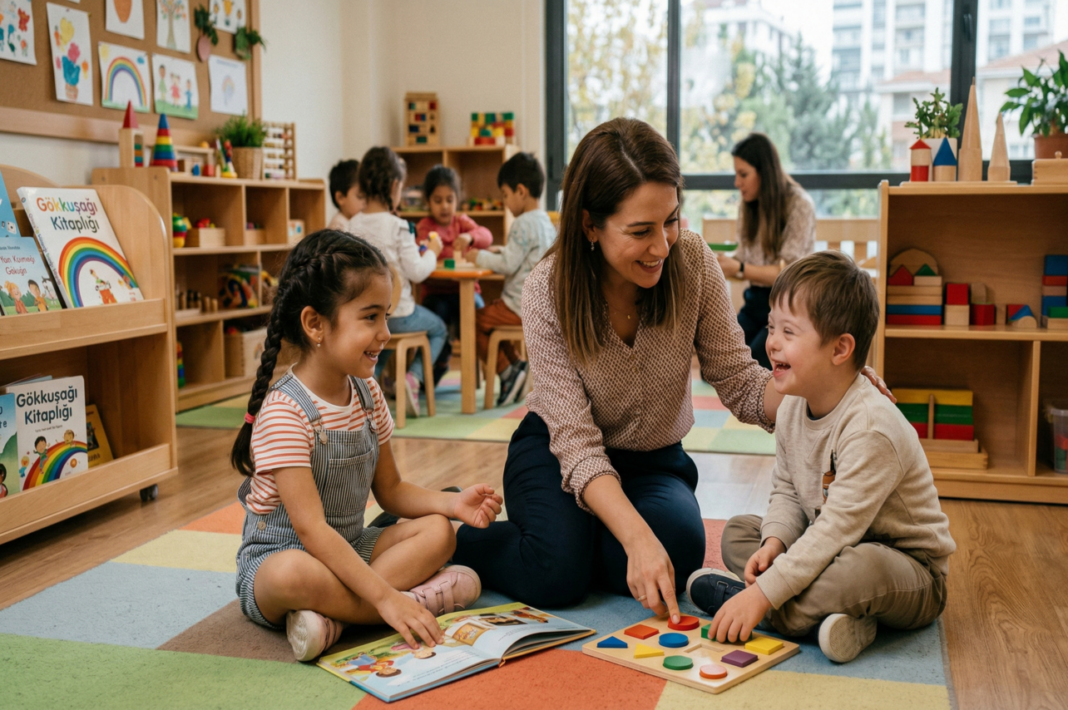
The preschool period represents an important transition in which the child separates from the primary caregiver and enters a new social environment. During this time, children frequently experience separation anxiety. This is considered developmentally normal and is directly related to the child’s attachment system (Bowlby, 1988). Teachers can become “secondary attachment figures” for children. A warm, accepting, and consistent approach by the teacher facilitates the child’s adaptation to school. Classroom routines, validation of emotions, and a secure communication style help the child feel safe. This sense of security enables the child to become more open to learning (Howes & Spieker, 2016).
Children With Special Needs and Attachment
Children with special needs may display different developmental characteristics in the attachment process. For instance, children with autism spectrum disorder may have difficulties in social interaction, maintaining eye contact, and expressing emotions. This can make it more challenging for caregivers to understand the child’s needs. In building attachment with these children, the following are essential:
-
Increased observation
-
Individualized communication
-
Patient and repetitive interactions
In addition, collaboration with special education professionals and psychologists supports the child’s attachment process. Research indicates that with appropriate support, children with special needs can also develop secure attachment (Odom & Wolery, 2003).
Conclusion
Attachment is one of the fundamental building blocks of early childhood development. Children who develop secure attachment are more likely to become emotionally and socially healthy individuals. Although factors such as caregiver changes, school transition, and special needs may affect attachment, this process can be managed effectively through appropriate approaches and supportive environments. Teachers’ awareness and sensitivity play a critical role in supporting children’s development of secure attachment.
References
Bowlby, J. (1988). A secure base: Parent-child attachment and healthy human development. Basic Books.
Ainsworth, M. D. S., Blehar, M. C., Waters, E., & Wall, S. (1978). Patterns of attachment. Lawrence Erlbaum.
Bretherton, I. (1992). The origins of attachment theory. Developmental Psychology, 28(5), 759–775.
Cassidy, J., & Shaver, P. R. (2016). Handbook of attachment (3rd ed.). Guilford Press.
Howes, C., & Spieker, S. (2016). Attachment in early childhood. In Cassidy & Shaver (Eds.), Handbook of attachment.
Odom, S. L., & Wolery, M. (2003). Early intervention practices. The Journal of Special Education, 37(3), 164–173.
Sroufe, L. A. (2005). Attachment and development. Attachment & Human Development, 7(4), 349–367.