


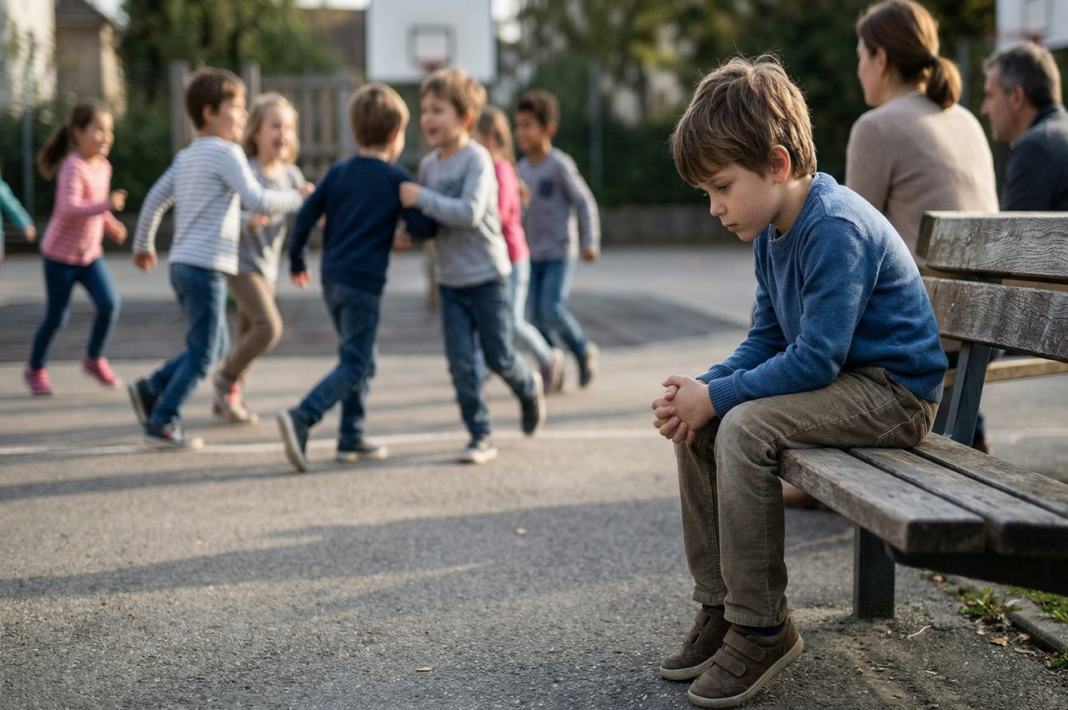

A child’s heart expands when they consistently experience love in the home they grow up in; when love is steady, they feel safe and open up to the world. Love becomes a point of support within the child’s inner world. However, when this love is tied to certain conditions, it ceases to be safe for the child. In environments where love is conditional, the child learns not to exist as they are, but to change in order to be accepted by others. Thus, childhood shifts from being a space of curiosity, exploration, and growth into a constant effort to adapt to environments and meet others’ expectations.
Conditional love is often applied—frequently without awareness—by parents in the name of disciplining the child, instilling manners, encouraging success, or “preparing them for life.” Yet, this unnoticed approach leaves deep and lasting marks on the child. This article aims to address not only the visible behavioral effects of conditional love but also its silent impact on the child’s inner world.
What Does Conditional Love Convey?
Even if not stated directly, conditional love sends a powerful implicit message to the child: “Who you are is not enough.” A child raised in such an environment learns that love is tied to success, obedience, good behavior, meeting expectations, or pleasing the parent. Over time, the child figures out which parts of themselves to show and which to hide in order to be accepted.
In this process, the child begins to monitor themselves—controlling their behaviors, emotions, and even thoughts. Love is no longer a secure bond; it becomes a reward that can be withdrawn. For such a child, being loved is no longer a basic right but something that must be earned.
Fractures In The Inner World
1. Worth Becomes Conditional A child raised with conditional love believes that worth is not an inherent right but something earned by fulfilling certain conditions. Thoughts like “If I succeed, I’ll be seen more” or “If I am compliant, I will be loved” take root in the child’s mind. This leads the child to question their own existence and feel a constant need to prove themselves to others.
2. Weakening Of Emotional Awareness These children quickly learn that some of their emotions are not accepted by their parents. Feelings such as anger, disappointment, jealousy, or sadness are suppressed. The child’s emotions are not acknowledged within the home, and they are expected to align with the emotional state of the parent. The child begins to believe that their feelings threaten love and learns to ignore them. Each suppressed emotion weakens the child’s connection with their inner world. In adulthood, this may result in difficulty understanding what they feel and a tendency to try to feel the “correct” emotion in the moment.
3. Constant Alertness The belief that love from parents, relatives, or friends can be withdrawn at any moment keeps the child in a constant state of alertness. Fear of making mistakes, sensitivity to criticism, and anxiety about being misunderstood begin to develop. These children do not necessarily learn to be calm; they learn to be controlled. Instead of relaxing, they learn to hold themselves back.
Reflections In Behavior
1. The Cycle Of Self-Proving Some children strive excessively to avoid losing the love they receive. They constantly produce, achieve, and try to appear strong—often without realizing how exhausted they are. Yet, no matter how far they go, they carry a deep sense of emptiness inside, because the love they receive remains conditional and never truly feels sufficient.
2. Choosing To Be Invisible Other children avoid risks to protect the love they receive. To prevent mistakes, they withdraw, suppress their desires, and learn not to attract attention. These children are often described as “quiet” or “trouble-free.” However, this silence often stems from their needs having been unseen in the past.
3. Self-Abandonment In Relationships Children raised with conditional love may continue, in adulthood, to ignore and stretch their own boundaries in order to avoid losing love. They remain silent to prevent abandonment and choose compliance over acknowledging their own needs. Instead of forming connections through love, they focus on preserving the love they receive.
Long-Term Effects
When a child raised with conditional love becomes an adult, they may carry a persistent sense of inadequacy. This can manifest as burnout, feelings of worthlessness, anxiety, and identity confusion. The individual often finds themselves asking: “Who am I really? Am I the person others expect me to be?”
What Unconditional Acceptance Is Not
Accepting a child unconditionally does not mean raising them without limits, rules, or responsibility. A child’s behaviors can be guided, mistakes can be discussed, and consequences can be taught. What should be criticized is the behavior—not the child. Saying “This behavior is not right” instead of “You are wrong” shapes how the child comes to understand themselves.
Children raised with conditional love experience love not as a secure bond, but as a fragile balancing act. Their lives often become dominated by anxiety and control. They hold themselves tightly to avoid falling, suppress themselves to avoid mistakes. Yet, a child’s most fundamental need is to know that they do not have to change who they are or abandon themselves in order to be loved. Children should not have to do something to earn love; they should be loved simply because they exist. This sense of unconditional acceptance is the true foundation of a healthy inner world.