
Night Stage: Are Nightmares The Mind’s Alarm Or An Attempt To Heal?

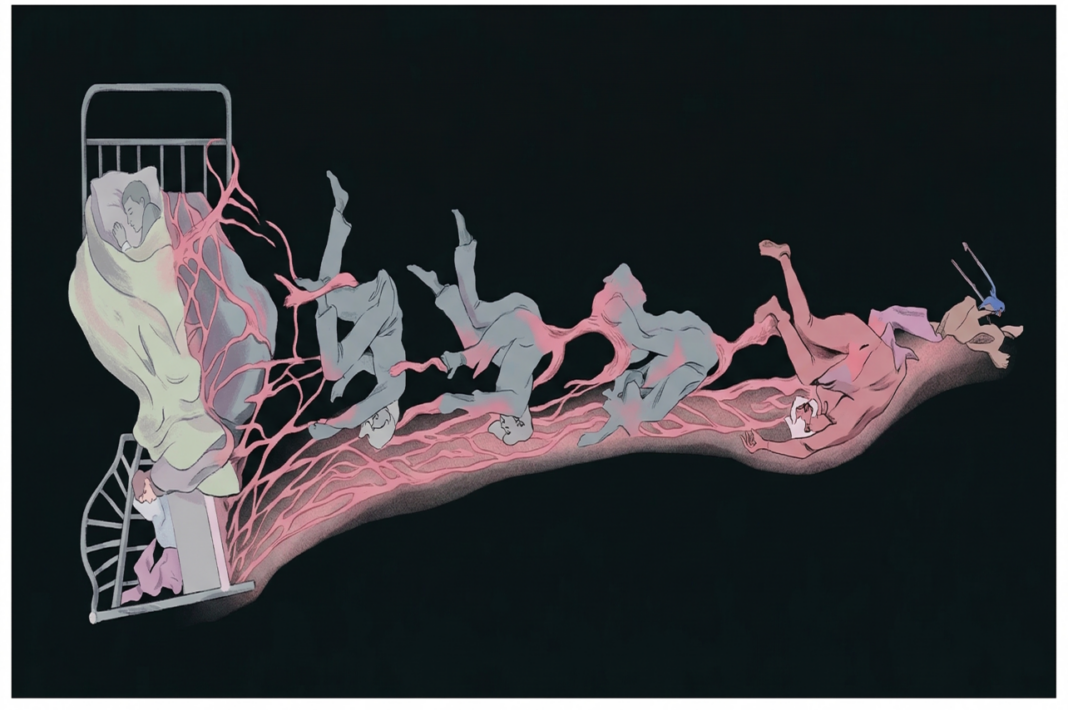
Introduction: Not Every Nightmare Is The Same
Many of us are familiar with that moment of waking up suddenly in the night with our heart racing. For a few seconds we wonder, “Was that real?” Most people experience nightmares from time to time, and this is generally considered normal. However, for some people nightmares become frequent, begin to interrupt sleep, and even affect daytime life. At that point, the issue becomes more than just a bad dream.
Today we know that nightmares are closely connected both to the brain’s way of processing emotions and to the stress and trauma we experience (Kellett & Beail, 1997). More importantly, chronic nightmares can often be reduced with psychological treatments.
When Do Nightmares Become A Problem?
Occasional nightmares are common. However, when nightmares occur at least once a week, continue for months, and cause a person to avoid going to sleep, the situation becomes clinically significant.
People who frequently experience nightmares often show the following:
-
Avoidance of going back to sleep
-
Interrupted night sleep
-
Daytime fatigue and irritability
-
Anxiety and low mood
Research shows that chronic nightmares are strongly associated with anxiety, depression, and symptoms of post-traumatic stress (Kellett & Beail, 1997).
Could Nightmares Be The Night Language Of Emotions?
According to some psychological theories, nightmares may be a way for intense emotions—those we cannot fully express during the day—to emerge at night. Particularly in individuals who experienced neglect, fear, or insecurity early in life, emotions may sometimes be stored more as bodily sensations than as words (Lansky & Bley, 1995).
This is why recurring nightmares often contain themes such as:
-
Being unable to escape
-
Freezing or being unable to move
-
Not finding help
-
A sense of approaching disaster
These dreams may not simply remind someone of a bad memory; the person may feel as if they are reliving the emotion itself.
Is The Mind A Single Piece?
Some theorists suggest that the mind is not a single, unified entity but rather a mosaic made up of different parts with different needs and emotions. During the day, these parts usually work together in harmony.
But during dreams things may change. The dream state can be imagined as a kind of night meeting where these parts communicate with each other. Fears or conflicts that are suppressed during the day may become more visible in dreams. That is why some nightmares can feel extremely vivid and real.
Why Are Nightmares More Intense After Trauma?
Clinical observations show that nightmares tend to be more frequent and more intense in individuals who have experienced early trauma (Kellett & Beail, 1997). These dreams often contain themes of helplessness, inability to move, or the absence of anyone who can help.
Interestingly, during therapy nightmares do not usually disappear all at once; instead, they often change shape first. For example, a helper appearing in the dream, emotions becoming slightly more manageable, or overwhelming terror turning into a more tolerable form of anxiety may all indicate that the mind is gradually recovering (Lansky & Bley, 1995).
The Brain Works Like A Prediction Machine
According to modern neuroscience approaches, the brain does not simply record the world—it constantly predicts what might happen next. During sleep, when external stimuli decrease, this prediction system begins to create its own kind of virtual reality: the dream.
For this reason dreams may contain pieces of the past as well as possible future scenarios. Dreams about relationships, in particular, may reflect the mind’s nighttime attempt to anticipate how others might behave.
How Can Nightmares Be Reduced?
One practical method for dealing with nightmares is to reshape the dream. In this approach, the person first briefly writes down the nightmare they usually experience. Then they intentionally change the storyline so that it becomes less frightening—for example, an escape route appears in a situation where they were trapped, someone arrives to help if they were alone, or the dreamer feels stronger and more capable.
Afterwards, the person spends a few minutes during the day visualizing this new version of the dream.
This technique may work because the brain processes vividly imagined scenes in ways that are very similar to real experiences. Over time, the learned link between sleep and threat can weaken, and the person begins to feel a greater sense of control over their dreams (Aurora et al., 2010). In addition, because the brain reorganizes emotional memories during REM sleep, practicing these new images during the day may provide the brain with a safer scenario to process during the night. Research shows that such techniques can significantly reduce both the frequency of nightmares and the distress they cause, particularly in people who experience recurring nightmares.
Conclusion
Nightmares May Carry A Message—But They Can Change What we know today is that nightmares are not one-dimensional. Sometimes they are a natural part of the brain’s emotional processing; at other times—especially after trauma—they can be the nighttime expression of fears carried by the body.
But the most important message is hopeful: recurring nightmares that disrupt life are not destiny. With the right psychological support, both the frequency and intensity of nightmares can be greatly reduced. The frightening stories that appear on the stage of the mind at night can, in many cases, be rewritten.
References
Kellett, S., & Beail, N. (1997). The treatment of chronic post-traumatic nightmares using psychodynamic-interpersonal psychotherapy: A single-case study. British Journal of Clinical Psychology, 36(1), 39–55. Lansky, M. R., & Bley, C. R. (1995). Posttraumatic nightmares: Psychodynamic explorations. Analytic Press, Inc. Standards of Practice Committee., Aurora, R., Zak, R. et al. Best Practice Guide for the Treatment of Nightmare Disorder in Adults. J Clin Sleep Med 6, 389–401 (2010). https://doi.org/10.5664/jcsm.27883