


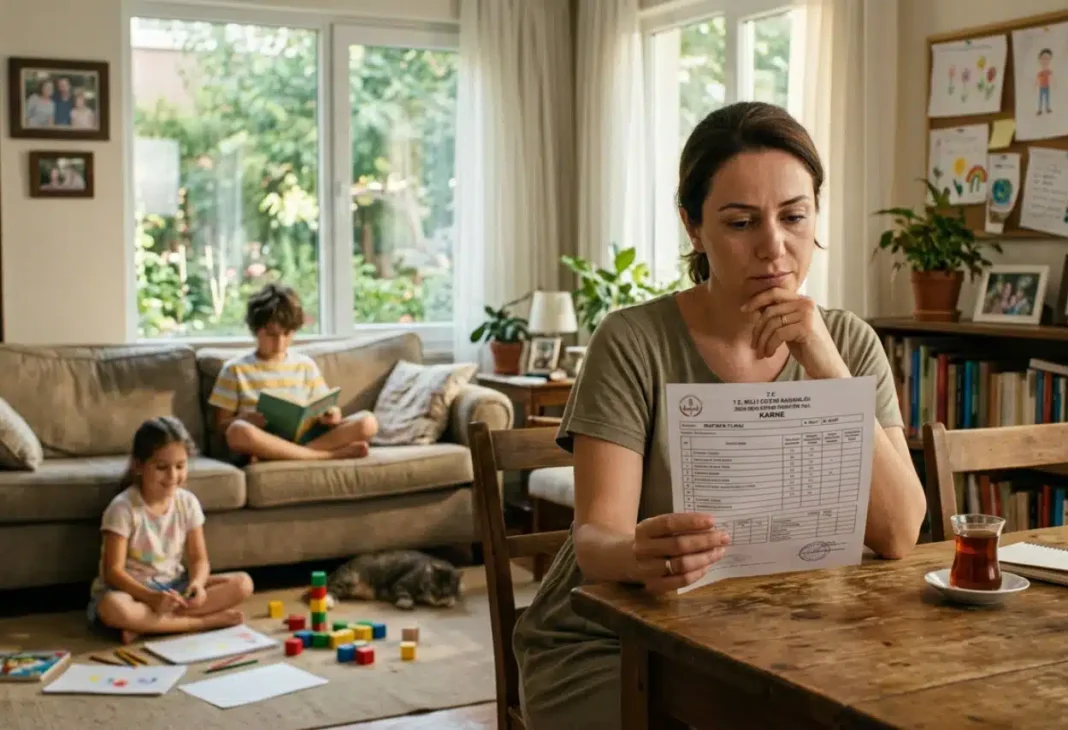

Children leaving an examination hall can display a wide range of emotional reactions. Some eagerly discuss the questions with their peers, while others struggle to hold back tears. Yet the group that often surprises parents the most consists of those who appear as though they feel nothing at all. Responding to questions such as “How did it go?” with a shrug and saying, “I don’t know,” “It doesn’t matter,” or “I don’t care,” these children are often perceived as calm, mature, or emotionally resilient. From a psychological perspective, however, such reactions do not always reflect genuine indifference.
Under intense stress, the human organism does not respond solely through the well-known fight-or-flight mechanisms. Neuropsychological research suggests that when a threat is perceived as overwhelming, a third response—freezing—may emerge. In individuals exposed to prolonged performance pressure, the emotional system may temporarily shut down as a protective mechanism. This phenomenon is commonly described in the literature as emotional numbing (Lanius et al., 2010).
When the Exam Ends, Stress Does Not Necessarily End
Consider a child who has spent months—or even years—preparing for a high-stakes examination. Academic expectations, family pressure, peer competition, and uncertainty about the future continuously occupy their mental and emotional resources. When the exam finally ends, the body and mind do not automatically return to a state of relief. On the contrary, the physiological and psychological exhaustion that follows prolonged stress may lead some children to suppress or disconnect from their emotions.
In this context, statements such as “I don’t care” deserve particular attention. One of the defense mechanisms described in psychodynamic theory is denial, which allows individuals to distance themselves from threatening emotions by keeping them out of conscious awareness (Vaillant, 1992). For a child who deeply values academic success, the possibility of disappointment can feel emotionally overwhelming. As a result, saying “I never really cared anyway” may feel psychologically safer than admitting, “This mattered a lot to me, and I’m afraid of being disappointed.”
Silence Does Not Always Mean Strength
One of the most common mistakes parents make during this period is interpreting silence as emotional strength. In reality, silence may conceal sadness, shame, anxiety, or fear of failure. During adolescence in particular, verbalizing emotions is not always easy. Research indicates that adolescents often withdraw socially following intense stress, and such withdrawal should not automatically be interpreted as a healthy coping strategy (Compas et al., 2017).
For this reason, parents’ primary role after an exam should not be to analyze performance but to establish emotional connection. Asking “How are you feeling?” may be far more helpful than asking, “How many questions did you get right?” Equally important, if a child does not wish to talk immediately, that silence should be respected. Psychological safety develops not only through open communication but also through relationships in which individuals are allowed to remain silent without fear of judgment or pressure.
Conclusion
Ultimately, apparent indifference after an examination is not always true indifference. Sometimes it reflects an invisible defense against overwhelming stress. Parents do not need to force children to express emotions before they are ready. Rather, their task is to create an environment in which emotions can be experienced safely and authentically.
Because sometimes, the children who seem to feel the least are the ones carrying the greatest emotional burden.
References
Compas, B. E., Jaser, S. S., Bettis, A. H., Watson, K. H., Gruhn, M. A., Dunbar, J. P., Williams, E., & Thigpen, J. C. (2017). Coping, Emotion Regulation, and Psychopathology in Childhood and Adolescence.
Lanius, R. A., Vermetten, E., & Pain, C. (2010). The Impact of Early Life Trauma on Health and Disease: The Hidden Epidemic.
Vaillant, G. E. (1992). Ego Mechanisms of Defense: A Guide for Clinicians and Researchers.