


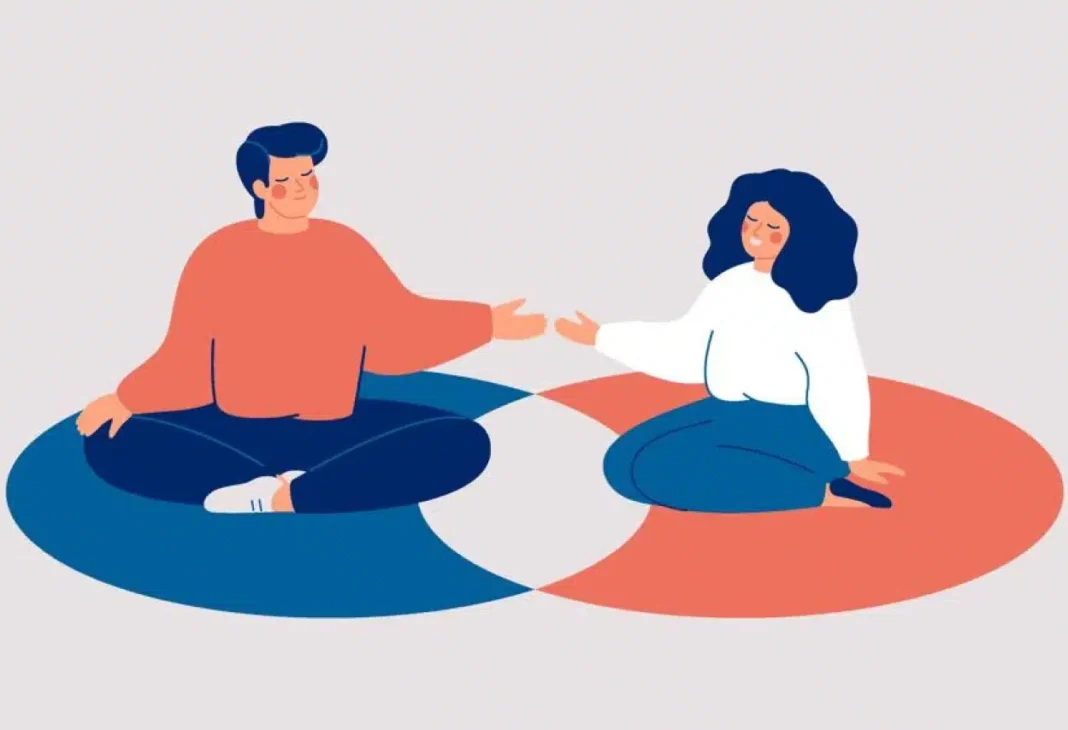

A word we seem to be hearing more often these days.
Most of the time, it is discussed within specific contexts—usually romantic or physical relationships. Yet consent is so much more than that.
Consent is not simply about obtaining permission. It is about recognizing another person’s space, respecting their boundaries, and perhaps most importantly, acknowledging that they have a choice too.
Pausing before hugging someone. Asking, “Is this a good time?” before sharing something personal. Or simply considering whether the other person feels comfortable. These may appear to be small gestures, but they carry profound meaning.
Perhaps the most interesting part is this: consent is already present in our everyday lives. We simply do not always recognize it.
When discussing consent, it is just as important to understand what it is not as it is to understand what it is.
Consent is not doing something because you feel obligated. If at any point a person feels pressured or forced, genuine consent is absent—or what appears to be consent is merely compliance.
Real consent is given freely. It is given consciously and with a clear understanding of what one is agreeing to.
And perhaps most importantly, because consent belongs to you, it can be withdrawn at any time.
When someone changes their mind or re-establishes a boundary, they should not face verbal, emotional, or physical pressure for doing so. Consent is an ongoing process. Giving it once does not mean it remains valid indefinitely.
A person should know exactly what they are consenting to, and those boundaries should never be crossed.
Consent must also be clear and explicit. It cannot be justified with statements such as, “That’s how I interpreted it.” When someone opens a personal part of their life to another person, assumptions are not enough. Respect requires clarity.
Consent Is Not Just Romantic
When most people hear the word consent, they immediately think of romantic or sexual situations. For example, partners asking for permission before becoming physically intimate.
But consent extends far beyond those contexts.
It appears throughout everyday life.
Pausing before hugging someone. Asking before borrowing another person’s belongings. Checking whether someone is available to have an important conversation.
Even a simple question such as, “Is now a good time to talk?” can be an act of consent.
Because consent is not only physical—it can also be emotional.
In fact, one of the clearest examples is something most people experience regularly. When visiting a doctor, patients are asked for permission before an examination takes place. It feels so routine that we rarely think about it. Yet this is not merely a procedural requirement. It is an act of respect and an acknowledgment that a person’s body belongs to them.
Perhaps that is why it remains one of the clearest examples of consent in everyday life.
Why Is It So Difficult?
If consent is already woven into so many aspects of daily life, why does it sometimes feel difficult?
Perhaps because consent requires us to pause.
Many of us move through life on autopilot. We hug, touch, ask questions, and make assumptions without much reflection. That small moment of hesitation—the moment we ask ourselves, “Is this okay?”—does not always occur naturally.
Part of the difficulty is that asking for consent also means being prepared to hear “no.”
And rejection can feel uncomfortable.
Asking someone, “Can I hug you?” means accepting that they may not want a hug. Asking, “Can we talk about this?” means accepting that now may not be the right time.
Sometimes requesting consent feels awkward, as though it creates distance or risks offending the other person. In reality, the opposite is true.
Asking does not exclude someone from the interaction. It includes them.
Many people grow up learning how to say “yes,” but not how to say “no.” They learn to avoid disappointing others, to avoid seeming impolite, and to prioritize harmony over personal comfort. As a result, setting boundaries can become extremely difficult.
The messages many people receive during childhood often reinforce this pattern:
“Go give them a kiss.”
“Give them a hug.”
“Don’t be rude.”
Rarely do children hear a different question:
“Do you want to?”
Perhaps that is where the difficulty begins.
Because consent is something that should be learned early in life.
Yet it is also an abstract concept. Explaining personal space, boundaries, and the meaning of saying “no” is not always easy. Nevertheless, these lessons matter.
Knowing your boundaries, understanding your rights, and protecting yourself when necessary are not skills that suddenly emerge in adulthood. They are learned gradually over time.
And perhaps that is why so many adults continue to struggle with them today.
There is another common misunderstanding as well: we often assume that other people’s boundaries should resemble our own.
We think, “I wouldn’t mind.”
But consent is not measured by what we would tolerate.
It is measured by what the other person is comfortable with.
And perhaps one of the most challenging aspects of consent is accepting that someone else’s limits may be very different from our own.
Why Should We Teach Children About Consent?
Boundaries are not learned overnight. They develop gradually through everyday experiences.
Allowing a child to say, “I don’t want to.”
Not forcing them.
Asking whether they genuinely want a hug rather than insisting on one.
These may seem like small actions, but they carry enormous significance.
Because in those moments, children are not simply learning a behavior. They are learning that they have rights over their own body and personal space.
And perhaps even more importantly, they are learning that they are allowed to use those rights.
They learn that saying “no” does not make the world fall apart. They learn that they do not have to sacrifice their comfort to protect someone else’s feelings. They learn that their boundaries are valid.
At the same time, they learn something equally important: other people’s boundaries matter too.
This is where consent truly begins to take shape.
It is not only about protecting oneself. It is also about respecting the autonomy, comfort, and dignity of others.
Many of the difficulties we encounter as adults may stem from the fact that we were never taught this language.
Neither how to ask.
Nor how to decline.
A Small Scene, A Powerful Message
Because consent can feel abstract, explaining what it is—and what it is not—can sometimes be difficult, particularly for children.
This is why stories, animations, and visual examples can be such powerful teaching tools. They allow abstract concepts to become tangible and relatable.
One animated scene in particular has always stayed with me.
The scenario itself is remarkably simple.
One character needs to hug another in order to survive the cold. It is genuinely a matter of survival.
And yet, before doing so, they ask for permission.
As though they are saying:
“I need this, but are you comfortable with it?”
What makes the scene so powerful is that it is not about romance or intimacy.
It is simply about need.
And even within that need, another person’s boundaries are still respected.
Perhaps that is why the scene feels so meaningful.
Because consent does not exist only in ideal situations.
It can exist even in difficult ones.
A Final Thought
Perhaps consent is not as complicated as we sometimes make it.
Maybe it is simply a pause.
A question.
An acknowledgment of another person’s space.
Choosing to ask instead of assume.
Taking a step back when we believe we already know the answer.
Because we can never fully know another person.
But we can respect them.
And perhaps most importantly, consent is not only a boundary.
It is also a source of trust.
When someone asks for your permission, they communicate something powerful:
You matter.
And sometimes that small question—
“Is this okay?”
can make a person feel far safer than they ever expected.