


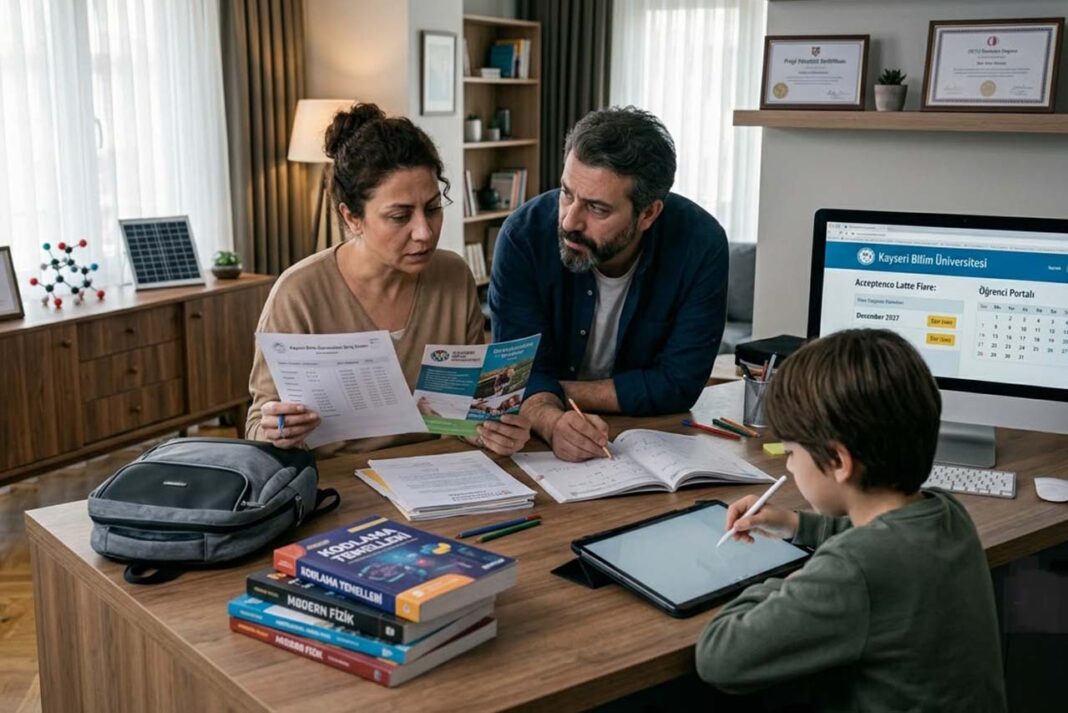

Global Success Narratives and “Project Children”
One of the most prominent illusions of modern society is the unwavering, dogmatic belief that the future can be constructed by sacrificing today. This belief manifests itself, especially in contemporary parenting practices, as a destructive ambition, an endless competition, and a structural spiral of anxiety.
When June arrives, the atmosphere in homes turns heavy. The tense waiting outside exam halls, the rustling of test booklets, mock exam results, and the cold, impersonal numbers of score calculation tables completely overshadow the uniquely unhurried and exploration-filled rhythm of childhood.
Throughout my more than twenty years in the field as a psychological counselor, the most painful reality I have observed in therapy rooms and school corridors is this: in the name of preparing our children for the future and protecting them from the risks of an uncertain tomorrow, we insidiously usurp their right to “live today”—the only real capital they possess. Instead of accepting them as authentic human beings and respecting their existence, we transform them into systemic projects within a success-oriented culture.
By its evolutionary and psychological nature, parenting inherently embodies the instincts to protect, nurture, and guide. However, in today’s world, this noble instinct has become contaminated by neoliberal success narratives, concerns over social status, and the perfectionistic pressures reinforced by digital capitalism.
Education is no longer viewed as an inner journey through which individuals cultivate intellectual curiosity or discover artistic and scientific interests. Instead, it has transformed into a ruthless and mechanical struggle for survival within a global labor market. Both the nationwide examination system in Türkiye and the highly stratified educational ecosystem in the United Kingdom (UK) generate a collective parental panic that can be summarized as follows: “If my child does not rank at the very top, they will be crushed by the system.”
This panic transforms parents into project managers—or, as described in the literature, helicopter parents—who plan their children’s lives down to the smallest detail and standardize every hour of their day (Clutterbuck et al., 2022).
A childhood schedule that begins with piano lessons in the morning, continues with mathematics tutoring in the afternoon, and ends with coding workshops in the evening may appear to be an excellent investment in the future. Yet, from the child’s perspective, it often resembles a profound emotional desert.
The Loss of Unstructured Time and Performance Anxiety
The psychological cost of this highly controlling and over-structured parenting style can often be seen in the eyes of the children, adolescents, and young adults who visit our clinics.
Healthy neurological and psychosocial development requires unstructured time—those seemingly purposeless moments free from performance demands, productivity goals, and measurable outcomes. The moments when a child watches clouds drift across the sky, arranges stones on the ground, plays with tree branches, or simply experiences boredom are precisely the experiences through which creativity, intrinsic motivation, problem-solving abilities, and ultimately self-esteem are cultivated (Antoniou, 2020).
However, when every moment of a child’s life is tied to grades, certificates, achievements, or performance metrics, they become trapped in an existential dilemma:
“I am worthy of love, approval, and belonging only when I succeed.”
This distorted internal belief system lays the foundation for chronic performance anxiety and a deep sense of inadequacy. Failure gradually becomes an existential threat equivalent to losing parental love and acceptance, thereby undermining the foundations of secure attachment (Schiffrin et al., 2014).
The inevitable consequences include early burnout, adolescent depression, psychosomatic symptoms, and ultimately a profound disruption in identity development.
Snowplow Parenting and the Erosion of Resilience
From both sociological and psychological perspectives, this phenomenon represents the commodification and instrumentalization of childhood.
Children increasingly become symbols of parental status, vehicles for unrealized ambitions, or carriers of regrets from previous generations. Longitudinal studies conducted in the United Kingdom reveal that children raised in highly protective families—where every challenge is removed and every decision is made on their behalf—often enter adulthood with significantly underdeveloped self-regulation and self-efficacy skills (Kouros et al., 2017).
These children are frequently raised by what researchers describe as snowplow parents: parents who remove every obstacle before the child encounters it.
As a result, young adults who have been shielded from disappointment, failure, and responsibility frequently struggle when confronted with the inevitable challenges of university life, career setbacks, or interpersonal rejection. They have never developed the psychological muscles necessary to tolerate uncertainty and adversity.
The psychological mechanism we call resilience does not emerge in sterile environments where success is guaranteed and applause is constant. Resilience develops through setbacks, mistakes, disappointments, and the experience of getting back up after falling.
When we prevent our children’s knees from ever being scraped, we may unintentionally increase the likelihood that their emotional worlds will fracture when they encounter life’s unavoidable hardships.
An Exit Ramp: Slow Parenting and Unconditional Acceptance
How, then, can we rescue both modern families and future generations from this collective vortex of anxiety and achievement obsession?
The solution is not to reject education, academic development, or thoughtful future planning. Rather, it lies in creating a compassionate and fundamental shift in our understanding of parenting, schooling, and success itself.
The concepts of slow parenting and psychological minimalism, increasingly emphasized within clinical psychology and educational sciences, offer a meaningful alternative (Honoré, 2008).
Contrary to popular misconceptions, slow parenting does not mean neglecting children or abandoning responsibility. Instead, it involves respecting a child’s unique developmental rhythm, encouraging meaningful engagement with nature, and creating opportunities for authentic interests to emerge organically rather than through external pressure.
Perhaps the most enduring gift that a parent, educator, or counselor can offer a child is not a prestigious school placement or an impressive résumé, but the consistent and embodied message:
“Regardless of your grades, exam scores, achievements, admissions, or awards, you are valuable simply because you exist.”
Carl Rogers’ concept of unconditional positive regard remains one of the strongest protective factors for psychological well-being and emotional resilience (Rogers, 1957).
The Future Cannot Be Built on the Unhappiness of Today
In this highly anxious and exam-centered season of June, regardless of score thresholds, rankings, or acceptance letters, we must remember that children are far more complex, profound, and valuable than any number displayed on a screen or printed on a report.
Sacrificing the irreplaceable experiences of childhood in an attempt to guarantee future success is one of the greatest pedagogical fallacies of our time.
A bright future cannot be built upon present-day unhappiness, anxiety, and psychological wounds.
While we hope our children will become successful adults tomorrow, we must ensure that we do not extinguish their curiosity, vitality, and joy today.
Ultimately, those who thrive psychologically in life will not necessarily be those who achieved the highest scores. Rather, they will be those who know who they are, understand their limits, value themselves under all circumstances, and preserve their emotional integrity.
The emptiness left behind by a stolen childhood cannot be repaired later by prestigious diplomas, professional titles, or executive offices.
The greatest investment we can make in a child’s future begins with protecting their childhood today and honoring the innocence that makes it so valuable.
REFERENCES
Antoniou, A. S. (2020). The emotional landscape of modern childhood: Self-esteem and structured time in early development. Journal of Applied Developmental Psychology, 68, 101–115.
Clutterbuck, R., Harris, M., & Smith, G. (2022). The pressure of protection: Helicopter parenting and its impact on adolescent anxiety in the UK. British Journal of Educational Psychology, 92(3), 445–461.
Honoré, C. (2008). Under Pressure: Rescuing Our Children from the Culture of Hyper-Parenting. HarperOne.
Kouros, C. D., Pruitt, M. M., Ekas, N. V., Kiriaki, R., & Woods, S. (2017). Helicopter parenting, autonomy support, and college students’ mental health and well-being: The moderating role of sex. Journal of Child and Family Studies, 26(3), 939–949.
Rogers, C. R. (1957). The necessary and sufficient conditions of therapeutic personality change. Journal of Consulting Psychology, 21(2), 95–103.
Schiffrin, H. H., Liss, M., Miles-McLean, H., Geary, K. A., Erchull, M. J., & Tashner, T. (2014). Helping or hovering? The effects of helicopter parenting on college students’ well-being. Journal of Child and Family Studies, 23(3), 548–557.