
Who is Normal, Who is Abnormal?

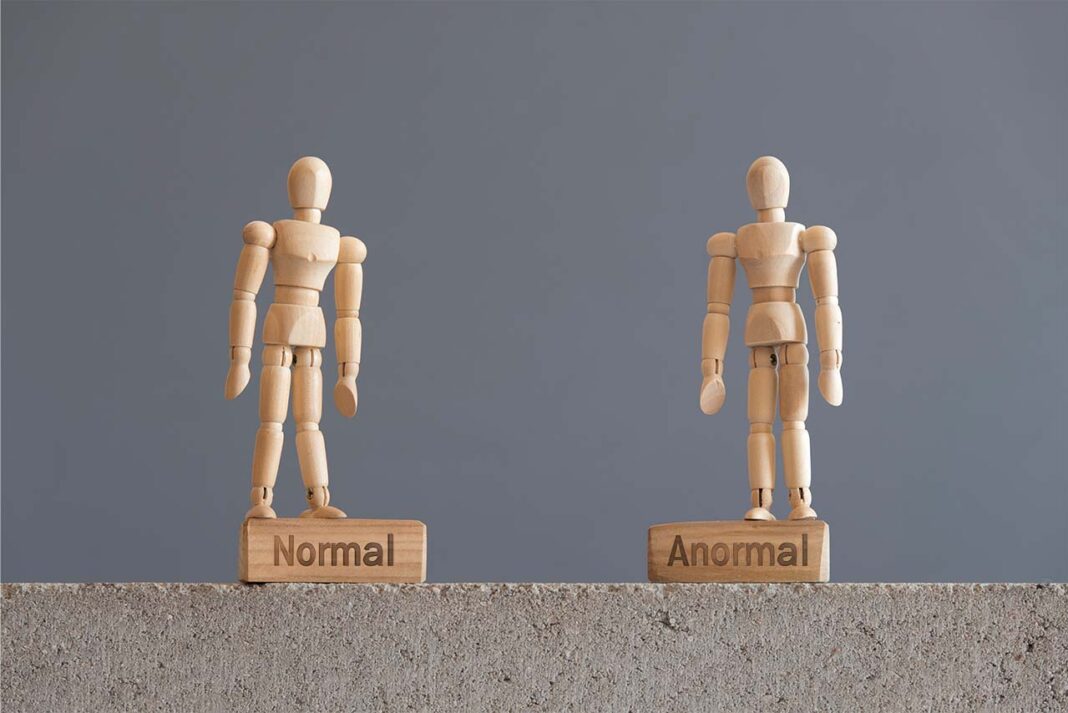
Just pause for a moment and think: your neighbor is having a conversation with their three cats. Do you think this behavior is normal, or abnormal? At first, most of us would probably answer “a little strange.” But right here we step into one of psychology’s biggest debates: normal and abnormal behavior—according to whom, and based on which criteria?
In daily life, we often use expressions like “not very normal” or “a bit abnormal.” A friend repeatedly asking the same question, someone laughing to themselves in class, or unusual behavior we encounter on the bus is immediately labeled this way. But once psychology gets involved, the matter becomes much more complex. Because “normal” and “abnormal” are not only about the behavior itself; they are also closely related to context, culture, and the individual’s functionality.
Scientific Framework: Criteria of Normal–Abnormal
In psychology literature, a single criterion is not enough to explain “abnormal” behavior. As Butcher, Mineka, and Hooley state in Abnormal Psychology (2014), multiple criteria are considered when making this distinction:
-
Distress: If a person is experiencing significant psychological suffering, this may be a sign of abnormality. But caution is needed: an individual experiencing a manic episode may feel like they are at the best point in their life. In this case, there is no suffering, but functionality is impaired.
-
Maladaptiveness: If behavior prevents a person from carrying on their daily life, it is considered abnormal. For example, washing hands is normal for hygiene; but if this behavior continues for hours and prevents the person from going to work, it has become dysfunctional.
-
Statistical Rarity: Behaviors that occur in very few people may sometimes be considered abnormal. But caution is needed: being gifted is also rare, yet it is not pathology.
-
Violation of Norms: Behaviors that contradict society’s general rules may be labeled abnormal. But this also changes across cultures. A behavior considered ordinary in one society may be perceived as strange in another.
All of this shows us that the concepts of normal and abnormal are not as sharp as a black-and-white distinction. There is a wide gray area in between.
The Role of Culture: Where Does Normal Begin and End?
As emphasized in the DSM-5, culture plays a critical role in this distinction. The same behavior can carry very different meanings across cultures. For example, in some societies, depression is expressed through physical complaints: stomach pain, dizziness, fatigue. In other societies, emotional symptoms come to the forefront: feeling down, a sense of emptiness, hopelessness.
Or consider religious/spiritual experiences. Rituals considered “normal” in one culture may be interpreted as “strange” or even “pathological” in another. Ignoring cultural context when evaluating a behavior can lead to false conclusions.
As a psychology student, what strikes me most is this: normal is actually a social consensus. And this consensus changes over time. For example, some behaviors once considered “abnormal” have now become ordinary. Social media addiction, constantly taking selfies, or creating identities in virtual spaces were hardly debated 20 years ago.
Critical Perspective: The Danger of Being Normal
In The Insanity of Normality (1992), Arno Gruen argues that “normal” itself can be problematic. According to him, people often distance themselves from their true selves and are forced to live according to society’s expectations. Thus emerges a self that seems “adapted” but is in fact artificial.
Being normal does not always mean being healthy. Sometimes the patterns imposed as “normal” suppress the individual’s true self. We often witness this in university life. In class, everyone tries to speak, laugh, and behave in the same way. The one who is different immediately stands out and is often labeled “abnormal.” Yet real creativity or authenticity may sometimes be hidden precisely in those behaviors that appear “abnormal.”
Everyday Situations We May Witness
-
You see someone talking to themselves on the bus in the morning. Your first reaction may be “abnormal.” But perhaps the person is rehearsing their exam presentation.
-
Your friend is constantly posting on social media. You might immediately label them “attention-seeking.” Yet this behavior may be an effort to compensate for loneliness.
-
Your neighbor is talking to their cat. Most people may find this odd. But for this person, the relationship with their cat may be a healthy social support mechanism.
As you can see, making a “normal–abnormal” judgment without knowing the context is easy but often superficial. In psychology, what truly matters is evaluating the behavior within the individual’s life and functionality.
Conclusion: Who Draws the Line?
When reviewing the sources, it becomes clear that the distinction between normal and abnormal cannot be explained in a single sentence. When scientific criteria, cultural context, and a critical perspective come together, this distinction is not fixed but a shifting line.
As a psychology student, the lesson I take is: instead of asking “Is this normal or abnormal?” it may be more accurate to ask, “What does this behavior mean under which circumstances?” Most of the time, we are the ones deciding who is normal. And this decision is not independent of our culture, values, and worldview.
References
American Psychiatric Association. (2013). Diagnostic and statistical manual of mental disorders (5th ed.). Arlington, VA: American Psychiatric Publishing.
Butcher, J. N., Mineka, S., & Hooley, J. M. (2014). Abnormal psychology (16th ed.). Boston, MA: Pearson.
Comer, R. J. (2018). Abnormal psychology (10th ed.). New York, NY: Worth Publishers.
Gruen, A. (1992). The insanity of normality: Realism as sickness – Toward understanding human destructiveness. New York, NY: Grove Weidenfeld.
Sue, D., Sue, D. W., Sue, S., & Sue, D. M. (2015). Understanding abnormal behavior (11th ed.). Stamford, CT: Cengage Learning.