


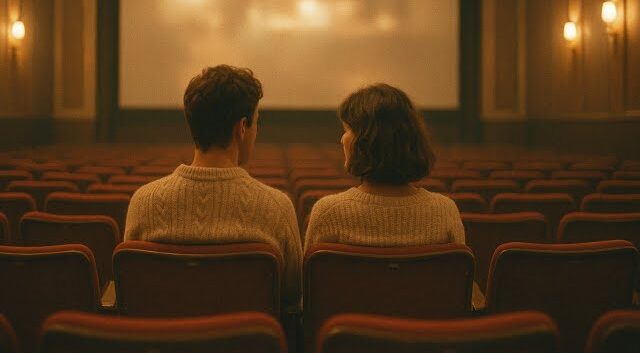

We don’t just watch some films—we live them. Because in every story projected on the screen, a part of us is reflected.
Films and Emotional Connection
When we watch certain films, the story eventually stops flowing independently of us. Characters speak, argue, remain silent… and yet, somewhere in those scenes, we are there too.
When a couple on screen hurts each other, a familiar pang arises within us. When someone forgives, we quietly think, “I wish I could do that too.”
In that moment, the film touches our own lives. Cinema is not merely a visual experience—it is an emotional mirror. A character’s expression can remind us of a memory from our own past. This is why some scenes are impossible to escape. The characters on screen are not just a story; they echo our own relationships. We hear echoes of old arguments in their tones, and see our own silences reflected in their gazes. Characters are there to speak what we cannot, to show what we have yet to confront. After a while, the line between us and the screen fades; we are no longer watching them—we are watching ourselves.
Finding Ourselves in Characters
The way a couple approaches each other on screen can reveal the hidden answers to the question, “How do I want to be loved?” Someone else’s anxiety can awaken a latent insecurity within us.
Sometimes the character we resent the most is the part of ourselves we have suppressed. Sometimes the one we feel most protective of reflects our own wounded self. In these moments, whether we realize it or not, a process of projection occurs—we leave pieces of who we are, who we are not, and who we wish to be in those scenes.
Films are powerful for this reason: they reveal not only our emotions but also the hidden patterns in our relationships. A dialogue can make us notice the repeated points of conflict in our own interactions. A silence can show why we often choose to remain quiet. Another’s story becomes a mirror for our own schemas.
Relationship Schemas and Inner Awareness
Each of us carries a “relationship schema” shaped from childhood. How love is shown, how anger is expressed, how hurt is repaired—these unwritten rules follow us into adulthood.
Films make these patterns visible. A couple’s manner of speaking may feel familiar because we argue in similar ways. Or a character’s way of showing love may unsettle us because it reminds us of a controlling or hurtful bond from the past.
This awareness can be unsettling or thought-provoking. At that moment, we are not only watching a film but observing our own inner world. As viewers, we are far from passive; with every scene, we interpret and relate it through our personal experiences. We try to understand why a character remains silent, why they distance themselves, or why they show love, all through the lens of our own life stories.
The Lasting Impact Of Films
Perhaps this is why certain films stay with us throughout life. We remember a line years later because, at some point, it reflected our own words. Some characters remain unforgettable because we were once like them.
Films, moving through time, serve as an art form that reminds us of ourselves. The intensity of our reaction to a scene comes from its ability to awaken buried emotions within us. A breakup scene may bring up an old wound, while a reconciliation may evoke the understanding we long for.
When The Lights Come On
Perhaps this is why we love these stories so much. They reveal not someone else’s story, but the story of our own relationships. When the film ends and the lights come on, a part of us remains in the dark.
“What would I have done?”
“Would I have stayed or left?”
The answers to these questions change each time, but one thing remains constant: whoever is on screen, we are always partly there. Sometimes while watching, sometimes in silence, sometimes simply thinking, “Yes, exactly,”… Films pass, the credits roll, but we remain in our own scenes.
Perhaps this is why cinema is not only something we watch, but something we feel. And every film, in its own way, becomes a mirror that reflects us back to ourselves. This is the quiet power of cinema.