



The Aesthetics Of Melancholy
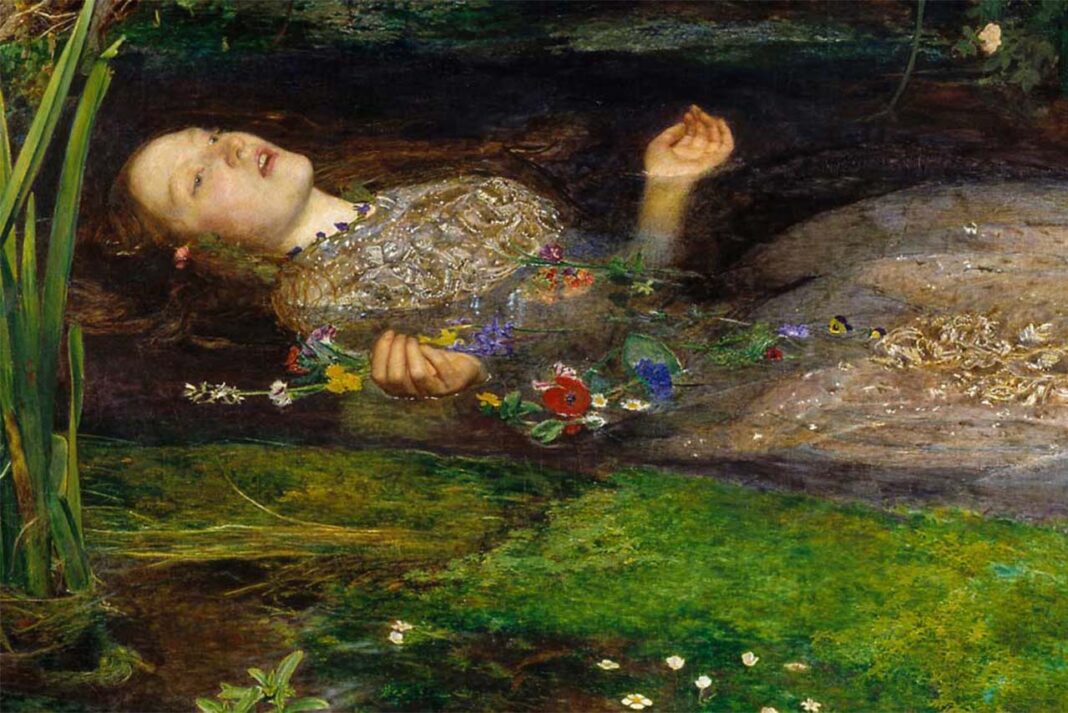
In John Everett Millais’ Ophelia, inspired by Shakespeare’s Hamlet, we see Ophelia floating in a stream among flowers with a vacant and distant gaze. In Hamlet, the young woman is deeply affected first by the games of the man she loves, and later by the death of her father, gradually descending into madness. This madness is not destructive; rather, it is quiet and inward-looking.
One day, Ophelia goes to a stream to gather flowers. She climbs a large tree to reach a bloom, but the branch breaks, and she falls into the water. She makes no effort to save herself, showing no struggle to survive. Her billowing dress keeps her afloat as she begins to sing. As she sings her final song, the waterlogged dress drags her down slowly. Ultimately, without any resistance, she drowns while singing her last song. The painting resonates with melancholy, loss, and traumatic dissolution, making Ophelia a symbol of romantic melancholy.
Freudian Anatomy Of Melancholy
In Mourning and Melancholia, Freud defines two reactions to loss: mourning and melancholia. In mourning, the individual is aware of the loss, experiences sadness, and eventually comes to accept it. The loss is externalized (“object-loss”), and life continues; the pain, though real, is also temporary. Freud writes, “The difference in melancholia lies in the unconscious awareness of the loss.” In melancholia, the lost object becomes a “shadow of the self.” The lost object is no longer external; it becomes part of the ego, causing direct harm.
Ophelia internalizes the loss of Hamlet’s love and her father’s authority. Her pain is no longer directed only at them; it turns inward. She is consumed by self-directed anger and guilt, remaining silent while singing.
From Dependency To Void
Ophelia learned to exist by clinging to others: first her father, then Hamlet. When they are gone, she loses her sense of self. This identity loss reflects traits of dependent personality disorder. When the ego loses its external support, it falls into a void where reality collapses.
Freud’s concept of ego fragmentation explains this: when a loss is internalized, the psyche slowly harms itself. Ophelia’s consciousness gradually sinks beneath the waters, illustrating the psychic dissolution of melancholia.
Traumatic Dissociation
Individuals often push unbearable pain and stress into the depths of the unconscious rather than experience it directly. This defense mechanism is called traumatic dissociation. One separates the trauma temporarily from conscious awareness to maintain functioning. This dissociation acts as a kind of psychological buffer.
Ophelia’s madness reflects not only melancholia but also a process of traumatic detachment. As her losses accumulate and societal pressures intensify, her connection to reality diminishes. Traumatic dissociation serves as a survival mechanism, but it also paves the way for melancholia and ego fragmentation.
Women’s Madness Or Society’s Madness?
Historically, Ophelia has been labeled as a “mad woman,” and her situation oversimplified. Suppressing her emotions weighed heavily on her, and she broke under this burden. Her collapse is a reflection of societal trauma. Women criticized for being “overly emotional” often unravel internally, just like Ophelia.
Society teaches women to carry their grief, anger, and loss silently, rendering visible emotion a pathology. Ophelia’s “madness” is not an individual weakness but a product of societal norms, repressed desires, and restricted emotional freedom.
Millais’ painting offers more than an aesthetic scene; it reveals the quiet history of female psychology, societal pressure, and romantic melancholy.
The Cry Of Silence
Ophelia emits a silent cry, both individually and socially. Her tragic end embodies romantic melancholy, repressed emotion, and societal expectations. Millais’ painting reminds us that “madness” is not solely an individual pathology; it can reflect the silence, losses, and suppressed feelings imposed by society.
Her silence, singing and surrendering to the water without resistance, expresses an inner resistance, revealing the unraveling of her psyche, ego fragmentation, and the helplessness created by societal pressure.
Her tragedy is not only personal collapse but also a critique of a society that has historically forced women to suppress their feelings. The emotional rules and gendered norms imposed on women transform Ophelia from a mere character into a representation of repressed female experience. In this sense, Millais’ painting is more than an aesthetic scene; it is a psychological and social narrative.
Ophelia, through her tragic story, continues to voice the silenced souls of centuries. Her descent into the stream represents the quiet yet profound echo of melancholy and trauma. By making this silence visible through art, the viewer is offered both an aesthetic experience and an awareness of the emotional burdens and suppressed traumas imposed on women. From the past to the present, Ophelia endures as a symbol, continuing to make the cry of silence heard.