
From Michelangelo’s Visions To Freud’s Depths: The Aesthetics Of The Human Mind

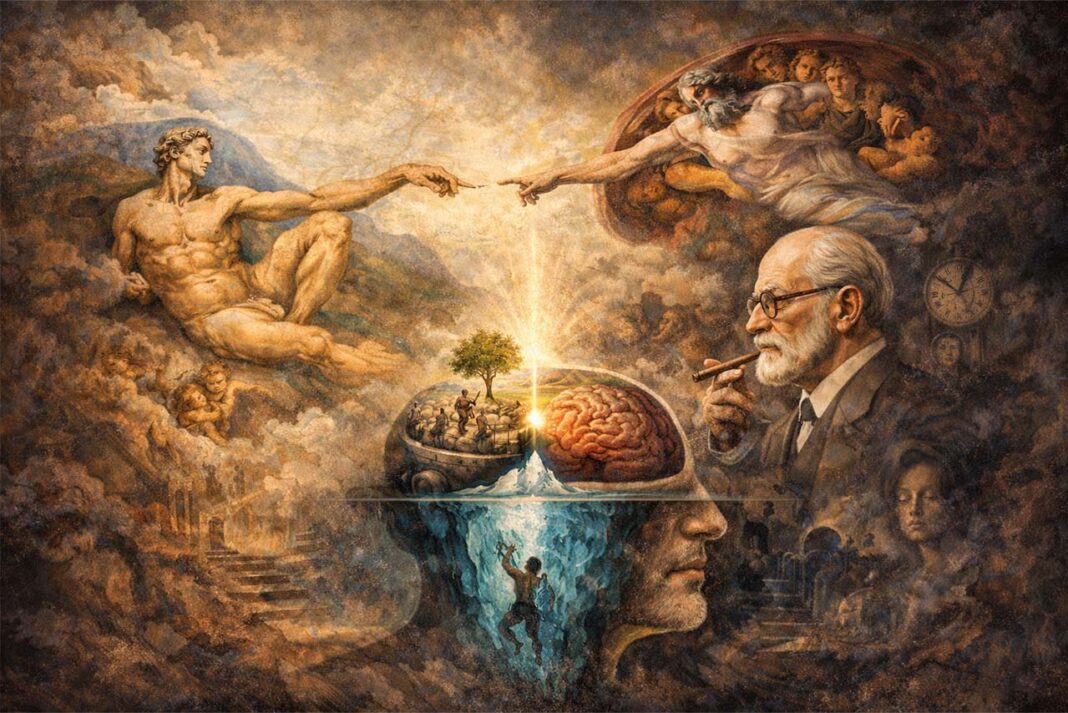
The Aesthetics Of The Mind
The human mind has not only cognitive functions but also an aesthetic function. Thoughts, feelings, and impulses often take on a specific form rather than remaining in their natural state, becoming easier to hold in the mind. Therefore, aesthetics is not a by-product of mental life, but one of its basic regulatory mechanisms. In order to cope with inner turmoil, human beings transform it into different forms. Art is one of those transformations. Renaissance art presents one of the most obvious examples of this aesthetic mental organization, and one of the best examples of this process is Michelangelo.
Michelangelo’s approach to the human body is more than just anatomical mastery. Specifically, in the statue of David, the body represents not only physical strength but also the mental tension created by the moment of decision-making. The tense posture in the sculpture represents the mind being caught between possibilities, as the impending threat has not yet materialized. This is the transformation of inner conflict into an aesthetic form.
In Freud’s psychoanalytic theory, the mind is in a constant search for balance between drives, prohibitions, and ideals. Artistic creativity is the aesthetic outcome of this quest for balance. Michelangelo’s works have an aesthetic order that elevates the inner tension of human beings while also maintaining balance. For this reason, art can be understood as the result of the effort to keep conflicts within the human mind in equilibrium.
Image And The Unconscious
The image is one of the most powerful transitional areas between the conscious and the unconscious. Words represent consciousness, while images often represent the unconscious. For Freud, unconscious contents are transformed and emerge in symbolic forms. Dreams are the most well-known examples of this process. Art can be thought of as a dream constructed while awake. In this sense, Michelangelo’s figures in the Sistine Chapel are not only religious representations, but also aesthetic representations of intense unconscious processes.
Especially in the scene depicting The Creation of Adam, the space between God’s and Adam’s fingertips embodies themes of deficiency, desire, and separation alongside creation. This state of being unable to make physical contact lies at the core of Freud’s theory of desire and deprivation.
Freud argues that the artist transforms unconscious impulses into socially acceptable forms rather than repressing them. This transformation process is explained through the concept of sublimation. Michelangelo’s intense physical compositions can be understood as an aesthetic and cultural sublimation of impulsive energy. The image thus carries what is repressed and transforms it, making it psychologically bearable for the viewer.
For Freud, art functions as an indirect representation of the unconscious. For Michelangelo, however, the body itself becomes the primary medium of expression. From a psychoanalytic perspective, Michelangelo’s creations are therefore not merely aesthetic objects, but visual texts through which mental processes can be read. This is the shared ground between art and psychoanalysis. Both aim to reveal the inner reality of the individual. Michelangelo’s images and Freud’s ideas converge in their attempt to illuminate the aesthetic transformation and psychodynamic depths of the human mind.