


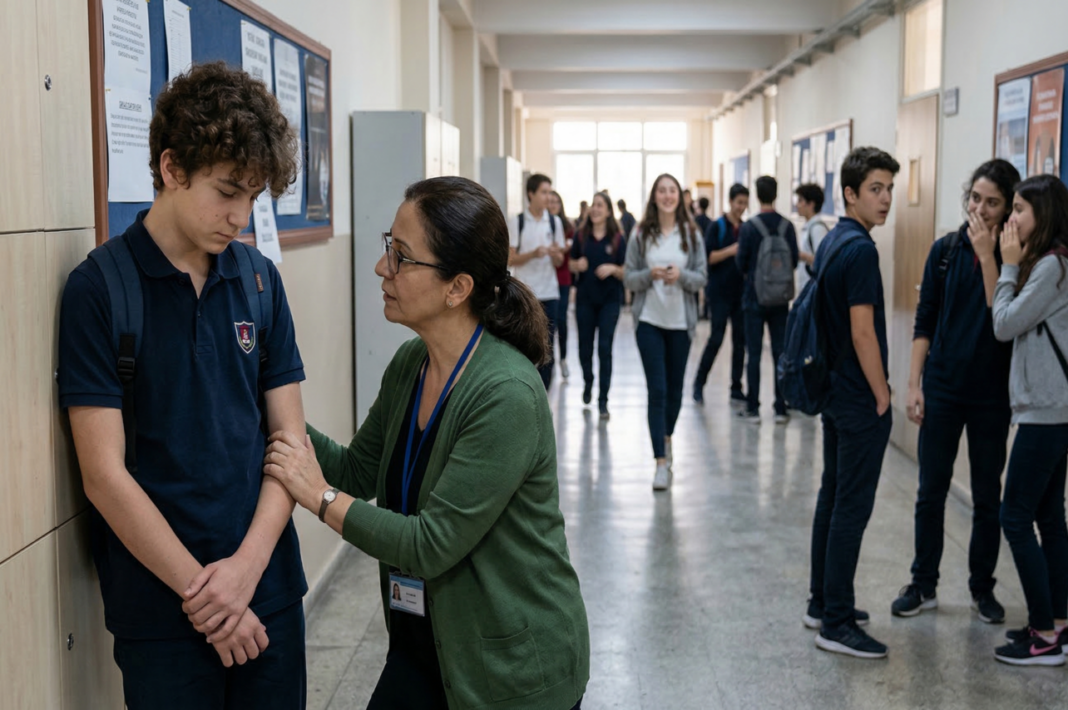

Schools are not only institutions where students gain academic knowledge; they are also important environments where social relationships are formed and individuals shape their personal development. Since students spend a large portion of their day at school, the experiences they have in this environment can directly affect their psychological, emotional, and social development. However, some negative behaviors that occur in school settings can make it difficult for students to feel safe. One of the most notable of these behaviors is bullying. Bullying is generally defined as the intentional and repetitive harmful behavior of an individual who is in a stronger position toward someone they perceive as weaker. These behaviors may occur in different forms such as physical aggression, verbal insults, psychological pressure, or social exclusion. The main characteristic of bullying is the imbalance of power between the individuals involved. This imbalance makes it difficult for the victim to defend themselves and may allow the behavior to continue over time. Bullying in school environments affects not only the student who is exposed to it but can also negatively influence the overall atmosphere of the school. For this reason, bullying is considered an important issue in educational institutions. Research shows that bullying behaviors are more frequently observed among students, especially during adolescence. During this period, students’ desire to be accepted by peer groups, their efforts to gain social status, and the sense of competition may contribute to the emergence of bullying behaviors. Therefore, examining teachers’ and students’ perceptions of the concept of bullying is considered an important research topic. Studies that investigate the views of teachers and students indicate that bullying appears in different forms in schools and creates a problem that negatively affects the educational process (Altun Kobul, Karahan, Yavrutürk & Köse, 2022).
Forms Of Bullying In Schools
Bullying behaviors in schools can occur in various forms. These behaviors are generally classified as physical, verbal, psychological, and social bullying. Physical bullying includes direct aggressive actions such as pushing, hitting, kicking, or damaging someone else’s belongings. Verbal bullying involves behaviors such as insulting, mocking, using humiliating words, or giving offensive nicknames. Psychological bullying refers to emotionally pressuring an individual, while social bullying occurs when a person is intentionally excluded from peer groups or social relationships. Research findings show that one of the most common types of bullying among high school students is verbal bullying. Students mocking each other, using insulting expressions, or giving offensive nicknames can frequently be observed in school environments. In addition, some students may attempt to dominate others through physical force or threats. Such behaviors can eventually create a sense of insecurity in the school environment and cause students to feel uncomfortable.
Factors Influencing Bullying Behaviors
Various factors are known to influence the emergence of bullying behaviors. Family structure, social environment, and individual characteristics play an important role among these factors. A lack of healthy communication within the family or insufficient attention and support for the student may contribute to the development of aggressive behaviors. Additionally, students’ desire to gain acceptance within peer groups or their attempts to appear stronger may also trigger bullying behaviors. Research indicates that both teachers and students believe that family and social factors are particularly influential in the emergence of bullying (Altun Kobul et al., 2022).
Characteristics and Impacts On Victims
Students who are exposed to bullying often share some common characteristics. These students may generally be more shy, have lower self-confidence, and experience difficulties expressing themselves in social relationships. Not being sufficiently accepted in the social environment or having a weaker position in peer relationships may lead these students to become targets of bullying. This situation can negatively affect students’ psychological well-being and lead to problems such as anxiety, stress, and loss of self-confidence. Furthermore, students who are exposed to bullying may develop negative attitudes toward school, and their academic performance may also decline.
Prevention and Cooperation Strategies
Preventing bullying in schools requires cooperation not only among students but also among teachers, school administrators, and families. Teachers play an important role by establishing open and trust-based communication with students, recognizing bullying behaviors at an early stage, and cooperating with school counseling services when necessary. In addition, school administrations can contribute to reducing bullying by creating a safe school environment and organizing awareness activities for students.
Conclusion and Future Perspectives
In conclusion, bullying is a significant problem that negatively affects students’ psychological, social, and academic development in the school environment. Therefore, cooperation among teachers, school administrators, and families is essential in combating bullying. Moreover, helping students develop empathy, respect for others, and healthy communication skills can contribute to creating a safer school environment and more supportive school environment.
Reference
Altun Kobul, F., Karahan, D., Yavrutürk, A. R., & Köse, N. (2022). Examination of bullying perceptions of high school teachers and students. Mavi Atlas, 10(1), 151–181.