



Introduction
Sometimes, words cannot find the courage to emerge at the beginning. Holding a brush, touching paint, turning on music, dancing, or picking up a pen allows expression to begin through another sense. Art therapy is, in essence, a holistic journey in which the process is felt stitch by stitch on the path toward an outcome.
For many artists, art serves as a medium through which free emotions and thoughts are expressed through action. The healing power of art varies from person to person. While dancing may be soothing for one individual, writing or painting may be healing for another. Well-being is personal. The greatest barrier to this process is aesthetic concern. When art is freed from aesthetic judgment, it becomes adaptable to therapeutic work.
Art As Emotional Bridge
Engaging in art freely allows individuals to release the energy accumulated within them. It becomes a bridge through which emotions that cannot be expressed in words can emerge. Being in contact—both with the material and with oneself—makes the flow across this bridge possible.
Aesthetic anxiety blocks this bridge; it prevents emotions and thoughts from transitioning into action. For this reason, experiencing a free and unrestrained process is a fundamental factor where art and well-being intersect. It is well known that many great artists used art as a means of coping with psychological distress and as a way to sustain their lives more comfortably.
What Is Art Therapy?
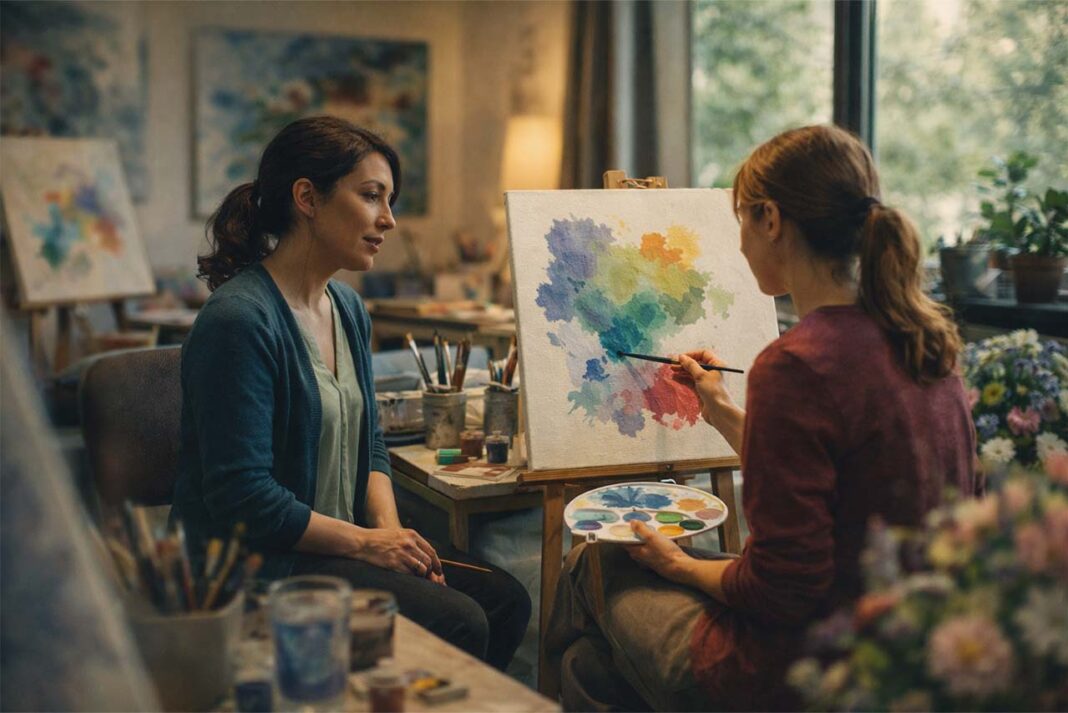
Art therapy is an expressive therapy modality in which art is used as a tool under the guidance of a trained therapist. These expressive techniques can be applied for purposes such as processing trauma, transforming emotions through expression, promoting relaxation, and enhancing creativity.
Some individuals engage in this process as part of their personal development journey to gain self-awareness, while others participate as a component of their ongoing therapeutic work. Art therapy can be applied individually as well as in group settings.
Individual And Group Art Therapy
Individual art therapy is a modality that can independently guide the therapeutic process through its own techniques. In addition, when a therapist is competent in this field, art therapy can be integrated eclectically into ongoing psychotherapy sessions.
In group-based art therapy, a certain number of participants come together to work around a shared theme. This process unfolds in a more open and shared manner. A participant who initially hesitates to share may, through another group member’s expression, realize that “I am not the only one experiencing this.” Such moments can reduce feelings of loneliness, soften reservations, and encourage openness.
For someone who has never engaged in therapy before, group art therapy can serve as a gentle and accessible gateway into the therapeutic process.
Art Therapy For Couples
How can art therapy be adapted for couples? Relationships are largely shaped through feeling and connection, and art therapy directly addresses these dimensions. In relationships, conflicts often arise around discussions of how one feels. Art therapy shifts this focus toward “showing how you feel.” Art becomes a medium through which the relationship itself is explored.
Each partner enters their own process, and the outcomes are then reflected upon together, allowing interpersonal differences to be discussed in a more tangible and embodied way.
In shared art processes, couples may continue each other’s artwork at certain stages—such as one partner carrying on from where the other left off. This type of intervention offers a visual representation of relational dynamics and wholeness. The primary aim of art therapy with couples is to foster mutual awareness and understanding between partners.
Art, Nature, And Awareness
At its core, art and therapy—both separately and together—serve well-being through emotional expression and creative process. Human beings live within nature, which itself is the source of artistic inspiration. Historical structures, trees, the sea, and at times a vibrant sunset—when we come into contact with these forms of art in the world, often without realizing it, we experience a sense of peace.
Creating art, observing art, or simply becoming aware of art—ultimately, the essence lies in cultivating awareness of both our surroundings and ourselves. Those who seek art therapy do so with the awareness that they will gain insight related to the specific theme of the work. Yet, why do we struggle to recognize the sense of well-being that art, already present in our daily lives, can bring to our inner world?
Art, with its essence rooted in nature, appears in many aspects of life. Paintings, canvases, dances, or flower arrangements—each serves a purpose of awareness within its own theme. When we create a flower bouquet ourselves, we witness not only the final result but also the process and effort behind its creation.
Why do we gift this bouquet to ourselves? What part of ourselves are we celebrating? Or in which area do we need motivation or support?
Bringing flowers together with these questions in mind is, in itself, an act of awareness. Art therapy supports our reflective capacities and offers an inner journey of experiential discovery.