


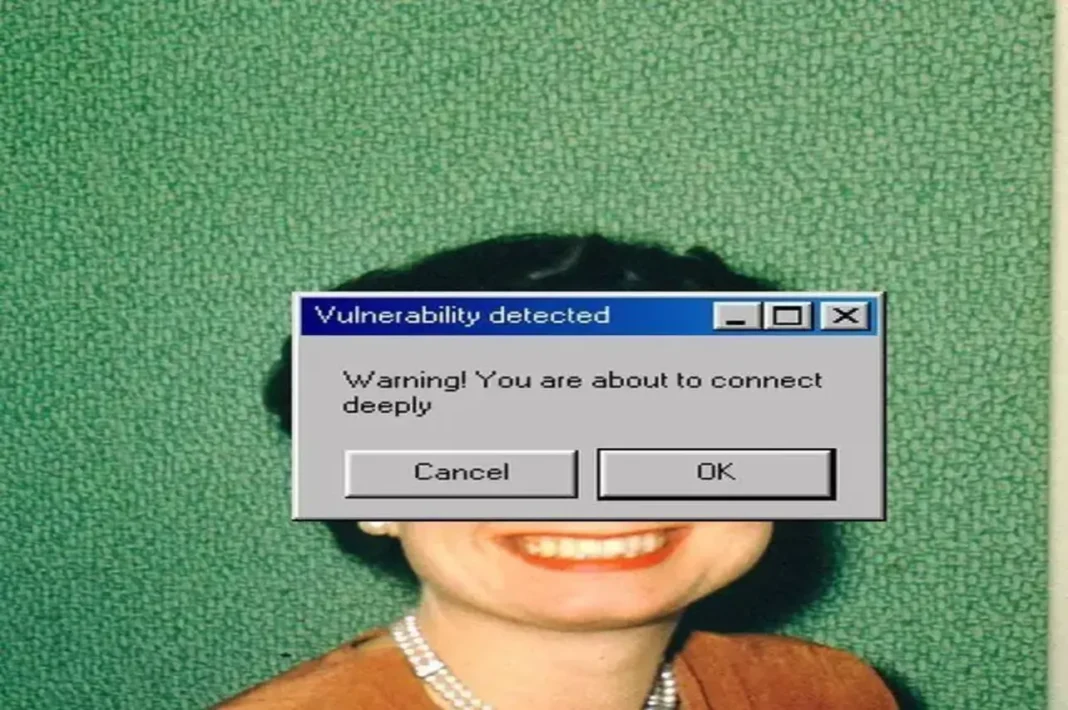

Individuals vary considerably in the extent to which structured belief systems are internalized during development. Some are raised within clearly defined religious frameworks, whereas others experience minimal or indirect exposure to such systems. Notably, engagement with existential or belief-related questions often does not peak in early development, but instead re-emerges later in adulthood. This later emergence is typically introspective, gradual, and context-dependent rather than doctrinal.
From a developmental perspective, this pattern raises an important question: how and why does the search for belief systems become salient after periods of apparent disengagement?
Identity Formation and Structural Discontinuities
Human development is not a strictly linear process. During childhood, socially transmitted values and belief structures are frequently internalized with minimal critical evaluation. Familial and cultural frameworks are often encoded as default representations of reality. However, during adolescence and early adulthood, this stability becomes increasingly susceptible to cognitive revision. Exposure to novel social environments and alternative epistemic frameworks introduces variability into previously stable belief structures.
At this stage, individuals may begin to experience meta-cognitive reflection on their own beliefs:
“Are these beliefs internally generated, or socially inherited?”
This form of reflective distancing is a key marker of identity reorganization. Within developmental psychology, identity formation is not limited to behavioral or social roles, but extends to epistemic and existential frameworks.
Modernity and The Fragmentation Of Meaning Systems
In pre-modern contexts, belief systems were typically transmitted through relatively cohesive cultural and familial structures. In contrast, contemporary environments are characterized by epistemic plurality and informational overexposure.
Individuals are now routinely overexposed to multiple, and often incompatible, interpretative frameworks, including religious, scientific, spiritual, and secular narratives. Digital media further amplifies this heterogeneity by enabling simultaneous access to divergent systems of meaning. While this condition is frequently interpreted as increased cognitive freedom, it also introduces a structural challenge: the destabilization of coherent meaning systems.
Cognitive processing under such conditions often involves rapid switching between frameworks, for example between spiritual discourse and scientific reductionism. Over time, this may lead to a latent integrative question:
“Within which framework does the self meaningfully belong?”
Belief Emergence As A Non-Pathological Restructuring Process
Contrary to interpretations that frame late emergence of belief systems as crisis-driven, evidence from developmental and existential psychology suggests a more nuanced interpretation. Rather than reflecting absence of belief, such processes often indicate delayed system construction.
Individuals do not necessarily lack belief; rather, they may lack a consolidated and affectively integrated belief structure. This distinction becomes particularly salient in adulthood, when life-course transitions introduce increased cognitive and emotional load. Career consolidation, relational dynamics, and exposure to loss or instability may collectively activate previously underdeveloped existential concerns. In such contexts, questions of meaning may arise independent of explicit external triggers.
Stress Exposure and Existential Re-Evaluation
Empirical observations suggest that significant life events—such as bereavement, relational disruption, or chronic stress exposure—can function as catalysts for existential re-evaluation. However, even in the absence of discrete events, cumulative psychological load may produce similar effects.
In these states, individuals often shift from goal-oriented cognition to meaning-oriented cognition. This transition is marked by increased attention to questions of purpose, control, and existential coherence. Importantly, such processes are not necessarily indicative of dysfunction, but may represent adaptive restructuring of cognitive schemas.
Meaning-Making Under Uncertainty
A central finding across existential and cognitive psychology is that humans exhibit a fundamental drive toward meaning construction. Belief systems, whether religious, philosophical, or secular, often function as higher-order frameworks that reduce uncertainty and integrate fragmented experiences.
Under conditions of epistemic plurality, individuals may attempt to reconcile competing frameworks into a unified interpretative structure. This process does not always result in formal religious re-engagement; rather, it may manifest as broader meaning-making reorganization.
Conclusion
The delayed emergence of belief-related cognition should not be conceptualized as a deviation from normative development, but rather as a temporally distributed process of identity and meaning consolidation.
From a psychological standpoint, belief systems are not merely inherited structures, but dynamically constructed frameworks that evolve in response to cognitive maturation and life experience. Accordingly, the central question may not be why belief is absent in early life, but how meaning systems are progressively assembled, deconstructed, and reconfigured across the lifespan.