


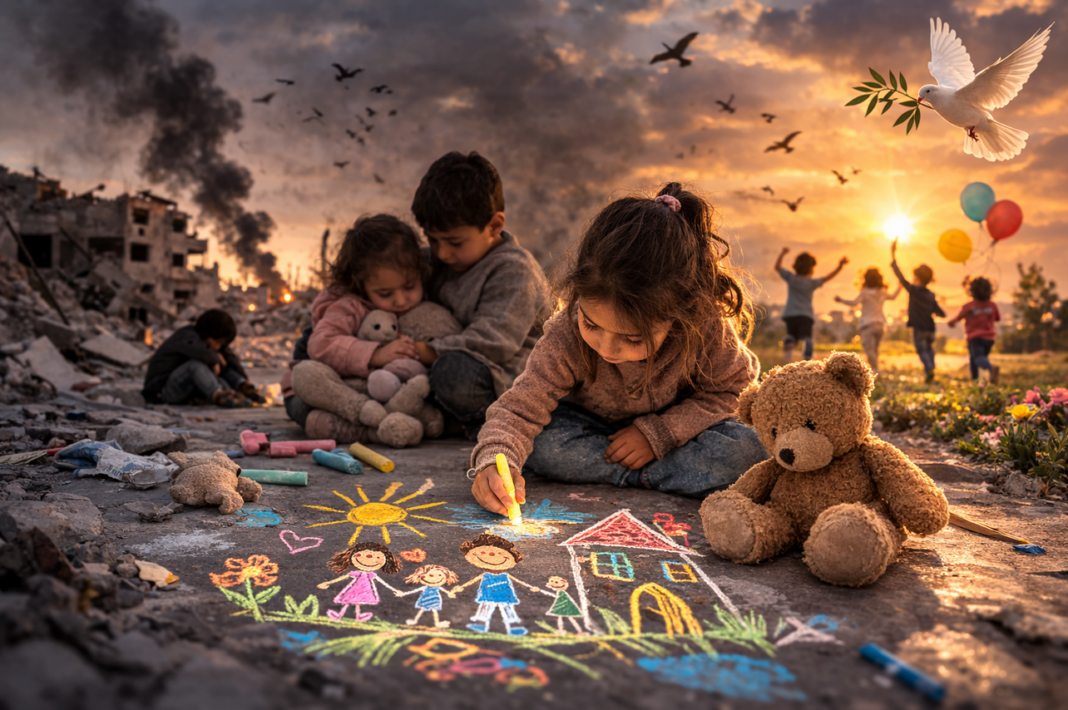

War and armed conflicts not only threaten the physical security of societies but also profoundly affect the psychological well-being of individuals. Among those most vulnerable to these conditions are children and adolescents. Being in a developmentally sensitive stage, children exposed to war may face significantpsychological risks due to uncertainty, loss, and the constant perception of threat. Research indicates that children who have experienced war are more likely to exhibit trauma symptoms, anxiety, and various developmental difficulties.
Why Is The War Environment Particularly Risky For Children?
During war, children may witness violent events, lose family members, or be forced to leave their homes. Displacement, the loss of safe living environments, and a persistent sense of danger can undermine children’s sense of security.
A considerable body of research shows that psychological problems are more prevalent among children living in conflict zones or those who are forced to migrate due to war. In addition, many experiences occurring during wartime are considered violations of children’s rights. Therefore, protecting children from the effects of war is of great importance not only in terms ofpsychological support systems but also within the framework of international law.
What Psychological Problems Can War Cause In Children?
Children who experience war may develop a range of psychological problems. Research suggests that the following conditions are particularly common:
-
Post-traumatic stress disorder (PTSD)
-
Depression
-
Anxiety disorders
-
Behavioral problems and anger outbursts
-
Sleep disturbances and nightmares
Traumatic experiences can alter children’s perception of the world as a safe place. Constant exposure to threat and experiences of loss may challenge children’s emotional regulation capacities. These effects may not only influence children in the short term but may also lead to long-term mental health risks.
How Does War Affect Children’s Development?
Living under continuous fear and uncertainty can significantly disrupt children’s developmental processes. Under normal circumstances, children spend their time learning, playing, and engaging in social interactions that support healthy development. However, in conflict environments, children’s attention and energy are often directed toward safety and survival.
Studies show that chronic stress experienced at an early age can influence children’s nervous system development, stress responses, and emotional regulation abilities. Therefore, the consequences of war are not limited to psychological effects but may also emerge at biological and developmental levels.
What Behavioral Reactions May Be Observed In Children?
Children exposed to war may display various behavioral reactions. These reactions are often considered natural psychological responses to traumatic experiences. The most frequently reported behaviors include:
-
Persistent anxiety and hypervigilance
-
Repeatedly asking the same questions
-
Re-enacting traumatic events through play
-
Separation anxiety
-
Anger outbursts and low tolerance
-
Sleep problems and nightmares
Such behaviors may represent children’s attempts to understand what has happened and to regulate their emotional experiences.
Do Children’s Reactions Differ By Age?
Yes. Children’s responses to war experiences may vary depending on their age and developmental stage.
Younger children often express traumatic experiences through play. Repetitive play related to traumatic events, separation anxiety, and intense fear responses are commonly observed in this age group.
Among adolescents, avoidance of discussing traumatic events, persistent hypervigilance, sleep disturbances, and intrusive thoughts may become more pronounced. These differences highlight the importance of designing psychological support programs that are appropriate to children’s developmental needs.
Are All Children Affected In The Same Way?
Although war poses serious psychological risks, not every child is affected to the same extent. Research indicates that some children can developpsychological resilience despite adverse experiences.
Important protective factors that support resilience include:
-
Family and social support
-
Safe and supportive relationships
-
School and community support
-
The continuation of daily routines and play activities
These factors can help children adapt and recover despite exposure to traumatic experiences.
How Can Children Affected By War Be Supported?
Research suggests that psychosocial interventions play a crucial role in the recovery process of children who have experienced war. These interventions may include:
-
Psychosocial support programs
-
Trauma-focused psychotherapeutic approaches
-
The provision of safe and stable living environments
-
Psychological support and educational programs for families
Recent studies also highlight the potential of digital mental health interventions in reaching children living in war and conflict zones. Particularly in regions where access to traditional mental health services is limited, online psychological support applications may provide an alternative way of supporting children and adolescents.
Conclusion
War can have profound psychological consequences for children and adolescents, affecting not only their physical safety but also their emotional and developmental well-being. Nevertheless, with appropriate psychosocial support, safe environments, and strong social relationships, many children can adapt and develop psychological resilience after traumatic experiences.
Understanding the impact of war on children and strengthening mental health services designed for them are therefore crucial for both individual well-being and public health.