


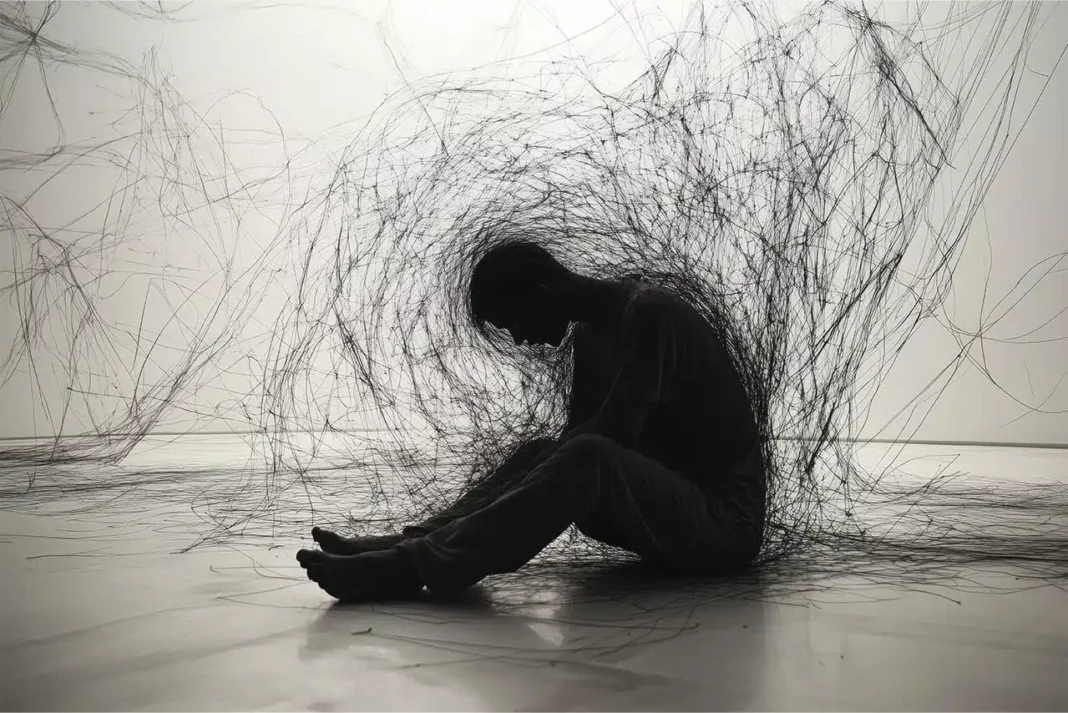

From the moment they are born, humans develop through their interactions with their environment (Yavuzer, 2013, p. 15). A child’s emotional, social, and spiritual development is closely linked to the relationship they form with their caregivers and the security of this relationship. However, negative experiences such as neglect, abuse, or insecure attachment can interrupt this developmental process. Such traumatic experiences can weaken an individual’s relationships with both themselves and society, increasing the risk of criminal behavior later in life (Beşer et al., 2019, p. 221). Numerous studies demonstrate that childhood Trauma significantly weakens an individual’s personality structure, social adaptability, and emotional regulation skills.
Over time, children exposed to neglect or abuse can internalize feelings of insecurity, worthlessness, and intense anger. When these feelings are not expressed in a healthy way or are suppressed, they can lead to aggressive behavior, sudden rage reactions, and hostile attitudes toward society (Dereboy & Dereboy, 2017). At this point, childhood traumas are not just past events; they become the seeds of future criminal behavior.
The Impact Of Trauma Within The Framework Of Attachment Theory
Bowlby’s Attachment Theory (2014) provides an important theoretical basis for explaining how childhood traumas determine the process leading to criminal behavior. According to the theory, the relationship established with a caregiver in the early years forms the source of a fundamental sense of trust that an individual maintains throughout life. In short, this theory states, “You cling to life as you did in the early years.”
It has been noted that children who fail to develop secure attachments experience various difficulties in empathy, emotion regulation, and adapting to social relationships in later years. For example, individuals who are consistently rejected in childhood may develop intense “abandonment” anxiety and related angry or aggressive reactions in adulthood. Similarly, adolescents who are criticized or neglected by their parents tend to fill the emotional void they feel with group affiliation or gang identity (Turan, 2020). Therefore, criminal behavior is not merely an act; it is a reflection of an individual’s quest for acceptance and recognition. In this process, the individual may turn to violent or criminal behavior in order to express their repressed emotions or fill the emotional void (Özdemir & Çok, 2011).
The Transmission Of Violence From A Social Learning Theory Perspective
According to Bandura’s Social Learning Theory (2016), children replicate what they learn by modeling the behaviors they observe in their environment. Children who witness constant conflict, insults, or physical violence at home may begin to consider these behaviors as “normal” over time.
For example, if a father physically abuses his spouse in moments of anger, the child may learn this behavior as a “show of power” and may reproduce similar behavioral patterns in their own relationships in later years. For the child who witnesses this, these images do not remain solely “in the moment.” They are recorded in their brain, acquire meaning, and become normalized. Thus, violence ceases to be merely an individual reaction and becomes a behavioral pattern transmitted across generations.
Various studies conducted in Turkey show that a significant portion of individuals who turn to crime were subjected to physical, emotional, or sexual Childhood Abuse (Karataş, 2020). Childhood traumas not only leave a mark on the individual’s inner world; they can also pave the way for the transmission of violent and criminal behavior across generations (Beşer et al., 2019).
Emotional And Attachment-Based Consequences Of Trauma
Another important consequence of traumatic experiences is emotional numbing. Violence experienced in early childhood can lead to a child suppressing their emotional responses and, over time, desensitization to the suffering of others (Karaman, 2008). This type of emotional dulling is considered a psychological risk factor that paves the way for aggression and antisocial behavior, making an individual prone to criminal behavior (Sardoğan & Kaygusuz, 2006).
In this context, we can see that neglect, abuse, and attachment problems are not independent of one another; on the contrary, they are processes that trigger and reinforce each other. A neglected child is often considered to have been subjected to emotional abuse. Similarly, children who experience abuse are significantly less likely to develop secure attachments. These negative experiences profoundly affect and shape an individual’s self-perception, social relationships, and social attitudes (Yiğit & Erden, 2015).
When a child is wounded where they should find love and security… Who can heal that wound when they grow up?
Perhaps what we call criminal behavior is born precisely at this point.
If a child once couldn’t make their voice heard, as an adult they yearn for others to hear them—sometimes unable to remain silent, sometimes overstepping boundaries. That child, unseen, unheard, and unnoticed by society… Years later, we encounter them as “an individual driven to crime.” Yet, the story began much earlier, in the deepest recesses of silence.
Conclusion
Childhood traumas are not merely past events; they are powerful influences that shape an individual’s behavior, emotional responses, and social relationships throughout life (Pomakoğlu, 2023). While not every criminal behavior stems directly from trauma, there is often an unexpressed search for help behind almost every trauma (Özbay Güven & Yıldız).
Therefore, to understand criminal behavior, it is necessary to focus not only on the observed behavioral consequences but also on the underlying traumatic roots of these behaviors. The key to breaking the cycle of social violence is preventing childhood neglect and abuse, supporting secure attachment, and strengthening post-traumatic psychosocial support mechanisms (Üstündağ, 2020). Every child has the right to secure attachment, love, and protection, and any violation of these rights negatively impacts not only the individual but also the future of society.
Kaynakça
Bandura, A. (2016). Social learning theory. Pearson.
Beşer, A., Kısa, S., & Özkan, A. (2019). Çocukluk çağı travmalarının suç davranışı ile ilişkisi. Journal of Psychiatric Nursing, 10(3), 215–223.
Bowlby, J. (2014). Attachment and loss: Volume 1. Attachment. Basic Books.
Dereboy, F., & Dereboy, Ç. (2017). Çocukluk çağı travmaları ve psikiyatrik sonuçları. Anadolu Psikiyatri Dergisi, 18(2), 150–158.
Karaman, D. (2008). Çocukluk dönemi travmaları ve duygusal gelişim. Klinik Psikiyatri Dergisi, 11(3), 172–180.
Karataş, S. (2020). Suça sürüklenen çocuklar ve çocukluk travmaları: Türkiye örneği. Toplum ve Sosyal Hizmet, 31(2), 489–504.
Özdemir, Y., & Çok, F. (2011). Ergenlikte bağlanma sorunları ve riskli davranışlar. Türk Psikolojik Danışma ve Rehberlik Dergisi, 4(36), 54–67.
Özbay Güven, G., & Yıldız, M. (2018). Travma sonrası belirtiler ve genç suçlular. Adli Bilimler Dergisi, 7(1), 12–22.*
Pomakoğlu, S. (2023). Çocukluk çağı travmalarının gelişimsel etkileri. İstanbul Gelişim Üniversitesi Yayınları.
Sardoğan, M. E., & Kaygusuz, C. (2006). Duygusal duyarsızlaşma ve antisosyal davranış ilişkisi. Türk Psikiyatri Dergisi, 17(4), 289–297.
Turan, N. (2020). Bağlanma stilleri ve ergenlerde riskli davranışlar. Çocuk ve Gençlik Ruh Sağlığı Dergisi, 27(1), 45–56.
Üstündağ, A. (2020). Çocuk istismarının toplumsal etkileri ve önleme politikaları. Toplum ve Sosyal Politika Dergisi, 4(2), 210–230.
Yavuzer, H. (2013). Çocuk psikolojisi. Remzi Kitabevi.
Yiğit, İ., & Erden, G. (2015). Çocukluk çağı istismarının benlik algısına etkileri. Klinik Psikoloji Dergisi, 5(1), 66–78.