


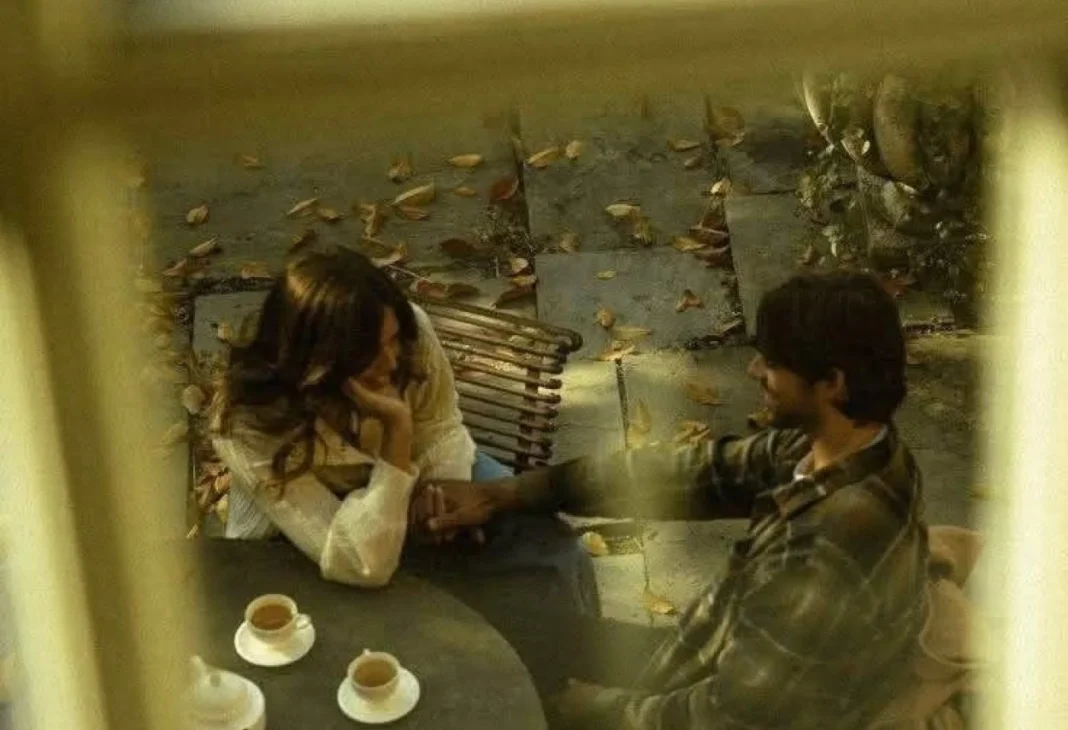

Have you ever thought, “What if they find someone better than me?”
Maybe you have asked yourself this after a breakup. Maybe you have felt it while being in a relationship. Sometimes, we do not only fear losing someone. We fear being replaced by someone else.
There is something painful about imagining that the person we love can continue their life without us. They can meet someone new, fall in love again, and perhaps look happier than they were with us.
Then we start asking ourselves:
“Was I really important to them?”
“Was I not enough?”
“Could someone easily take my place?”
These questions may look like simple relationship insecurities, but sometimes they are connected to something deeper: the way we see our own value.
Why Do We Feel Replaceable?
We live in a world where comparison is almost impossible to avoid.
We see other people’s relationships on social media. We see their appearances, achievements, travels, friendships, and romantic lives. Sometimes, without even noticing, we start comparing ourselves with people we do not even know.
This can also affect romantic relationships.
A person may think:
“Maybe my partner will meet someone more attractive.”
Or:
“Maybe they will find someone who understands them better than I do.”
The problem starts when we turn these thoughts into a measurement of our own value.
If someone leaves us, it does not automatically mean that another person was “better” than us.
Relationships can end for many reasons. Sometimes people are not compatible. Sometimes their needs change. Sometimes they cannot communicate well. Sometimes love changes.
But when our self-worth depends too much on being chosen by another person, a breakup can feel like a personal failure.
We stop asking, “Why did this relationship end?”
Instead, we ask:
“Why wasn’t I enough?”
The Feeling That Someone Can Easily Replace Us
Social media and modern dating can make this feeling stronger.
We are constantly reminded that there are many people out there. Dating apps can give us the feeling that if one relationship ends, another person is always waiting.
Of course, meeting new people is not a bad thing.
But sometimes this creates the idea that people are replaceable.
If someone does not choose us, there is always someone else.
If someone stops talking to us, they can talk to another person.
If a relationship ends, another relationship can begin.
This can make us wonder:
“If there are so many options, what makes me special?”
But human beings are not products.
A person cannot be compared to another person in the same way we compare two products and decide which one is better.
Still, many of us unconsciously do this.
We compare ourselves with our partner’s ex.
We compare our appearance with people they follow.
We compare our relationship with couples we see online.
And sometimes, we try to become “better” because we are afraid of being replaced.
When Being Loved Becomes Proof of Our Value
One of the most difficult parts of this fear is that love can become a way of proving our worth.
When someone chooses us, we feel valuable.
When they want us, we feel attractive.
When they miss us, we feel important.
But when their feelings change, our confidence can change too.
This creates a very fragile sense of self-worth.
Because our value becomes dependent on another person’s feelings.
A partner can love us, but they cannot be responsible for our entire self-worth.
They can make us feel loved, but they cannot permanently prove that we are worthy.
This is something we have to build inside ourselves.
Are We Afraid of Losing the Person or Losing Our Place in Their Life?
This is perhaps the question I find most interesting.
When we are afraid of being replaced, are we only afraid of losing the person?
Or are we also afraid of losing the place we had in their life?
Being someone’s partner can become an important part of our identity.
We become “his girlfriend,” “her boyfriend,” “their person.”
So when the relationship ends, we do not only lose the relationship.
Sometimes, we also lose a version of ourselves.
And seeing that person with someone new can make this even harder.
We may think:
“Someone else is now living the life I used to have.”
That thought can hurt more than we expect.
But their new relationship does not erase what our relationship meant.
Something can end and still have been real.
Someone can stop loving us without meaning that we were never lovable.
We Don’t Have to Become Impossible to Replace
When people are afraid of being replaced, they may try to become more desirable.
They may focus more on their appearance.
They may try to be the perfect partner.
They may stop expressing their needs because they are afraid of being “too much.”
They may try to become someone their partner cannot live without.
But this creates another problem.
We start believing:
“If I become good enough, they will never leave.”
Unfortunately, there is no such guarantee.
People can leave.
Feelings can change.
Relationships can end.
And sometimes, this happens even when both people are good people.
So perhaps the goal should not be becoming impossible to replace.
Perhaps the goal is becoming secure enough to know that being replaced does not mean being worthless.
Being Rejected Does Not Mean Being Unworthy
There is an important difference between rejection and worth.
Being rejected is an experience.
Being unworthy is a belief.
They are not the same thing.
Someone not choosing us does not automatically mean that we were not good enough.
It may simply mean that the relationship was not right anymore.
This does not make rejection painless. It can still hurt deeply.
But we can experience that pain without turning it into a judgment about who we are.
Maybe instead of asking:
“How can I make sure nobody replaces me?”
we should ask:
“Can I still know my worth when someone chooses not to stay?”
Because healthy self-worth is not about being the most beautiful, the most successful, or the most desirable person in the room.
It is about knowing that our value does not disappear when someone’s feelings change.
We do not have to be irreplaceable to be valuable.
We just have to stop measuring our value by how difficult we are to replace.