


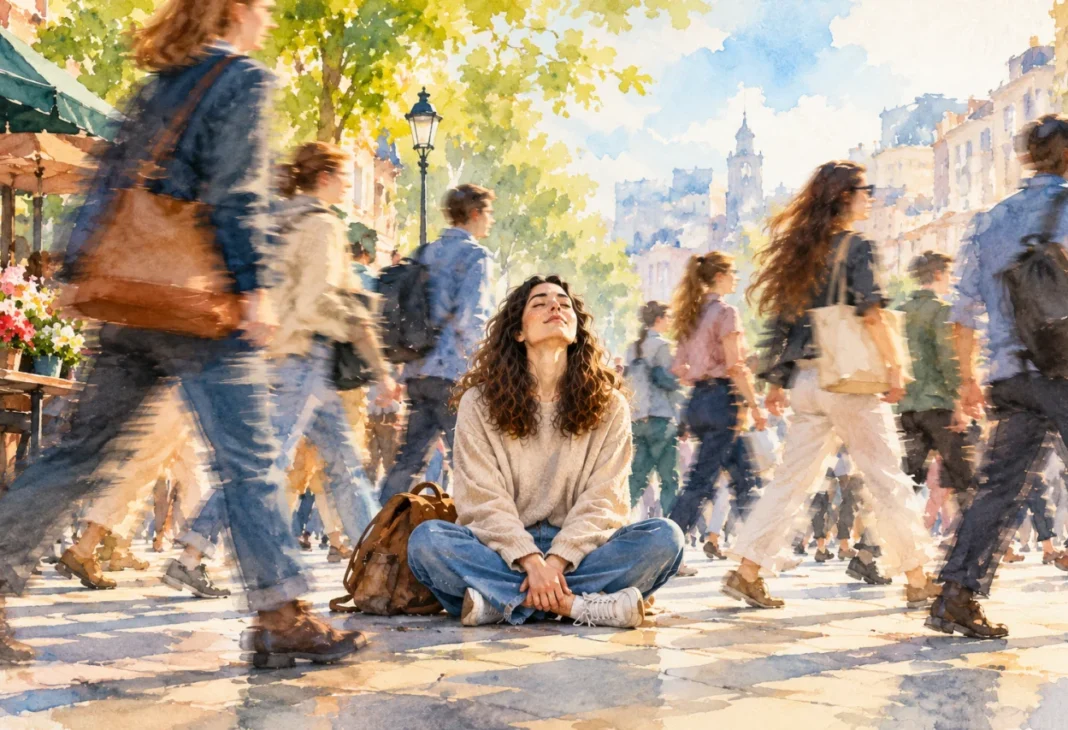

In recent years, slowing down and “being present” have become an important part of conversations around well-being. Amid the demands of everyday life, we often hear that we need to make more time for ourselves, rush less, and pause every now and then. All of these can, of course, be valuable. Yet sometimes, even when the free evening we have been waiting for finally arrives, we may notice that we still cannot truly stop. We reach for our phones, find something else to do, or feel restless when we are doing nothing. Perhaps the question we need to ask is not only, “How can I rest more?” but also, “Why can slowing down sometimes feel so difficult?”
Stopping Is Not Always Resting
We may be sitting on the couch while our minds are still moving at the pace of the day. Work may be over, yet our bodies may still be preparing for whatever comes next. Sometimes, when the movement around us quiets down, the movement within us becomes more noticeable. So, if setting aside time to rest does not immediately bring a sense of ease, it does not necessarily mean that we are “bad at resting.” Sometimes, for the body to slow down, it needs not only time, but also a transition.
The Familiarity of Speed
When rushing, solving, producing, thinking, and preparing for the next thing have been part of our everyday rhythm for a long time, our bodies can become accustomed to that pace. Speed may then show up not only in what we do, but also in how we move through the day, how we think, and how we prepare ourselves for what comes next. Speed can also serve a purpose at times. It may help us keep up, stay organized, or keep going through a difficult moment. Perhaps the point is not to eliminate speed from our lives, but to notice when it is helping us and when it has simply become a rhythm that continues on its own. This may be why slowing down does not always feel peaceful at first.
What We Hear in the Quiet
When our days are filled with movement and stimulation, things we barely notice can become more apparent when we slow down. Tiredness. Tension. Perhaps an emotion we have not had space for during the day. An unfinished thought. A sense of loneliness. Or simply a restlessness in the body that is difficult to put into words.
Sometimes, then, what moves us back into action may not be that we “do not like resting,” but rather what we encounter when we stop. An emotion, thought, or bodily sensation that remained in the background while we were moving may become easier to hear when we slow down.
Changing Gears Rather Than Hitting the Brakes
Imagine a car that has been traveling at high speed for hours. Rather than expecting it to stop instantly, we gradually reduce its speed. Sometimes, our bodies may need a similar kind of transition. Sitting down to meditate immediately after an intense workday may not feel regulating for everyone. One person may need to walk for a while first, another may take a shower, while someone else may listen to music or spend some time doing small things around the house. Perhaps our bodies do not always need us to hit the brakes; sometimes, they simply need us to change gears.
Small Ways of Slowing Down
Slowing down does not necessarily mean meditating for an hour, leaving an entire day empty, or completely changing the pace of our lives. It might mean waiting a few minutes before moving from one session to the next. Noticing our steps as we walk home. Not immediately starting something new after finishing a task. Drinking a cup of tea without doing something else at the same time. Or simply checking in with the body during the day and asking, “How fast am I moving right now?” What might change if, instead of stopping completely, I slowed down by just ten percent?
Towards Our Own Rhythm
Our circumstances are not all the same, and sometimes life genuinely requires us to move quickly. The point is not to be slow all the time, but to develop a relationship with our own pace. Perhaps slowing down is not about reducing all movement in our lives. It may be about noticing when we speed up, when we need to pause, and how our bodies move from one rhythm to another. Perhaps finding our own rhythm begins not with how much we can slow down, but with noticing the pace we are already moving at.