


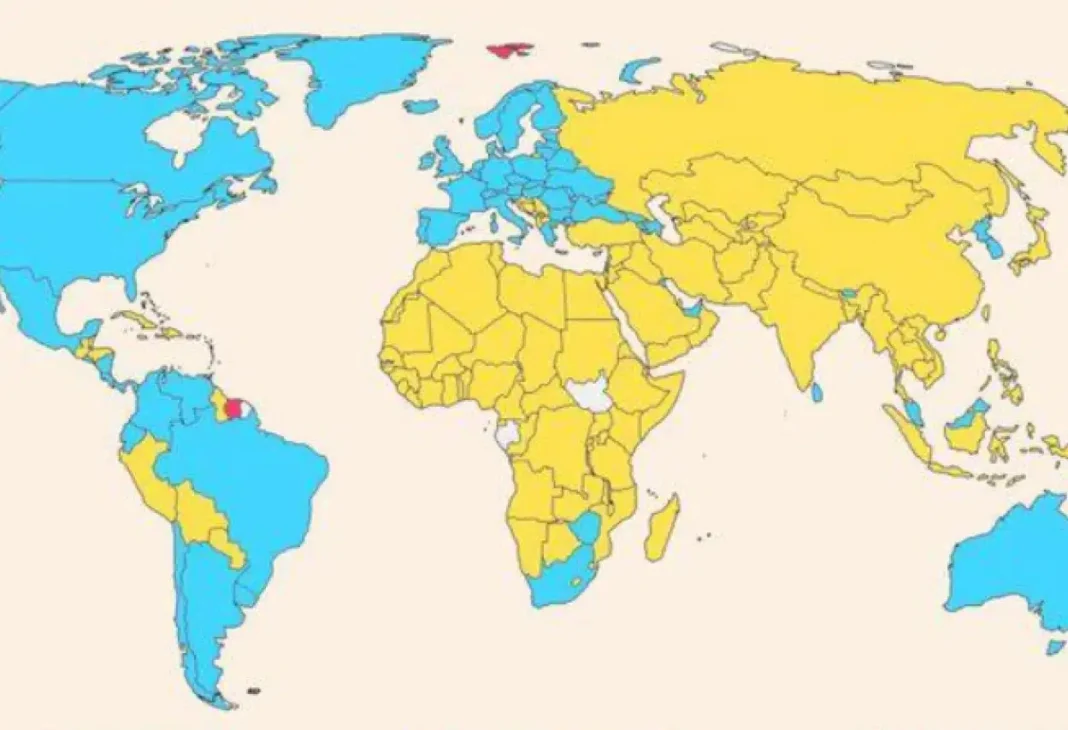

The Guilt, Shame, and Fear Culture Theory is a prominent framework proposing that the primary motivations regulating moral behavior vary across cultures. Originating in anthropology, particularly in the work of Ruth Benedict, the theory has subsequently attracted attention in cultural psychology, the sociology of religion, and intercultural communication. However, contemporary scholarship has questioned its tendency to portray cultures as homogeneous entities and its limited capacity to account for the complexity of social dynamics. This article critically reviews the historical development, fundamental assumptions, strengths, and limitations of the Guilt, Shame, and Fear Culture Theory, with the aim of evaluating its relevance within contemporary social science research.
Introduction
Culture is one of the fundamental forces shaping individuals’ values, beliefs, and patterns of behavior. Consequently, explaining cultural differences has long been a central concern within the social sciences. Among the theoretical approaches developed for this purpose, the Guilt, Shame, and Fear Culture Theory has been particularly influential in explaining how societies regulate moral behavior through different motivational mechanisms. Early anthropological formulations of this distinction are commonly associated with the work of Ruth Benedict, whose analyses of cultural patterns helped establish the conceptual foundation for subsequent developments.
The theory proposes that some societies primarily rely on internal conscience, others on social approval and reputation, and still others on fear of punishment or supernatural sanctions as their dominant mechanisms of moral regulation. Nevertheless, developments in contemporary cultural psychology and anthropology suggest that cultures are considerably more complex than these three categories imply. Accordingly, the theory is increasingly regarded not as a definitive classification system but as a historical and conceptual framework for understanding cultural tendencies.
Theoretical Framework
According to the theory, guilt cultures regulate behavior primarily through an individual’s internal conscience. Moral transgressions evoke feelings of guilt and personal responsibility even when they remain unknown to others. Consequently, internal moral standards serve as the principal mechanism of behavioral regulation.
In contrast, shame cultures emphasize social evaluation and public reputation. Maintaining social acceptance, preserving honor, and avoiding public embarrassment are considered central determinants of individual behavior. Individuals are therefore concerned not only with the consequences of their actions but also with how those actions are perceived by others.
Fear cultures, on the other hand, are characterized by behavioral regulation through fear of authority, punishment, or supernatural forces. Compared with guilt and shame cultures, however, the concept of fear culture has received relatively limited empirical attention and remains less theoretically developed.
Contributions of the Theory
One of the theory’s principal contributions lies in providing an accessible conceptual framework for understanding cross-cultural differences in moral motivation. It has been widely employed as a heuristic model in intercultural communication, international management, comparative religious studies, and cross-cultural education.
Moreover, research in cultural psychology has demonstrated that experiences of guilt and shame vary in both prevalence and expression across cultural contexts. These findings do not necessarily validate the theory in its entirety; rather, they suggest that some of its underlying assumptions are supported by empirical evidence. In this respect, the theory has made an important contribution by highlighting the relationship between culture and moral emotions and by encouraging interdisciplinary research on culturally shaped emotional experiences.
Contemporary Critiques
Despite its historical significance, the theory has been the subject of substantial criticism.
First, classifying entire societies according to a single dominant emotional mechanism has been criticized as overly reductionist. Contemporary scholars argue that guilt, shame, and fear frequently coexist within the same society and may influence behavior differently depending on the social context, interpersonal relationships, institutional structures, or specific moral situations. Consequently, assigning a single emotional orientation to an entire culture risks oversimplifying social reality.
Second, globalization, migration, multicultural societies, and digital communication have increasingly blurred cultural boundaries. Individuals are now exposed to multiple cultural influences simultaneously, making it difficult to conceptualize societies as culturally homogeneous entities. Rather than belonging exclusively to one cultural system, many people navigate multiple cultural identities throughout their lives. As a result, the explanatory power of rigid cultural classifications has diminished considerably.
Third, contemporary cultural psychology conceptualizes culture as a multidimensional and dynamic phenomenon. Factors such as individualism–collectivism, self-construal, social norms, moral values, historical context, and institutional influences interact in complex ways to shape human behavior. Therefore, reducing cultural variation solely to guilt, shame, and fear is widely regarded as insufficient for explaining the psychological complexity of contemporary societies.
Finally, the concept of fear culture remains considerably less theoretically developed and empirically validated than the concepts of guilt and shame. While numerous studies have investigated guilt and shame as moral emotions, comparatively little empirical research has examined fear as a defining cultural mechanism. Consequently, the status of fear culture as a distinct analytical category continues to be debated within contemporary scholarship.
Conclusion
The Guilt, Shame, and Fear Culture Theory has made a significant historical contribution to understanding cultural variation in moral motivation and remains an influential reference point in anthropology, cultural psychology, and intercultural studies. At the same time, contemporary research increasingly emphasizes that cultures are dynamic, multidimensional, and internally diverse rather than fitting neatly into discrete categories.
Consequently, the theory is more appropriately understood as a heuristic framework for interpreting cultural tendencies than as a definitive model for classifying societies. Although its explanatory power is limited when applied rigidly, it continues to offer valuable conceptual insights into the ways cultural environments shape moral emotions and behavioral regulation.
Future research would benefit from integrating this historical perspective with multidimensional psychological, anthropological, and sociological approaches. Such an integrative framework would provide a more comprehensive understanding of the complex relationship between culture, moral emotions, and human behavior in an increasingly interconnected world.