



A Familiar Story
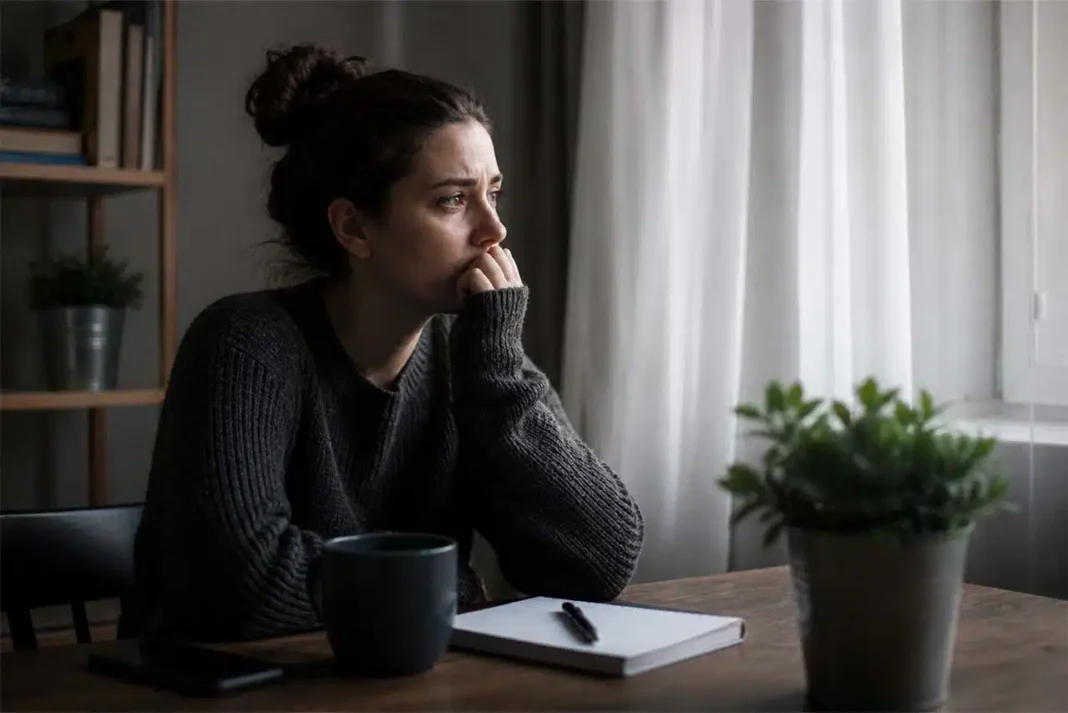
She has been tired for a long time. Not just physically, but in the way that makes it hard to recognize yourself in the mirror, hard to want things, hard to explain to the people around you why getting through the day feels like so much effort. She eventually sees someone. Depression is named. A prescription is written. What often goes unasked in this story is whether the depression arrived on its own or whether it was carried in by something else entirely. For a significant number of women, that something else is polycystic ovary syndrome (PCOS). Understanding this connection may matter more than any adjustment to the antidepressant dose.
More Than A Hormonal Condition
PCOS affects between 8 and 13% of women of reproductive age worldwide, making it the most common endocrine disorder in this group (Berni et al., 2024). It is typically described in terms of its physical features: irregular cycles, hormonal imbalances, and metabolic disruption. However, for many of the women living with it, the most disruptive aspect is not physical at all.
Research consistently shows that women with PCOS are three to eight times more likely to be diagnosed with depression and anxiety compared to those without the condition (Wang et al., 2023; Cooney & Dokras, 2017). Depression prevalence in PCOS samples ranges from 25 to 50% depending on the population and assessment method (Brutocao et al., 2018). Beyond depression and anxiety, elevated rates of body image distress, disordered eating, diminished self-worth, and reduced quality of life have all been documented (Dokras et al., 2024). PCOS is also associated with increased risk of obsessive-compulsive disorder, bipolar disorder, and sleep disorders, a psychiatric burden that extends well beyond mood alone. However, international surveys consistently find that clinicians have limited awareness of these mental health associations and that women with PCOS frequently report feeling unheard, dismissed, or inadequately supported when they raise psychological concerns (Dokras et al., 2024).
The Weight Of Living In This Body
The relationship between PCOS and depression is not a simple one-way street. It is a cycle, one that plays out as much in a woman’s psychological experience as in her physiology. Consider what PCOS can look like from the inside. Visible symptoms: unwanted hair growth, acne, weight changes that resist effort, menstrual irregularity are not neutral clinical findings. They are daily encounters with a body that feels difficult to inhabit and harder to explain. Research consistently links these symptoms to diminished self-esteem, body image distress, and a sense of lost control over one’s own physical identity (Dokras et al., 2024).
For younger women in particular, adolescents navigating PCOS face significantly higher rates of psychiatric disorders than their peers. This finding speaks to how early and how deeply the psychological impact takes hold (Cooney & Dokras, 2017). Then there is infertility. Up to 72% of individuals with PCOS experience some degree of fertility difficulty (Dokras et al., 2024). For women who want to become pregnant, this is not merely a medical complication, it is a source of profound grief, relational strain, and existential uncertainty. Depression prevalence rates ranging from 11 to 56% have been reported among women dealing with fertility challenges, a range that reflects not just symptom severity but the vastly different psychological meanings that pregnancy holds across individuals, cultures, and life circumstances. The result is a condition in which physical symptoms generate psychological distress, which in turn affects behavior, self-care, and the body itself deepening the original difficulty. Addressing one layer without attending to the others leaves the cycle intact.
It is also worth noting what this means for the experience of seeking help. Women with PCOS frequently describe their interactions with healthcare providers as frustrating and minimizing. The average time from symptom onset to diagnosis exceeds 4 years, with multiple consultations with different providers before a conclusive diagnosis is reached (Sydora et al., 2023). By the time depression is formally named, it may have been developing quietly for years in a context where the woman herself was told, in various ways, that what she was feeling was not quite real, not quite serious, or not quite the point.
The Antidepressant Paradox
Against this backdrop, the limitations of antidepressants as a standalone response become easier to understand, and harder to overlook. SSRIs are effective for many people. Nevertheless, a Cochrane systematic review examining antidepressant use specifically in women with PCOS found so few rigorous studies that no meaningful conclusions could be drawn, a sobering finding, given how commonly these medications are prescribed in this population (Morley et al., 2017). Antidepressants have, in effect, been widely applied to a condition they were never specifically tested against.
More practically, there is the question of what an antidepressant does and does not address. It can reduce the neurochemical intensity of depressive symptoms. It cannot change how a woman feels about her body. It cannot restore the sense of control that PCOS systematically erodes. It cannot address the grief of uncertain fertility, the social weight of visible symptoms, or the accumulated psychological toll of years of medical dismissal. For many women with PCOS, these are not side issues, they are the center of the depressive experience. There is also a practical complication worth naming: weight gain, a potential side effect of several commonly prescribed antidepressants, can worsen the metabolic features of PCOS and, in turn, intensify some of the very symptoms driving the psychological distress (Alur-Gupta & Dokras, 2023). A medication intended to help may, in some cases, quietly deepen the cycle it was meant to interrupt. The concern, then, is not that antidepressants are the wrong choice. They are often positioned as a complete answer to something considerably more complex.
Expanding The Frame
If the antidepressant alone is insufficient, what does a more adequate response look like? The evidence points toward approaches that take the full psychological experience of PCOS seriously not as a complication of the condition, but as a central feature of it. Psychotherapy occupies a more prominent role in this picture than it currently receives in most treatment plans. Cognitive behavioral therapy (CBT) has demonstrated efficacy for depression and anxiety in women with PCOS, with evidence suggesting it also improves PCOS-related quality of life and reduces distress related to body image and fertility concerns (Cooney & Dokras, 2017). Acceptance and commitment therapy (ACT), self-concept, and the psychological flexibility needed to live alongside a chronic condition may be particularly well suited to an experience that so often involves adjusting to an identity disrupted by an unpredictable body.
On the pharmacological side, the picture is more nuanced than a simple swap of one medication for another. Some PCOS-targeted treatments, including insulin-sensitizing medications, have shown secondary benefits for depressive symptoms not because they are antidepressants, but because addressing the physical substrate of the condition appears to reduce some of its psychological weight (Stovall et al., 2020). This is not an argument for abandoning antidepressants. It is an argument for considering them as part of a coordinated response, rather than the response itself.
A Closing Thought
The woman in the opening of this article is not unusual. She represents a gap that sits at the intersection of endocrinology, psychiatry, and psychology, one in which a condition with profound psychological dimensions is treated primarily as a hormonal problem, and its emotional consequences are addressed as though they arrived independently of everything else. Antidepressants are not the wrong answer for women with PCOS. For many, they are an important part of the picture. The concern is with how they are positioned as a first and final response to a kind of suffering shaped by identity, body image, loss, social experience, and years of feeling unseen. These are not problems that a prescription resolves. They are problems that require being heard, understood, and worked through. What women with PCOS may need most is not a different medication. It is a different kind of attention one that holds the whole person, not just the symptom.