


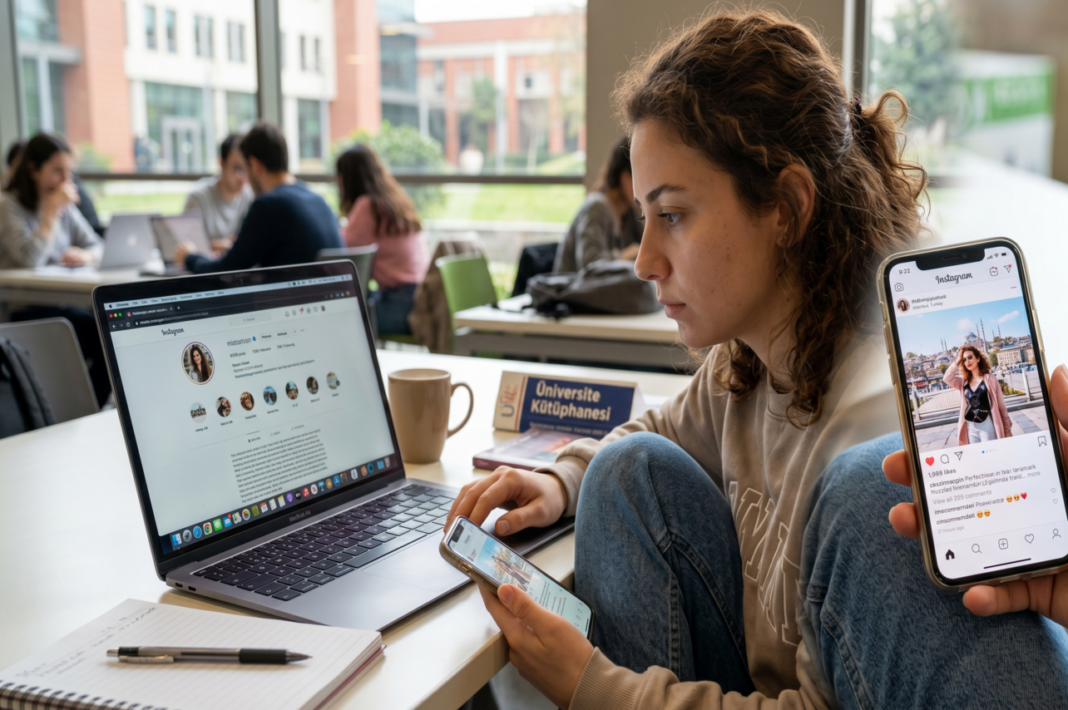

In today’s world, where digitalization is rapidly expanding, individuals’ identity development and self-perception processes have undergone significant transformation. Identity development is a dynamic and multidimensional process formed by the evolving answers individuals give to the question “Who am I?” over time. Adolescence and young adulthood, in particular, are considered critical periods during which individuals construct their sense of self. However, this process is no longer limited to the individual’s physical environment; it is being reshaped within an expanded field of interaction through social media and digital platforms. University students stand out as one of the groups most affected by this transformation, as they are both in a developmental stage characterized by intense identity exploration and active users of digital technologies.
The Real Self Versus The Ideal Self
Self-perception refers to the entirety of an individual’s thoughts, beliefs, and evaluations about themselves. This structure is generally examined in two main dimensions: the “real self” and the “ideal self.” While the real self reflects how individuals perceive themselves as they are, the ideal self represents who they aspire to become. An increasing discrepancy between these two dimensions may lead to negative outcomes such as feelings of inadequacy, low self-esteem, and psychological maladjustment. Digital environments, especially social media platforms, allow individuals to present their ideal selves, making this discrepancy more visible and more strongly felt.
Social Comparison Theory and Digital Interaction
Social comparison theory suggests that individuals have a tendency to evaluate themselves by comparing themselves with others. In this context, social media provides an environment where individuals are constantly exposed to selected and often idealized snapshots of others’ lives. Users tend to share their achievements, physical appearances, and the most positive aspects of their social lives. This can lead other individuals to perceive their own lives as insufficient or lacking. This culture of comparison, which is particularly prevalent among university students, has been associated with decreased self-esteem, feelings of worthlessness, and depressive symptoms.
The Role Of External Validation Mechanisms
The impact of social media on self-perception is not limited to comparison processes. External validation mechanisms such as “likes,” “comments,” and “number of followers” also play a significant role in shaping individuals’ sense of self-worth. Feedback received on posts may gradually make self-worth dependent on external factors. This can make an individual’s self-perception more fragile and increase sensitivity to criticism. Moreover, exposure to ideal body images, standards of success, and lifestyles on social media may lead individuals to develop unrealistic expectations about themselves.
Opportunities For Self-Expression and Support
However, the effects of social media are not entirely negative. Digital platforms also provide opportunities for self-expression, finding social support, and exploring one’s identity. Interactions with individuals who share similar interests can strengthen the sense of belonging and contribute to a better understanding of oneself. In this regard, the impact of social media can vary depending on the purpose and duration of use, as well as the individual’s psychological characteristics.
Self-Compassion As A Protective Factor
In this context, the concept of self-compassion emerges as an important protective factor against the negative effects of social media. Self-compassion refers to the ability of individuals to approach themselves with understanding and acceptance rather than judgment. Individuals with higher levels of self-compassion are less affected by social comparison processes and are able to maintain a more balanced self-perception. Because they view their imperfections as a natural part of being human, they can interpret idealized content on social media from a more realistic perspective.
Conclusion and Future Perspectives
In conclusion, identity development in the digital age has gained a multilayered structure that goes beyond classical psychological theories. Social media has become a powerful tool in shaping self-perception; however, its effects vary depending on individuals’ psychological resilience and usage habits. To help university students develop a healthy sense of self, it is important to increase awareness regarding social media use, enhance digital literacy skills, and expand self-compassion-based psychoeducational programs. Future research examining the relationships between these variables through experimental and longitudinal studies will make significant contributions to the field.
References
Festinger, L. (1954). A Theory of Social Comparison Processes. Human Relations.
Rogers, C. R. (1959). A Theory of Therapy, Personality and Interpersonal Relationships.
Neff, K. D. (2003). Self-Compassion: An Alternative Conceptualization of a Healthy Attitude Toward Oneself.
Valkenburg, P. M., & Peter, J. (2011). Online Communication and Adolescent Well-Being.
Twenge, J. M. (2017). iGen.
Brown, B. (2012). Daring Greatly.
American Psychological Association (2020). Publication Manual of the APA.