


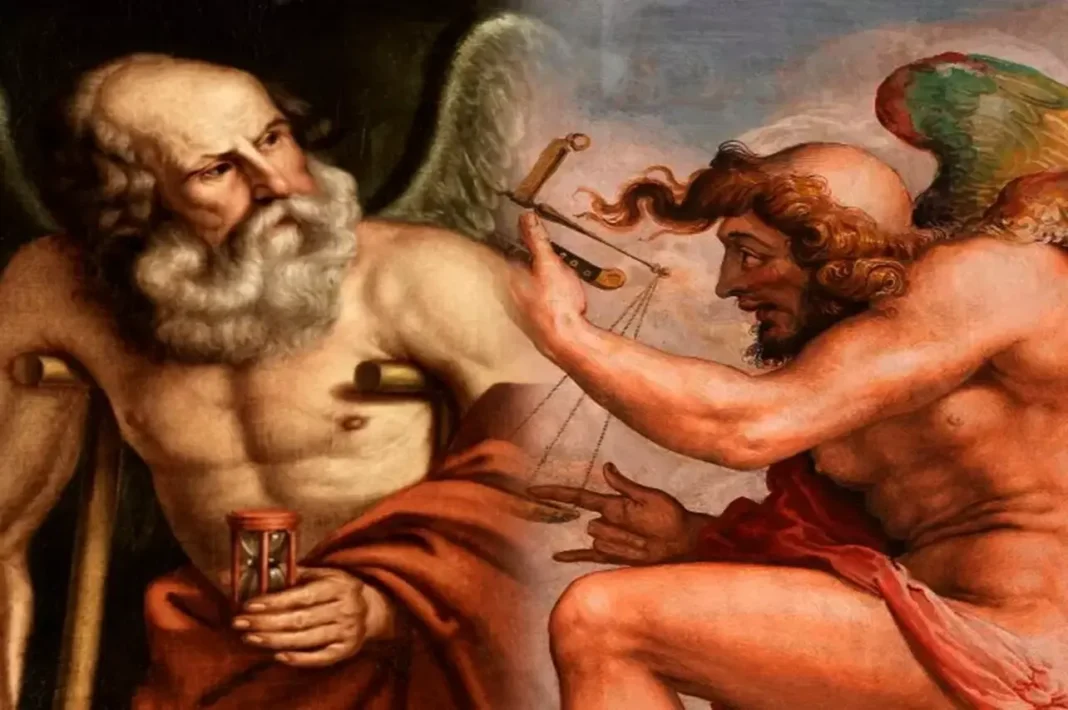

The Experience Of Time
Time is a concept that exists in the absence of death, yet can only be truly experienced in the progression toward it. To make sense of time’s existence, we are compelled to consume it. For us, time is much like oxygen; we do not notice its consumption from one moment to the next. A similar condition applies to time itself. Our perception of time is only possible within the context of time. When time stops, any form of experience becomes impossible. We find meaning in life through the existence of time, and we live life to find meaning in time.
We can understand the impact of time more clearly through the hypothetical construct of “stopping time.” What changed between right now and ten seconds later that allowed me to perceive it? The answer is the passage of time, which brings our experiences into the realm of awareness. The time we consume does not leave us without a trace. It manifests as wrinkles on our bodies, separations or new beginnings in our relationships, new patterns in our personalities, and the construction of the values we adopt. These changes are made possible by our consumption of time. However, what creates dozens of different possibilities for everyone is how that time is experienced.
Even under identical conditions, no two individuals experience time in the same way. The time spent waiting at the door while a loved one undergoes life-threatening surgery flows at the same objective speed as the time spent in a pleasant conversation with a dear friend. However, if these individuals were asked how time felt in those moments, their answers would not be similar. The human being, who provides the ground for the experience of time, is simultaneously the subject of time. A subjective being will experience time in subjective states. To treat time as one-dimensional would be to reduce the human experience.
Time, which we strive to understand primarily through its traces in our lives, is symbolized in Ancient Greek mythology by two gods: Chronos and Kairos.
Chronos (The God Of Time)
Chronos is the hourglass of our lives. As Augustine aptly put it, it is “the linear progression of time from the past and present toward the future.” Chronos consumes everything he creates; it is the passage of Chronos that causes a ripening apple to rot. It is quantitative time that flows of its own accord, accompanied by the fixed rhythms of our vitality, such as our pulse. We assume that time flows at a constant speed within its natural course, yet the rhythm of the clock’s hand may not always synchronize with the rhythm of our hearts. Chronos is the time that provides the basis for defining time. To define time, we generally need two phenomena that we can compare, possessing a sequence of before and after. Sometimes, looking back, the change between our childhood memories and the present day can provide that ground for us.
The fact that Chronos is irreversible and offers no compensation causes us anxiety and makes us feel under pressure. To meet the needs of humanity, we divide this rhythmic time into minutes, hours, days, months, and years. To gain control, we begin to plan and manage these segments through calendars and planners. We seek to foster a perception that we are controlling the time that slowly leads us toward death. From this structured system, we have even created a science called Chronology. Of course, this effort is not in vain; it is, in fact, functional and necessary.
Kairos (The God Of Opportunity)
If Chronos is the definition of time, Kairos is the internal experience of it. It is qualitative time—the moments when we feel truly alive. These are the times when we forget what hour it is. Much like opportunities, their arrival is unpredictable. They come at specific moments; they are fragile, instantaneous, and unique. Unlike Chronos, Kairos is not regular or rhythmic; it is irregular and complex. It is like chronological rifts where the sharp boundaries of Chronos become fluid. Kairos is the “opportune moment” to make a decision or to realize something. It is being open to the present with concentrated attention. The American professor of psychology, Mihaly Csikszentmihalyi, defines these moments of heightened attention as the “flow experience.” While performing a task with full focus, the individual perceives time as passing quickly, and the influence of external stimuli significantly diminishes. In this way, we find the opportunity to notice the right moment, recognize opportunities, and even seize those we previously let slip away.
Kairos is not about living many years; it is about living meaningful moments. These are the times that create the “opportunity” for an individual to construct their own world of meaning. To learn to recognize Kairos, one must slow down enough to perceive the emerging opportunities. Sometimes, a sense of emptiness within us encourages us to stay alert to experience moments of Kairos. Capturing Kairos does not mean denying the existence of Chronos. On the contrary, Chronos influences Kairos. Through the sensory stimuli we obtain in Chronos, we perceive our environment. These perceptions shape our thoughts and emotions, playing a role in the formation of our world of meaning. Chronos counsels us to wait for Kairos, and thus, we are able to experience Kairos moments.
Time Management
A life lived is directly related not just to the expiration of duration, but to how time is managed. When we reach the end of a cycle and look back, what truly remains is not the number of days lived, but the intensity of significant moments. These moments transcend chronological time. For example, we may not remember the meal we ate yesterday. Yet, a sudden sound or scent can transport us back to a memory from years ago, with a vividness as if we had just experienced it. This shows us that those moments did not merely flow by through Chronos, but were also experienced through Kairos. We remember our lives through experiences where we felt the flow of time change—beyond the times we can measure. Looking back, we may realize that most of these moments stem from Kairos. Our ability to enjoy life is perhaps possible thanks to the traces of these moments in our minds where we “bent” time.
Chronos and Kairos accompany us in every new experience, reminding us that time has a layered structure. Under the excessive dominance of Chronos, we become captives of constant productivity, driven by the fear of routine and the inevitable end. The process can spiral out of control and eliminate the experience of Kairos. Under the sovereignty of Kairos, however, we might chase uncontrollably from one opportunity to the next, deprived of the order and planning that Chronos provides. To build a meaningful life worth living, establishing a balance between Chronos and Kairos is essential for time management. The tension between these two dimensions of time emerges as a dynamic that is constantly reproduced in the existential experience of the human being. It offers us the chance to re-evaluate our actions and priorities, allowing us to notice the moments when we feel truly alive. With the vitality brought by this awareness, we can find the strength within ourselves to overcome problems.
References
Feedobem. (n.d.). Chronos e Kairós: Como agarrar oportunidades sem ser engolido pelo tempo [Chronos and Kairos: How to seize opportunities without being swallowed by time]. https://feedobem.com/como-harmonizar-chronos-e-kairos/
Kennedy, D., & Kohan, W. O. (2008). Aión, kairós and chrónos: Fragments of an endless conversation on childhood, philosophy and education. Childhood & Philosophy, 4(8), 5–22. https://doi.org/10.12957/childphilo.2008.20524
Saraçoğlu, E. (2021). İnsanın zaman deneyiminin fizyolojik ve psikolojik temelleri [Physiological and psychological foundations of the human experience of time]. Humanitas, 9(18), 235–252. https://doi.org/10.20304/humanitas.950911
Sayar, R. (2025). Obje felsefesine dair bir deneme: Kronos ve Kairos arasında topos olarak demlik [An essay on the philosophy of objects: The teapot as a topos between Chronos and Kairos]. Van İlahiyat Dergisi, 13(22), 91–104. https://doi.org/10.54893/vanid.1622930