
Time in Limbo: The Psychological Impact of Waiting in Migration

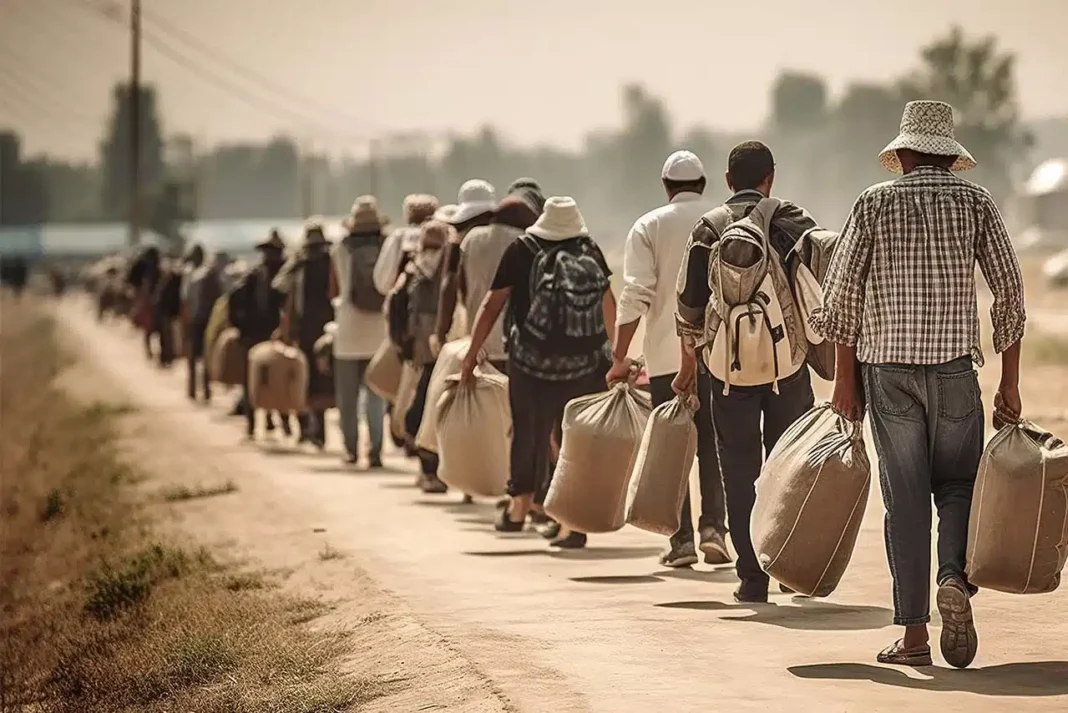
In the 21st century, migration is no longer only about movement across borders but also about waiting in limbo—bureaucratic and social uncertainty. For many asylum seekers and refugees, waiting for legal decisions, permits, or integration services becomes a defining feature of daily life. This temporal uncertainty can have profound effects on mental health, identity, and social relationships. While policymakers often discuss migration in terms of numbers and flows, psychological research highlights that time itself—delayed, suspended, or uncertain—shapes the lives of displaced people.
Waiting and Mental Health
Several studies have shown that prolonged waiting is strongly correlated with mental health difficulties. A longitudinal study in Denmark found that refugees who waited longer for asylum decisions had higher risks of psychiatric disorders compared to those with shorter waiting periods (Norredam et al., 2019). In the UK, refugees with extended waiting times reported poorer physical and emotional well-being, emphasizing that delays compound vulnerability (Hargreaves et al., 2021). A recent meta-analysis further demonstrated that asylum seekers with insecure status present elevated rates of depression (≈50%), anxiety (≈43%), and PTSD (≈41%) compared to settled migrants (Riley et al., 2024).
The Lived Experience of Time
Beyond clinical outcomes, waiting in limbo shapes everyday rhythms. Anthropologists describe this condition as “liminality,” where individuals are stuck between past and future, belonging and exclusion (Bendixsen & Eriksen, 2018). For migrant youth, school becomes a paradox: they are expected to plan for the future while their legal status remains uncertain.
In Austrian studies, asylum-seeking children reported feelings of sadness, immobility, and loss of control during prolonged waiting phases (Gruber et al., 2022). Similar patterns are noted in Sweden, where trust in institutions declined as waiting periods lengthened (Brekke & Midtbøen, 2022).
Coping Strategies and Resilience
Not all responses to waiting are negative. Research shows that social support networks can buffer against the harms of uncertainty. In Turkey, studies among Syrian asylum seekers revealed that while traumatic pre-migration experiences predicted PTSD, post-migration community support reduced the severity of symptoms (Alpak et al., 2017).
Protective factors such as optimism, religious faith, and lower intolerance to uncertainty can mediate the relationship between discrimination and mental health distress (Çetrez et al., 2023). These findings suggest that the psychological experience of waiting in limbo is not uniform but mediated by social context and coping resources.
Why Istanbul Matters
Istanbul offers a unique site for studying migration temporality. As a hub hosting diverse migrant populations, it reflects both regional displacement (Syrian, Afghan, Iraqi) and global migration dynamics. Ethnographic fieldwork in this context could reveal how young migrants structure their days, what symbolic practices they use to “fill” waiting time, and how institutions influence their sense of stability. Linking such insights with international research would contribute not only to psychology but also to anthropology and policy debates on migration.
Conclusion
Waiting in limbo is not a neutral pause; it is an active condition that shapes the psychological lives of migrants. Prolonged uncertainty increases risks for depression, anxiety, and loss of trust, but resilience can emerge through community support and personal coping strategies. Understanding waiting as a psychological and social phenomenon allows us to see migration more holistically—not only as a movement in space but also as an experience in time. By situating Istanbul’s migrant youth in this broader discussion, we can contribute both to academic knowledge and to more humane migration policies worldwide.
References
-
Alpak, G., Unal, A., Bulbul, F., Sagaltici, E., Bez, Y., Altindag, A., Dalkilic, A., & Savas, H. A. (2017). Post-traumatic stress disorder among Syrian refugees in Turkey: Prevalence and risk factors. Journal of Clinical Psychology, 36(10), 835–851.
-
Bendixsen, S., & Eriksen, T. H. (2018). Time and the other: Waiting and hope among irregular migrants. Ethnography, 19(1), 3–24.
-
Brekke, J. P., & Midtbøen, A. H. (2022). Trust under pressure: Waiting and uncertainty in the asylum process. Politics and Society, 50(3), 357–380.
-
Çetrez, Ö. A., Dangel, T., & Bartolomei, J. (2023). Intolerance of uncertainty and resilience as mediators of the relation between discrimination and mental health in migrants. Healthcare, 11(4), 503.
-
Gruber, S., Strasser, R., & Hinger, S. (2022). Children in limbo: The impact of asylum procedures on migrant children’s mental well-being in Austria. Child Society, 36(4), 403–417.
-
Hargreaves, S., Rustage, K., Nellums, L. B., et al. (2021). The health impact of long asylum waiting times: Evidence from the UK. BMC Public Health, 21, 146.
-
Norredam, M., Nellums, L., Nielsen, R. S., Byberg, S., & Petersen, J. H. (2019). Waiting for asylum decisions and psychiatric disorders in refugees. The Lancet Public Health, 4(11), e637–e644.
-
Riley, A., Thomas, T., & Nair, K. (2024). Mental health outcomes of asylum seekers with insecure status: A systematic review and meta-analysis. Psychiatry Research, 327, 116–125.