
The Lord of the Rings (LOTR): The Psychology of New Adventures

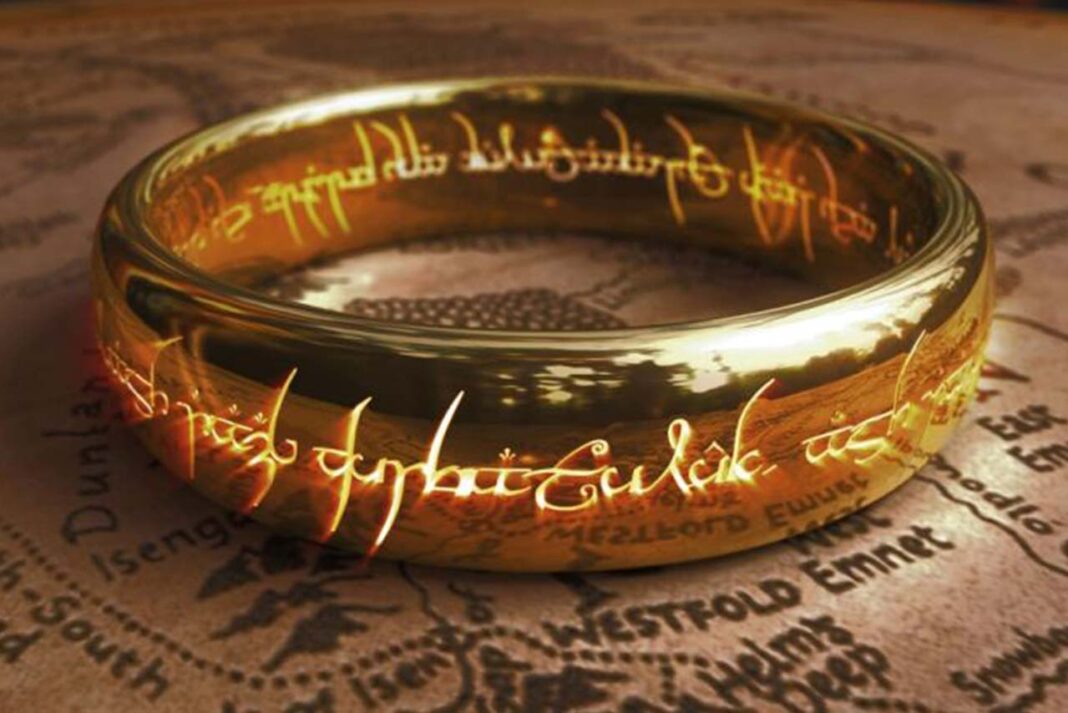
The Lord of the Rings, created by J. R. R. Tolkien and adapted into an epic fantasy film series directed by Peter Jackson, is a masterpiece of mythological psychology. The author crafted the enchanting power of Middle-earth with mythological races and languages such as Elves, Dwarves, Hobbits, Men, and Wizards. Around these races, he shaped strong bonds of friendship and deeply reflected individual transformation processes, where characters confront the unconscious shadow work aspects of themselves in the face of absolute power. What leaves a lasting impression on LOTR fans is undoubtedly the magic of the “Fellowship of the Ring” against the darkness unleashed by absolute power, the power of friendship uniting Middle-earth’s peoples in the Elven realm of Rivendell, and the excitement of shared new adventures and beginnings.
“The world is changing. I feel it in the water. I feel it in the earth. I smell it in the air. Much that once was is lost, for none now live who remember it.”
The series begins with these compelling words spoken in Elvish by the wise elf Lady Galadriel of Lothlórien. This marks one of the greatest turning points in the story—the adventure has begun. Men, Elves, Half-Elves, Hobbits, Dwarves, Ainur, and Orcs—within the 982 characters of the series, the ability to interact with many from various social strata, from gardener Sam to ruler Galadriel, points to the accessibility of power in the book. Characters who come into contact with absolute power unknowingly reveal unconscious desires and shadow work traits, symbolizing how absolute power corresponds to the material desires of individuals. Their attitudes toward power will cause them either to face their shadow selves or to fall into psychic obsession. This entire journey symbolizes Jung’s process of individuation, representing a path to wisdom. The Lord of the Rings becomes even more compelling through its mythological narrative of individual transformation. This narrative symbolizes Frodo’s confrontation with the shadow, while through Gollum’s character, it reveals the destructive psychic obsessions of loss.
Inspired by the series, scientists named the “Ring Effect” the fiery ring shape visible during a solar eclipse—the last rays of the sun appearing from the valleys on the moon’s edges. Similarly, in the story, the ring’s power to extinguish light symbolizes how the characters’ passion for power leads to corruption. Tolkien himself stated:
“The Lord of the Rings is an examination of the placing of power in external objects.”
Although Tolkien emphasized that the book is not an allegory, this element is what deeply connects readers to the series. One of the greatest reasons for the book’s timeless and universal appeal is the psychological resonance it creates in people through events, characters, and places that evoke memories and associations. What makes the series so magical are the psychological associations it evokes in the conscious and unconscious mind. Each reading can yield new meanings depending on the reader’s life phase, and the divine and dark powers in the story continually transform, creating a healing effect in memory.
Throughout the series, it is evident that Frodo, the ring bearer who inherited this mission from his uncle Bilbo, carries a traumatic burden. Carrying the ring tests Frodo’s psychological resilience and causes him to face severe psychological challenges on his path. Due to the abyss that absolute power awakens in his soul and unconscious, Frodo distances himself from his self and exhibits paranoid behavior. Even after the ring’s destruction, Frodo remains dependent on it due to his previous bond, reflecting symptoms of PTSD (Post-Traumatic Stress Disorder). His ongoing inner conflicts with conscious and unconscious struggles regarding the ring, along with social isolation and difficulty adapting to daily life, relate to these symptoms. In such cases, individuals may experience flashbacks, nightmares, hypervigilance, or emotional numbing and difficulties with emotion regulation. The longing Frodo and Sam feel for their home, the Shire, fuels their determination on the journey. The Shire is often metaphorically described as paradise, while Mordor symbolizes hell. Even when Frodo returns to his dreamt-of Shire, intrapsychic conflict and social isolation propel him on a divine journey symbolized as a mythological paradise—the immortal lands of Valinor, toward eternal peace.
Sam, who accompanies Frodo throughout his journey and plays a crucial role in achieving the goal, is often described in literature as having a dependent personality. However, he symbolizes friendship and unconditional support. In the series, Sam can be associated with Carl Rogers’ Humanistic Theory and the ideal self, representing psychological healing. The ideal self, when aligned with rational goals, provides a healthy sense of self and possesses the power to heal one’s environment.
Smeagol, known as Gollum, tragically embodies the destructive outcome of addiction to the ring. He exhibits symptoms of Dissociative Identity Disorder (DID), including multiple identity conflicts, mental fragmentation, and loss of conscious and behavioral control. Frodo’s compassion toward Smeagol illustrates the overcoming of shadow work aspects. Jung’s quote about Smeagol’s calling the ring “my precious” is particularly apt:
“The person who does not integrate the shadow becomes its slave.”
Jung’s archetype of the senex, the wise old man, undoubtedly represents Gandalf. Throughout the series, Gandalf sees himself as the bearer of a great mission and is symbolized as a protective divine force. His transformation from Gandalf the Grey to Gandalf the White provides insights into resolving inner conflicts and achieving the self. As a guide figure, Gandalf inspires LOTR fans to recognize their inner resources and find their inner compass.
Aragorn symbolizes “a part of a fully realized life” through the strengthening of his self-perception. In the final scenes of the series, during the coronation against the setting sun, Aragorn unites with his beloved—Arwen, the evening star—achieving Jung’s archetype of “accessing the self.” Aragorn’s integration of repressed desires enables him to reach self-consciousness.
In an interview, Tolkien said:
“The story is always a human story, always about one thing, isn’t it? Death. The inevitability of death. The only decision we have to make is what to do with the time that is given to us.”
The Lord of the Rings is not just an epic fantasy analysis; for those who encounter it deeply, it is a universal influence representing the struggle to confront one’s darkness and achieve wholeness. The representation of unconscious shadow aspects through characters enables readers and viewers to encounter their own selves, opening psychic gateways to locked corners of the soul. Undoubtedly, what makes The Lord of the Rings so healing is the magic of new journeys.
REFERENCES
Fordham, Michael (1978). Jungian Psychotherapy: A Study in Analytical Psychology. London: Wiley & Sons.
Nelson, Charles W. (2002). “From Gollum to Gandalf: Guide Figures in J.R.R. Tolkien’s The Lord of the Rings.” Journal of the Fantastic in the Arts.
Skogemann, P. (2009). Where the Shadows Lie: A Jungian Interpretation of Tolkien’s The Lord of the Rings. Wilmette, IL: Chiron Publications.
Tolkien, J. R. R. (2019). The Fellowship of the Ring (Trans. Çiğdem Erkal İpek & Bülent Somay). Metis Publishing. ISBN 978-975-342-598-8
Tolkien, J. R. R. (2019). The Two Towers (Trans. Çiğdem Erkal İpek & Bülent Somay). Metis Publishing. ISBN 978-975-342-181-2
Tolkien, J. R. R. (2020). The Return of the King (Trans. Çiğdem Erkal İpek & Bülent Somay). Metis Publishing. ISBN 978-975-342-202-4
Jackson, P. (Director). (2001). The Lord of the Rings: The Fellowship of the Ring [Film]. New Line Cinema.
Jackson, P. (Director). (2002). The Lord of the Rings: The Two Towers [Film]. New Line Cinema.
Jackson, P. (Director). (2003). The Lord of the Rings: The Return of the King [Film]. New Line Cinema.