


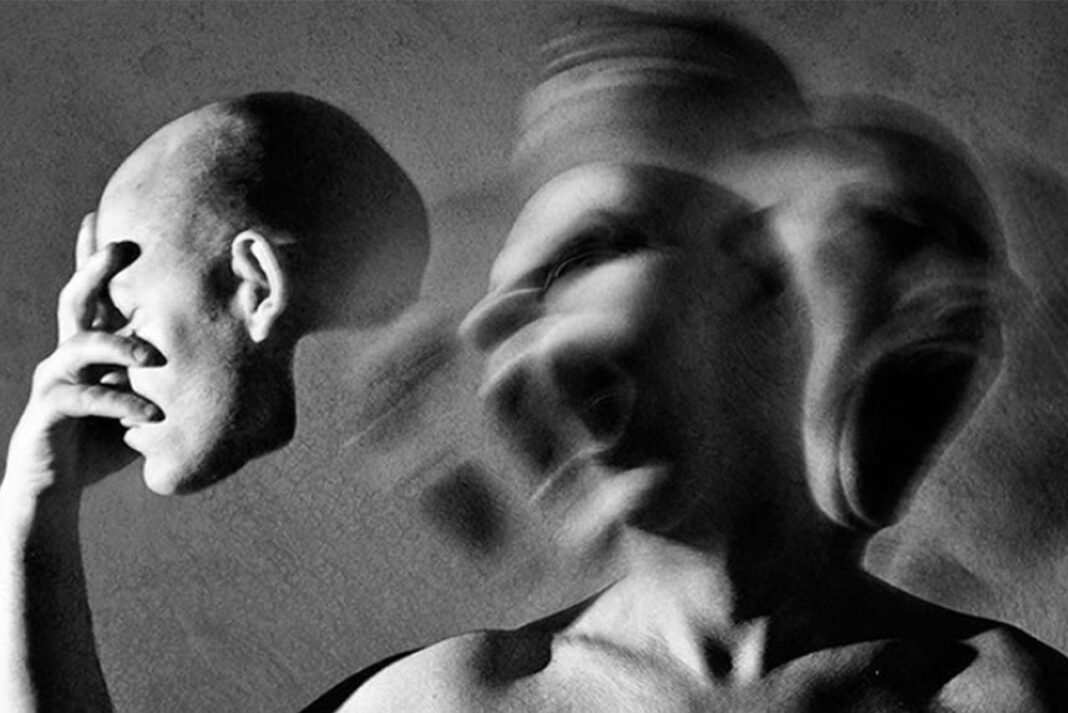

Have you ever thought that people you know have been replaced by others who look exactly like them? Your mother standing in front of you may have the same hair, height, and weight as always — but what if she’s not really your mother? What if someone trying to deceive you has taken her place?
Although these questions may sound absurd, they are precisely the kind of thoughts that circulate in the mind of someone suffering from Capgras Syndrome.
What is Capgras Syndrome?
Capgras Syndrome is characterized by the delusional belief that someone close to the individual has been replaced by an impostor who looks exactly the same (Berson, 1983). The person acknowledges the physical resemblance but remains convinced that the individual has been replaced. In most cases, the person cannot clearly identify who carried out the replacement. The mind seeks out a malicious perpetrator, often pointing to aliens, paranormal forces, or intelligence agencies.
Schizophrenia or Syndrome?
A common question is: “Is it paranoid schizophrenia or Capgras Syndrome?”
Paranoid schizophrenia involves both delusions and hallucinations. In contrast, Capgras Syndrome typically involves only a delusional misidentification and no hallucinations (Christodoulou, 1977).
Capgras is rarer and may be observed in the context of neurological conditions such as dementia and epilepsy. While schizophrenia is often associated with genetic and biochemical factors (particularly dopamine imbalances), Capgras is more closely linked to brain damage, temporal lobe dysfunction, and dementia.
Clinical Features and Symptoms
In Capgras Syndrome, the patient visually recognizes the familiar person but fails to achieve emotional recognition. This leads to the belief: “She looks like my mother, but she isn’t my mother.”
-
Initially, the delusion typically targets a single person (e.g., a spouse, parent).
-
Over time, it may extend to others in the social circle.
-
This may result in severe anxiety, paranoid thoughts, and even aggressive behavior.
The syndrome becomes especially dramatic in close relationships within the same household, where the patient feels alienation and fear toward loved ones.
Neuroscientific Explanations
It is believed that there is a disconnection between the temporal lobe (responsible for facial recognition) and the limbic system (which provides emotional response). In other words, the person recognizes the face, but their emotional memory is not activated. As a result, they both recognize and fail to recognize the individual at the same time.
Studies have shown that Capgras Syndrome may be associated with temporal lobe dysfunction, dementia, and brain injuries (Hirstein & Ramachandran, 1997). Thus, it is regarded not only as a psychiatric disorder but also as a complex clinical condition with a neurological basis.
Cognitive Perspective
The cognitive approach sees Capgras Syndrome as a result of a misattribution. Normally, when we see someone familiar, we activate both visual recognition and a sense of emotional familiarity. In Capgras, the emotional connection is severed. The brain attempts to explain this mismatch by concluding: “This person must be an impostor who just looks like them.”
Treatment Approaches
Treating Capgras Syndrome is complex, as it frequently co-occurs with other disorders.
-
Medication: Antipsychotic drugs are commonly used.
-
Psychotherapy: Cognitive Behavioral Therapy (CBT) techniques can help test the patient’s reality.
-
Family Psychoeducation: Educating family members about the syndrome reduces caregiver burden.
Conclusion: The Unfamiliar Within the Familiar
Capgras Syndrome highlights the fragile nature of our perception of reality. Recognizing a face is not only the work of the eyes but also of the heart. Understanding that our emotional responses to loved ones are tied to intricate neurological processes reminds us of the deep complexity of human nature.
This syndrome opens a shared field of study between psychiatry and neurology — and perhaps most importantly, it raises a profound question:
“What does it truly mean to recognize someone?”
References
-
Berson, R. J. (1983). Capgras’ syndrome. American Journal of Psychiatry, 140(8), 969–978. https://doi.org/10.1176/ajp.140.8.969
-
Christodoulou, G. N. (1977). The syndrome of Capgras. British Journal of Psychiatry, 130(6), 556–564. https://doi.org/10.1192/bjp.130.6.556
-
Ellis, H. D., & Young, A. W. (1990). Accounting for delusional misidentifications. British Journal of Psychiatry, 157(2), 239–248. https://doi.org/10.1192/bjp.157.2.239
-
Feinberg, T. E., & Keenan, J. P. (2005). Where in the brain is the self? Consciousness and Cognition, 14(4), 661–678. https://doi.org/10.1016/j.concog.2005.01.002
-
Hirstein, W., & Ramachandran, V. S. (1997). Capgras syndrome: A novel probe for understanding the neural representation of the identity and familiarity of persons. Proceedings of the Royal Society of London. Series B: Biological Sciences, 264(1380), 437–444.