


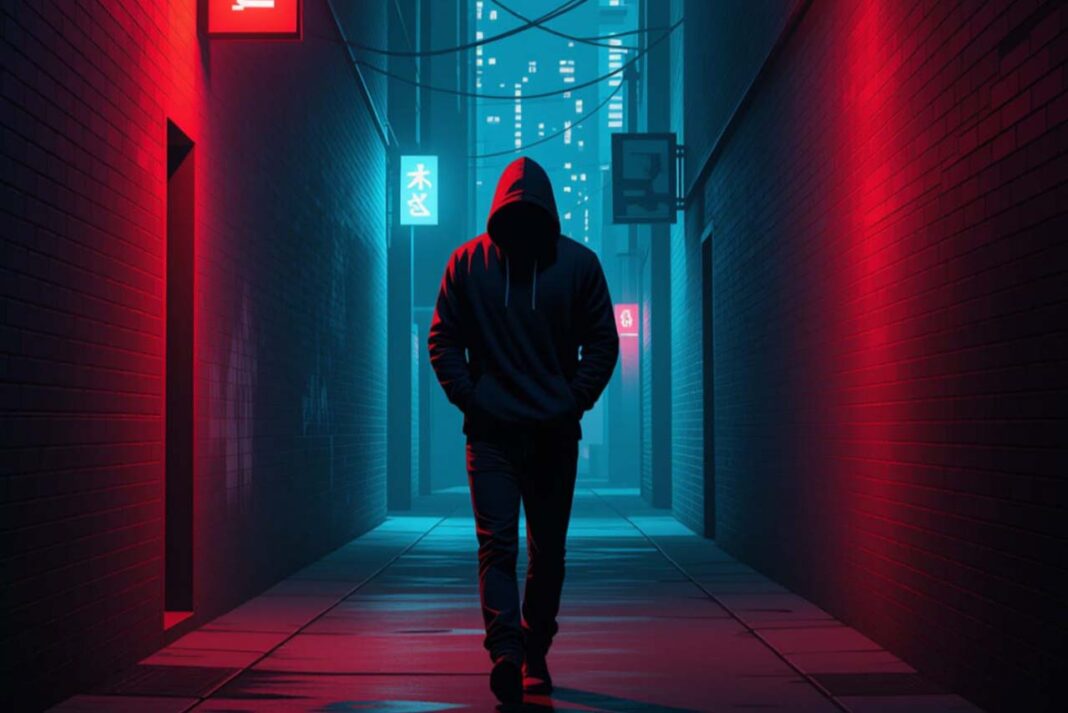

Stalking has become almost normalized in today’s social media culture. But what if the stalker wasn’t just behind a screen? What if we crossed paths in real life? Imagine stepping outside and feeling the weight of unseen eyes trailing your every move. Silent breaths keeping pace with your footsteps. The unsettling thought that someone could be lurking at every corner. Sometimes even at home, the place we associate with safety, the shadow of their presence lingers. This is not romance—it is a creepy and suffocating reality.
In this article, we will explore what stalking means, the psychological motivations behind it, and the devastating toll it takes on victims.
The Stalker’s Motivations
Stalkers are often driven by a need for control, obsessive attachment, or an intense fear of rejection. These behaviors can be linked to narcissistic traits (grandiosity, self-importance) or borderline tendencies (emotional volatility, fear of abandonment).
A common element is cognitive distortion—a tendency to justify their actions as harmless or even reciprocal:
-
“They (the victim) like me too, so this isn’t wrong.”
-
“I’m not doing any harm—it’s all innocent.”
Such distortions make it difficult for stalkers to stop, while victims are trapped in a cycle of uncertainty and fear. In some cases, the stalker even flips the narrative, convincing themselves that they are the true victim.
A well-known cultural example is Joe Goldberg from the series You. At first glance, Joe appears to be a hopeless romantic, yet in reality, he is manipulative, narcissistic, and boundaryless. His story reveals how obsession can masquerade as love, concealing a dangerous personality disorder. Even more strikingly, the series finale breaks the “fourth wall,” forcing viewers to confront how easily toxic behavior can be romanticized, and how deeply threatening it truly is.
The Impact on Victims
Stalking leaves lasting scars on victims’ lives, cutting across psychological, social, and digital dimensions:
-
Psychological: constant hypervigilance, anxiety, trauma, depression.
-
Social: withdrawal from daily life and relationships to seek safety.
-
Digital: paranoia, loss of trust, and the feeling of being watched online.
These effects become even more tangible when considering the moment Beck discovering the box where Joe had been hiding her belongings—tokens of obsession she never consented to give. In that instant, her lingering doubts crystallize into a horrifying truth: she is living with a stalker. Every private detail of her life has been watched, collected, and controlled by someone she thought she could trust. One can’t help but ask: “If this happened to me in real life, how would I feel?”
Unfortunately, the tragic case of Clare Bernal provides the answer. Clare had repeatedly reported harassment by her stalker to the police, yet her warnings were ignored. On September 13, 2005, she was shot and killed by him at the store where she worked. Her story illustrates how stalking is not only psychologically destructive but can escalate into a matter of life and death, creating profound psychological trauma for victims.
Societal and Legal Perspectives
Society and media sometimes romanticize stalkers, as with Joe Goldberg, and at other times underestimate the danger, as in Clare Bernal’s case. Yet stalking is not a private issue—it is a public safety concern.
Criminal behavior analyst Laura Richards describes stalking as a “slow-motion murder”—a form of violence that escalates step by step, leaving multiple missed opportunities for intervention. This makes strong legal protections and societal awareness crucial.
Unfortunately, in both Türkiye and many parts of the world, these mechanisms remain insufficient. Digital safety measures, community support systems, and psychological counselling are essential lifelines for those affected.
Stalking is not love, nor is it affection—it is a violation of boundaries, an invisible form of violence. Ask yourself: If someone like this became part of your life, how would you really feel?